
Editor's Note
This editor’s note highlights the key facts and market implications behind “Roman Mosaic Emerges from Beach Sand After Heavy”, with emphasis on sourcing, product fit, fabrication, logistics, or buyer impact.
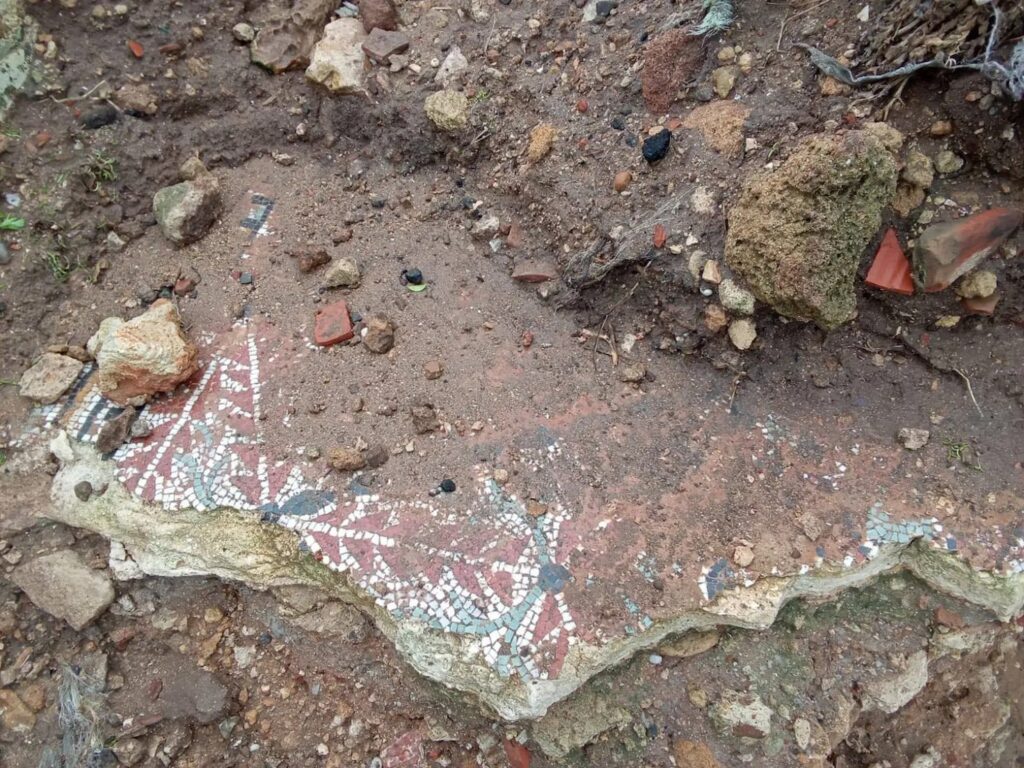
Heavy storms in the Mediterranean have caused strange and unique situations, such as the one involving ancient mosaics on Sidi Daoud beach in Tunisia. Tunisian authorities announced the discovery of previously unseen mosaics near the beach, dragged out and unearthed by rains that eroded the surface layers of the soil.
The emergence of these mosaics is no coincidence; the area sits atop an ancient Roman port city known as Missua, a center that played a fundamental role in Mediterranean trade during the Roman imperial era. According to reports from the media outlet Stile Arte, the findings include monochromatic and polychrome mosaics belonging to different settings.
After warnings from several passersby who alerted authorities to the new remains found on the beach, the team from the National Heritage Institute of the Nabeul Governorate, specialized in the study and conservation of mosaics, intervened at the Missua-Sidi Daoud-El Hauaria archaeological site. Their rapid action was an attempt to prevent atmospheric agents and marine erosion from permanently damaging the surfaces.
The Ancient City of Missua
The findings on Sidi Daoud beach are part of the Romanization of the Cap Bon peninsula and Proconsular Africa. According to the report, northeastern Tunisia was considered during the Republican era as an important strategic zone due to its location on routes connecting Italy, Sicily, and major African cities. With the fall of Carthage in 146 BC, Rome turned the metropolis of Missua into an efficient port with good connections to imperial trade.
From that moment, the creation of the Roman city focused on a key point among minor ports, allowing all grain, oil, and agricultural products from the interior of Cap Bon to circulate to more points of the Roman Empire from the port of Missua. According to a thorough analysis of the metropolis's amphorae, citizens of the ancient Roman city received food exported directly from Naples, identified by the composition of clays and minerals characteristic of the present-day Italian area.
The city was divided into residential neighborhoods with sea views, a functional port infrastructure, and some smaller public buildings of good architectural quality. The mosaics found on Sidi Daoud beach appear to come from a villa, probably the residence of a landowner or businessman linked to maritime activities. These claims are supported by the monochromatic and polychrome geometric decoration that characterizes the ancient surface.
With the arrival of the Roman Empire, the new inhabitants did not destroy the structures of the ancient cities, but instead learned from their techniques and incorporated them into their own. Between the 1st and 3rd centuries AD, the monochromatic and polychrome geometric decorations of Sidi Daoud already existed, placing the creation of the mosaics in that time period. Furthermore, their use was not merely as a simple covering; it was a sign of status and cultural belonging, and the existing preference for geometric patterns reflects a widespread taste in Proconsular Africa.
Source: Read the original article | Published: February 08, 2026