This editor’s note highlights the key facts and market implications behind “6 Pros And 6 Cons Of Using Peel-And-Stick Tile B”, with emphasis on sourcing, product fit, fabrication, logistics, or buyer impact.
A peel-and-stick tile backsplash offers a wealth of pros. "It's designed to give the look of real tile without the mess of grout or the need for power tools," explains Jeannine Rose, founder of [company].
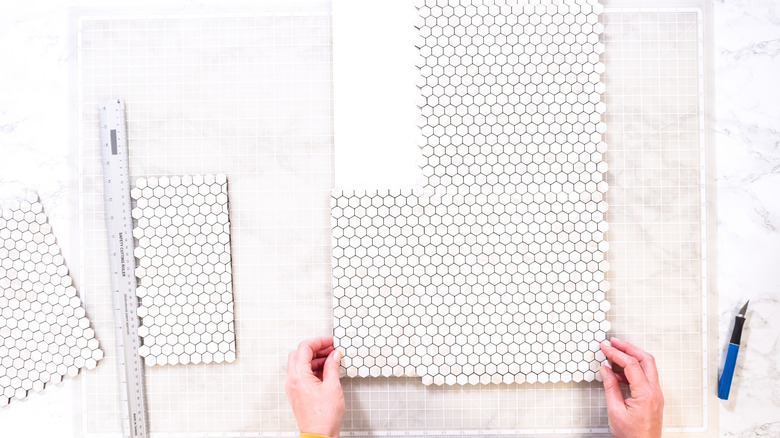
Pro: Ease of Installation
Foremost among the pros of a peel-and-stick tile backsplash is the ease of installation. "It's a favorite for DIY-ers and renters because it's super simple to install, easy to remove, and often budget-friendly too," says Teri Simone, head of design and marketing at [company].
“You just peel off the backing and stick the tile into place, making it perfect for renters or homeowners looking for a fast and stylish update without the hassle. You can totally install them over a weekend afternoon.”
Simone has worked with HGTV's Kortney Wilson and Queer Eye's Bobby Berk, and has seen every type of remodel under the sun, so she knows what she's talking about when she says peel-and-stick is a low-road option.
Con: Shorter Lifespan Than Real Tile
Because nothing in life is ever easy, a peel-and-stick tile backsplash does come with several cons as well. "These tiles don't have the same staying power as ceramic or stone," Tony Roberts says. "Eventually the adhesive will deteriorate, or the finish will fade, particularly in high-traffic areas."
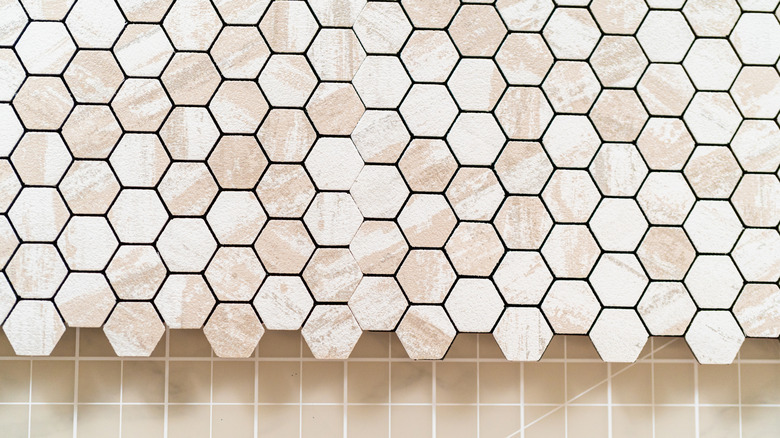
This isn't necessarily true of peel-and-stick tiles that use real materials (such as stone or wood), but since most use plastics, it's a definite concern.
Colleen Bennett estimates that you have between six months and a year for peel-and-stick tile, after which you will have to re-adhere it. This is doable through various means — applying heat, adding adhesive, managing humidity, and so forth — but it's still annoying. If you use real tile with adhesive backing rather than a vinyl product, it may have a bit more staying power. However, she says, "You're not actually putting the grout work behind it, which means it's only as good as the adhesive is."
Pro: Easy to Remove
One of the major pros associated with a peel-and-stick tile backsplash is that the tiles come back off the wall pretty easily. If, for instance, you decide to change your style from a [style] to another, you can simply peel them off and start over.
“Most peel-and-stick tiles are designed to come off without damaging your walls, so they’re perfect for renters or anyone who changes their mind often,” Jeannine Rose says.
The other experts agree that the impermanence of the installation is a huge benefit, giving folks who don't own their space a similar degree of control over it as homeowners have. It provides plenty of style opportunity without risking your security deposit, Teri Simone says.
That's not to say it's not a good option if you own your home or want a longer-lasting solution, either. As long as you're willing to do periodic inspections and fixes, you may get some serious mileage out of your tiles, and you don't have to pay anyone to do real grouting — or worse, learn to do it yourself. Shudder. It also gives you the freedom to change the look of your room with the seasons, if you're an especially enthusiastic DIY-er.
Con: Doesn’t Adhere Well to All Surfaces
Another of the main cons is that peel-and-stick tile backsplash can be a bit choosy about which surfaces they adhere to. "These tiles need a clean, smooth, and dry surface to really stick well," Teri Simone says. "If your wall is textured, uneven, or freshly painted, you may run into problems with adhesion."
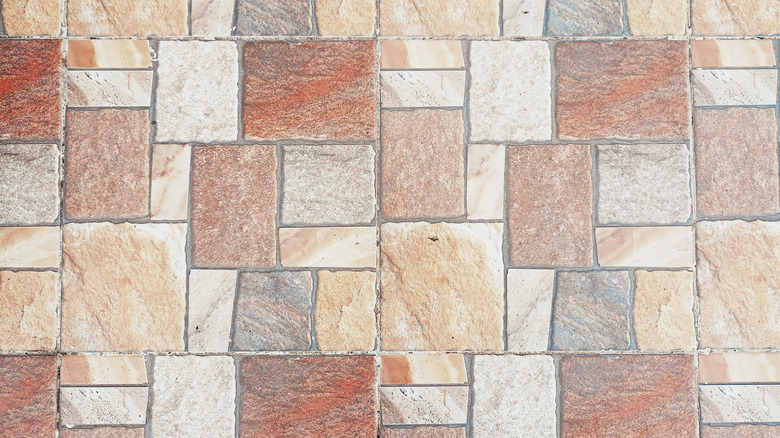
The same is true if the surface beneath has existing tile, which is not a good surface for adhering products on top. This is why most interior designers do not use it on job sites where homeowners are doing an actual renovation, Colleen Bennett says.
“Porous finishes, such as those found in textured walls, unevenly painted surfaces, or porous materials, may prevent proper adhesion which can cause bubbles or peeling,” Tony Roberts says.
If your walls, for instance, are finished with an orange peel texture, then the tile is unlikely to adhere well.
Even if you do have a clean, dry surface, you should do your due diligence to ensure the tiles have the best chance of sticking well. "Start by choosing high-quality brands and reading reviews, especially from people who've used them in the same kind of space," Jeannine Rose says. Always follow the prep instructions to the letter to ensure you set yourself up for long-term success.
“You can also test one panel first before committing to the full wall to make sure it sticks well and looks the way you want,” she points out, or add a layer of clear silicone caulk around the edges to help with adhesion.
Pro: Cost-Effective
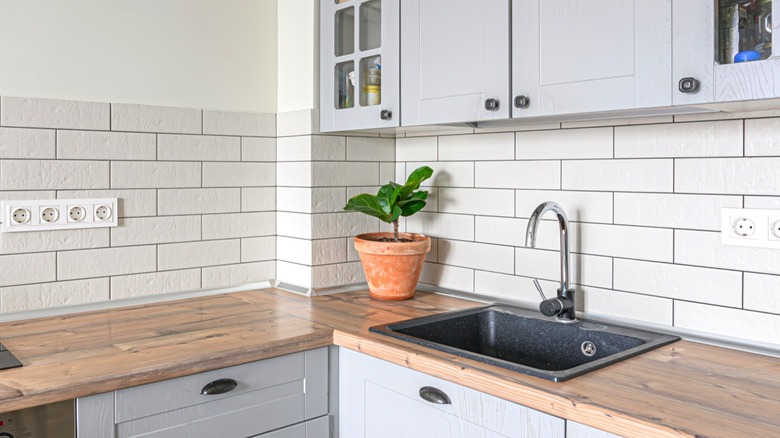
While a real tile backsplash isn't as expensive as, say, cabinets, it can still cost a pretty penny to install. Some estimates put the average cost of a 25-foot backsplash at $800, and that's assuming it isn't the full wall up to the ceiling. Cost, therefore, is certainly a factor when considering the pros and cons of a peel-and-stick tile backsplash.
If you're on a tight budget, peel-and-stick tiles are hands-down the winner. "You can transform a backsplash for under $100, which makes it a budget-friendly way to update your space without committing to a full renovation," Jeannine Rose says.
If you buy quality products and do all the prep as directed, you can get an expensive look for a very low price compared to ceramic or stone tiles. It's the ideal makeover solution for little money, and it can even be a way to see if you'll like real tiles in that same space.