
Editor's Note
This editor’s note highlights the key facts and market implications behind “How a Single Tile is Made: A Factory Tour of Yos”, with emphasis on sourcing, product fit, fabrication, logistics, or buyer impact.
The Tile as a “Fired Product”
While all are called tiles, their designs, manufacturing methods, and raw materials vary widely. Most tiles circulating in Japan today are collectively called ceramic tiles, which are further classified into three types based on their water absorption rate after firing: earthenware, stoneware, and porcelain.
Innovations in manufacturing, decoration, and installation technologies have refined the design and performance of ceramic tiles, leading to their adoption in a wider variety of settings. At the same time, the expression and texture of tiles made using traditional methods as "fired products" are also favored and are garnering renewed attention.
This article introduces the tile manufacturing process at Yoshimatsu Seitosho, a kiln that uses the traditional wet method to produce tiles such as the DINAONE products "HINONE" and "KoksⅡ".
Yoshimatsu Seitosho
Yoshimatsu Seitosho is a pottery studio located in Tokoname City, Aichi Prefecture, one of Japan's Six Ancient Kilns (six pottery kilns with continuous production from the medieval period to the present). It is characterized by its wet manufacturing method and reduction firing technique, continuing to produce tiles with deep colors and rich textures.
Ceramic Tile Manufacturing Methods
Ceramic tiles are primarily manufactured using either the "dry method" or the "wet method." In the dry method, powdered raw material (body clay) containing minimal moisture is filled into a metal mold and formed under high pressure. This allows for low-cost mass production, and because the raw material contains almost no water, dimensional accuracy after firing is high and quality is stable.
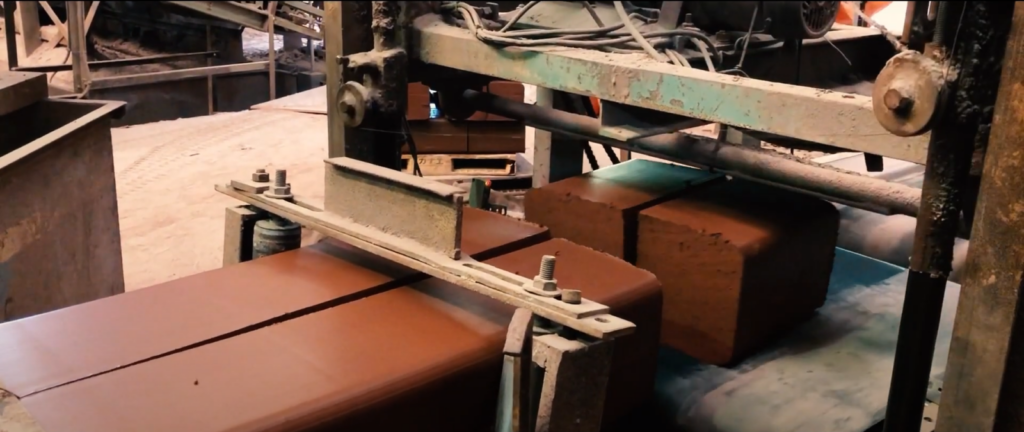
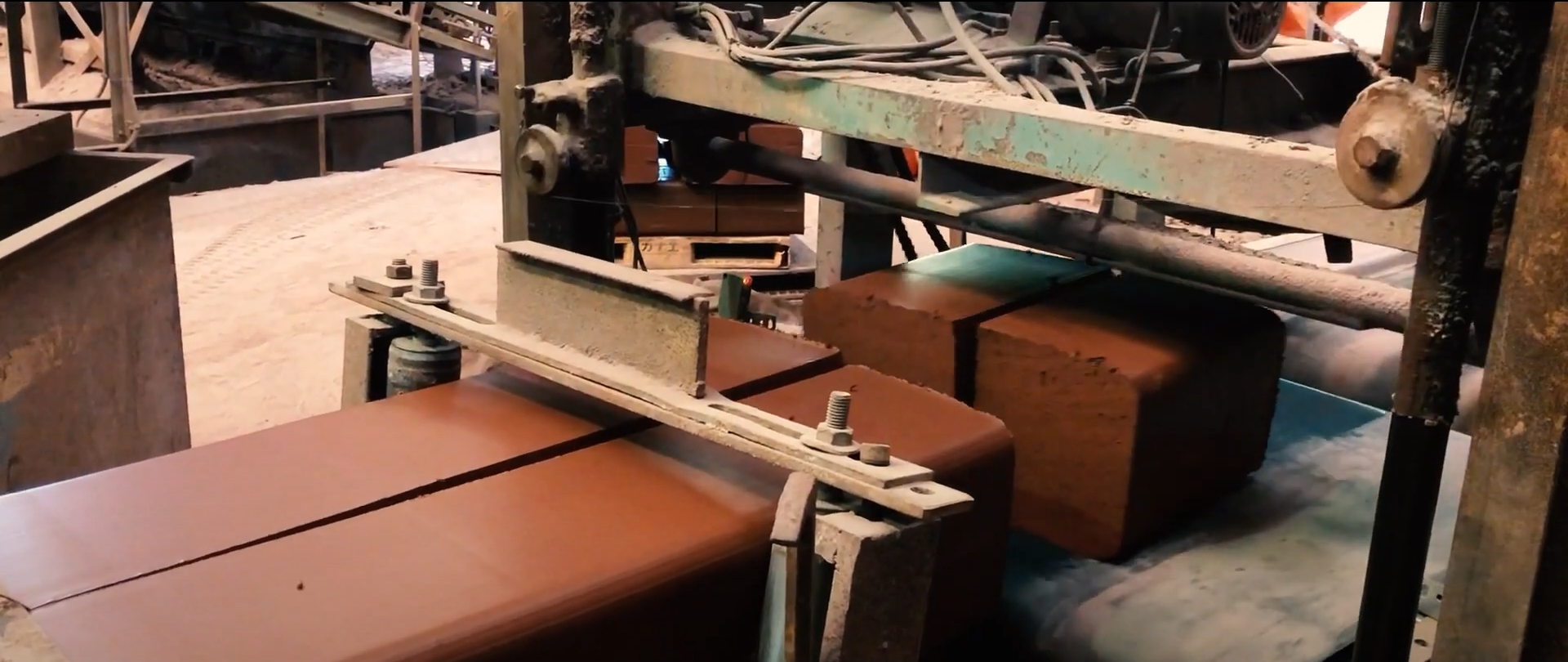
In the wet method, clay-like raw material with a moisture content of 20-25% is extruded by a forming machine and cut to a specified length with a piano wire or similar. Due to the high moisture content of the raw material, shrinkage and warping are more likely to occur during firing. However, these slight variations create the unique expression, texture, and so-called "character" inherent to fired products.

The Tile Manufacturing Process at Yoshimatsu Seitosho
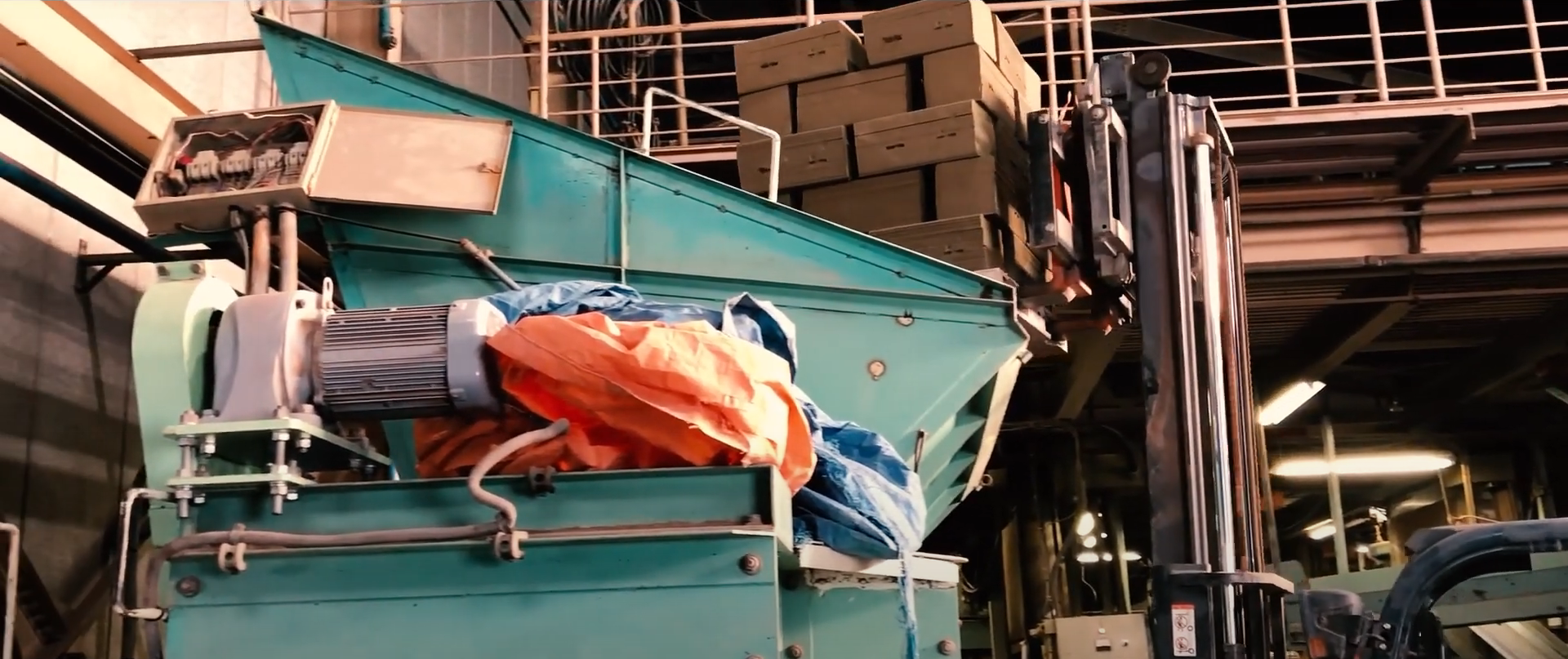
The main raw material, clay, is transported from a specialized raw material factory. Block-shaped clay is loaded into a large pug mill, and the process of creating the tile body begins. The body is formed as it is extruded from a die shaped like a tile through a vacuum extrusion forming machine. The formed body is cut about 20% larger than the finished dimensions, accounting for shrinkage during drying and firing. It is loaded onto carts and dried using the residual heat of the kiln.
Carts are successively loaded into a tunnel kiln approximately 65 meters long, where they are fired over about 30 hours while moving through the kiln. The temperature near the center of the kiln reaches about 1,200°C. Yoshimatsu Seitosho employs reduction firing, one of two firing methods (oxidation and reduction). This method limits the supply of air, preventing the combination of substances contained in the body and surface glaze with oxygen and causing the release of already-contained oxygen, thereby altering the texture and color. A characteristic of this method is that variations in how the fire touches the pieces easily create a range of colors typical of fired ware (kiln variation). Tiles made by the wet method are typically formed with two tiles connected at the back foot (lug) section. An impact is applied to the center to separate them, resulting in the familiar single tile. The sorted tiles are packed using an automatic mixing machine to prevent color bias and are shipped to job sites nationwide.
Source: Read the original article | Published: October 02, 2023