This editor’s note highlights the key facts and market implications behind “Sumitomo Bakelite Develops Flame-Retardant Prepr”, with emphasis on sourcing, product fit, fabrication, logistics, or buyer impact.
Sumitomo Bakelite has developed a flame-retardant prepreg using biomass-derived PFA (PolyFurfuryl Alcohol, commonly known as furan resin) to contribute to the aviation industry's efforts to achieve net-zero CO2 emissions by 2050. This product offers a solution that combines reduced environmental impact with safety for applications requiring high flame retardancy, such as aircraft interior materials, contributing to the realization of a sustainable society.
Development Background
The aviation industry is working towards decarbonization as major aircraft manufacturers aim to meet the "2050 Carbon Neutral Goal" set by IATA (International Air Transport Association) and ICAO (International Civil Aviation Organization). Meanwhile, as the use of FRP (Fiber Reinforced Plastic) for aircraft weight reduction becomes more widespread, reducing petroleum-derived raw materials in the manufacturing process has become a challenge. For thermosetting resins, which are particularly difficult to recycle, the application of biomass raw materials is being explored to reduce environmental impact, creating demand for new solutions across the entire supply chain.
Sumitomo Bakelite’s Initiative and Product Features
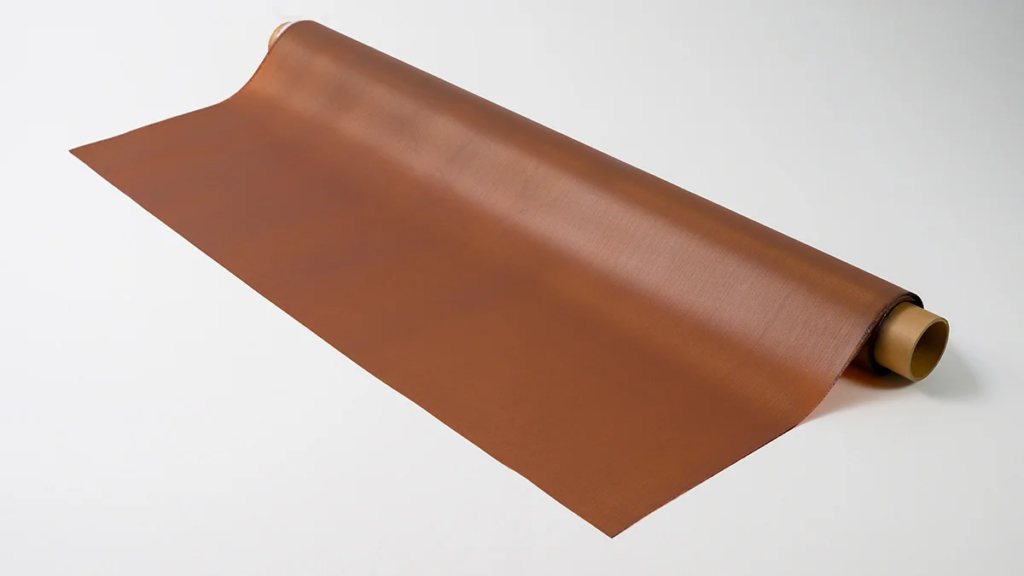
Sumitomo Bakelite has branded its non-edible biomass-derived PFA resin and related products as "sbPFA(R)". As part of this initiative, the company has developed a PFA prepreg using PFA resin as a binder. It positions this as a solution contributing to the decarbonization of the aviation industry, promoting CO2 reduction and sustainable product development. This prepreg possesses mechanical strength equivalent to conventional petroleum-derived phenolic resin and meets the high Flame, Smoke, and Toxicity (FST) standards required for aircraft interior components. It also demonstrates performance levels equivalent to petroleum-derived phenolic resin in the OSU Heat Release Test compliant with 14 CFR Part 25. Furthermore, by developing the process from PFA polymerization to prepreg formation in an integrated manner, the company has achieved a 43% reduction in Carbon Footprint (CFP) compared to existing products while realizing mechanical strength equivalent to conventional phenolic resin. This balances reduced environmental impact with enhanced safety. The product contributes to applications requiring flame retardancy, such as aircraft interior materials and automotive batteries.
"sbPFA(R)" is the brand for a product group utilizing non-edible biomass-derived PFA (PolyFurfuryl Alcohol) technology developed by Sumitomo Bakelite.
sbPFA(R)プリプレグ
Benefits of Adopting sbPFA(R)
1. Reduced Environmental Impact and Enhanced Corporate Value: Achieves a 43% CFP reduction, which was difficult with conventional phenolic resin prepregs, significantly contributing to the aviation industry's 2050 carbon neutrality goal. This also promotes improved ESG evaluation and brand image for companies. The use of non-edible biomass raw materials enables sustainable procurement and strengthens environmental consideration across the entire supply chain. 2. High Safety and Compatibility with Existing Processes: Ensures excellent FST performance essential for aircraft interior materials while allowing for the same handling as conventional phenolic resin prepregs. Therefore, it enables the continued provision of high-safety products while maintaining manufacturing efficiency, without the need for new equipment investment or major changes to manufacturing processes.
Future Plans
The product is currently in the prototyping stage, and sample provision to some aircraft manufacturers has begun. The company will proceed with customer evaluations, aiming for mass production start in 2028. Furthermore, it plans to strengthen marketing activities with an eye on expansion into fields requiring flame retardancy beyond aviation, such as automotive batteries.