
Editor's Note
This editor’s note highlights the key facts and market implications behind “Tile Trends 2026: Natural Tones and Subtle Luxur”, with emphasis on sourcing, product fit, fabrication, logistics, or buyer impact.
Warm colors, bold formats, strong textures: tiles have the potential to make a statement in bathrooms and kitchens, with technology and design moving ever closer together. These are the current trends.
Warm Earth and Natural Tones
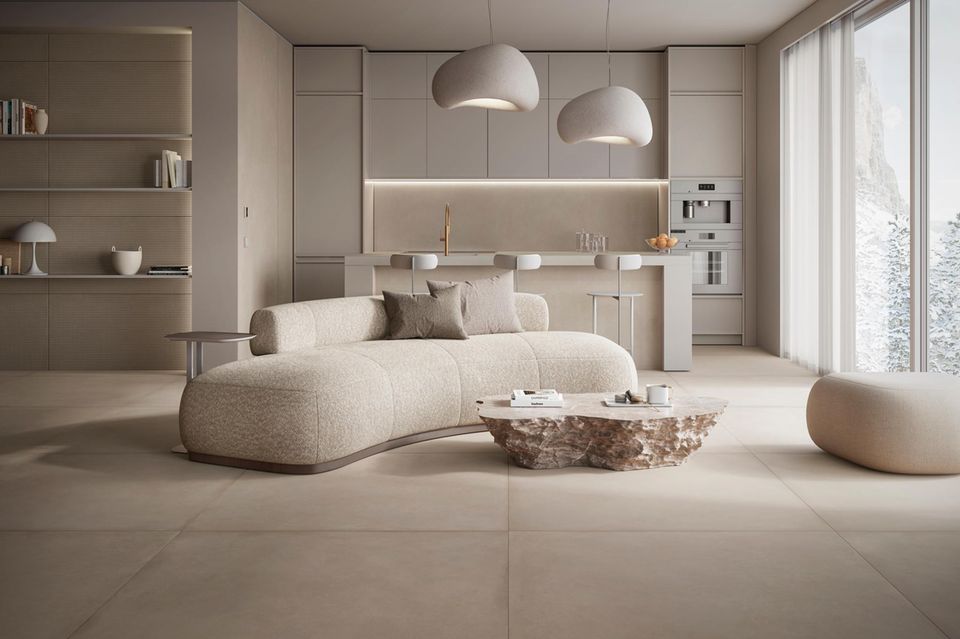
The cool gray palette of recent years is giving way to muted earth tones that will define surfaces in 2026: sand, beige, ochre, clay, sage. These tones act not decoratively, but spatially. They calm, connect materials like wood and stone, and create transitions in open floor plans. They show their strength particularly well in bathrooms or kitchens because they break light more softly and make surfaces appear visually softer.
Large-Format, Minimal-Joint Surfaces
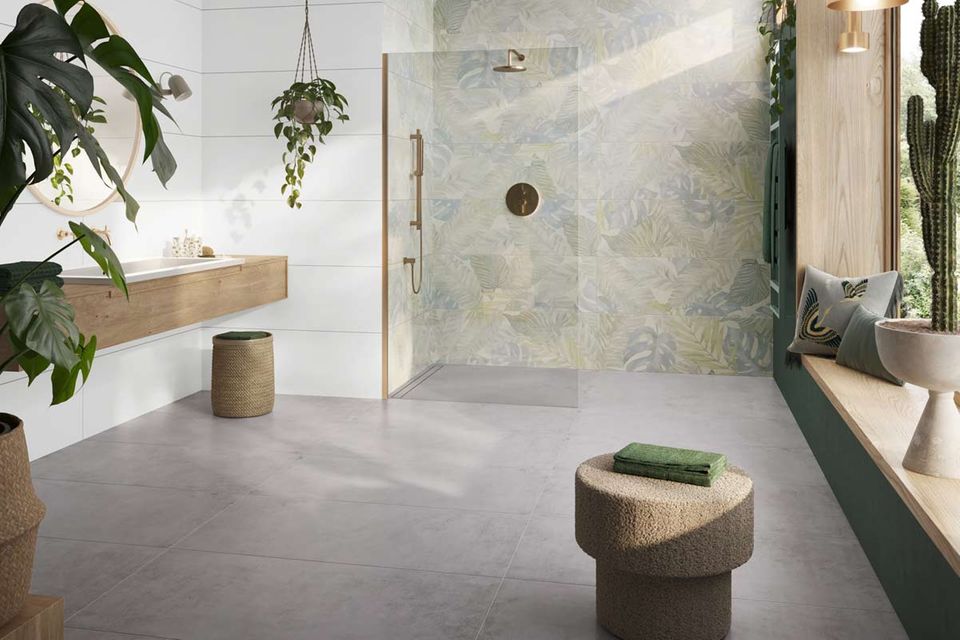
Large tile formats, sometimes over three meters in length, are radically changing the joint pattern. Fewer joints means: fewer visual interruptions, easier cleaning, and a more architecturally calm impression. In living spaces, flowing transitions are created; in the bathroom, single wall surfaces that appear seamless. High-quality porcelain stoneware slabs make this dimensionality possible; their minimal thickness even allows renovations without complete subfloor renovation. Clean installation remains crucial: large formats do not forgive unevenness.
Tactility: Relief, 3D, and Texture
What once had to be smooth can now speak: 3D structures, grooved profiles, woven surfaces, or slightly irregular edges create spatial depth. This brings haptics to the forefront. Textured tiles work particularly well when they absorb light – in hallways, on shower walls, next to vanities. Directed light creates shadow lines that act like a deliberately placed design element. This trend shows: texture is not an effect, but a tool.
Stone, Concrete, and Marble Looks
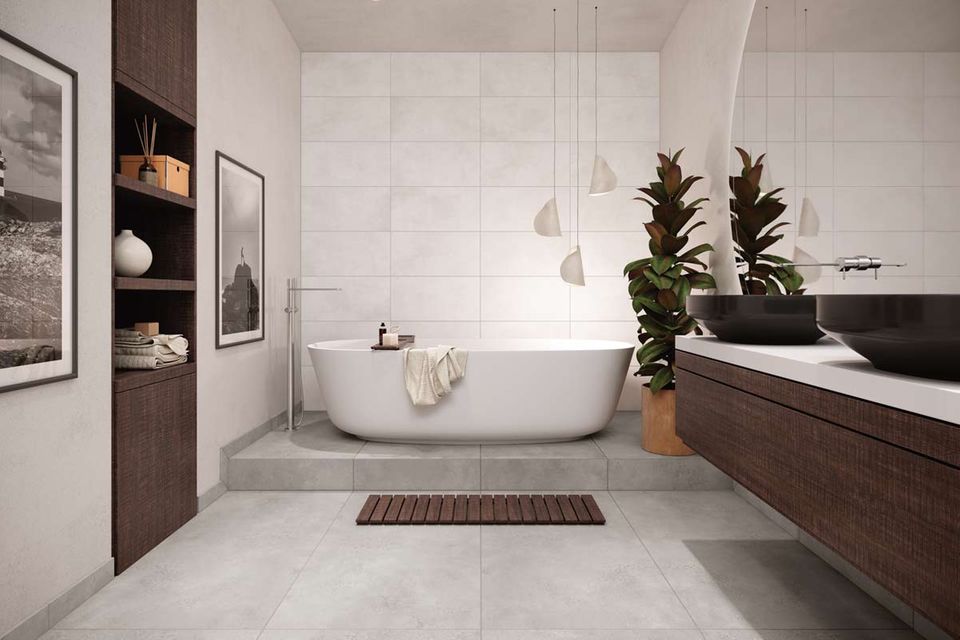
Digital prints are becoming more precise, porcelain stoneware technically better. In 2026, this means stone looks that are almost indistinguishable from the original. Marble with quiet veining, concrete in restrained nuances, slate with matte depth. Unlike natural stone, the slabs remain easy to care for, acid-resistant, and dimensionally stable. Those seeking a clear, reduced aesthetic find a robust solution here – without having to forgo impact.
Terrazzo Reinterpreted
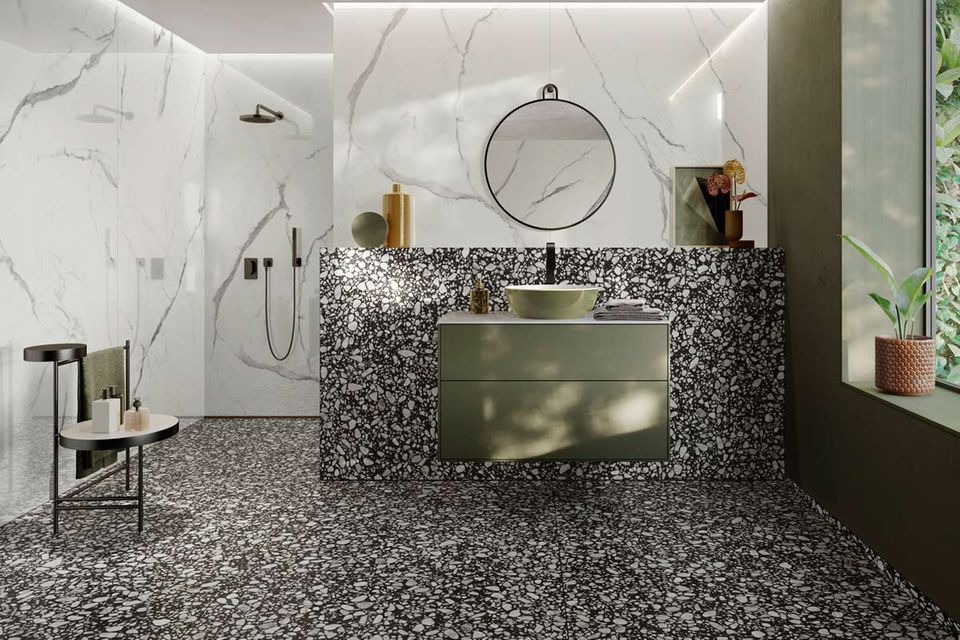
The terrazzo trend remains but changes its form: less colorful, less contrasting, instead more finely speckled and scaled more modernly. Micro-terrazzo appears almost textile, while large-grained variants are used deliberately graphically. Popular are floors that appear poured and visually hold large spaces together. Color is crucial: neutral base tones with precisely placed particles instead of loud patterns. This keeps terrazzo timeless – and loses its retro character.
Vintage, Pattern, and “Pattern Splicing”
Patterns are returning but feel subtler: not as a wall full of ornaments, but as controlled interventions. "Pattern Splicing" – the conscious combining of different pattern areas – characterizes many new collections. Cement-tile looks, patchwork, graphic micro-patterns: they are used strategically to define zones or create focal points. In small rooms more punctually, in large areas as rhythm creators. The trend follows a clear principle: patterns may play, but never dominate.
Source: Read the original article | Published: December 17, 2025