
Editor's Note
This editor’s note highlights the key facts and market implications behind “Lombardy Region Grants Up to 50% for Constructio”, with emphasis on sourcing, product fit, fabrication, logistics, or buyer impact.
Description
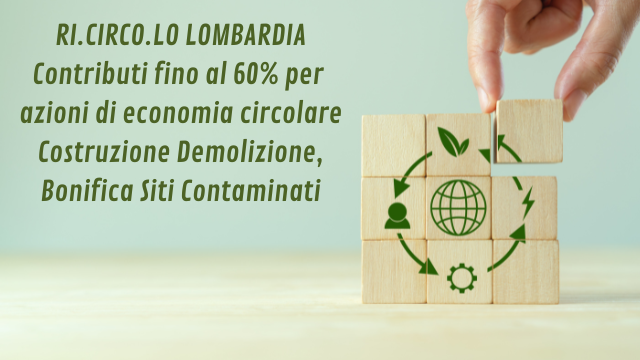
Lombardy Recycling Call: Incentives for Lombardy's Small and Medium Enterprises with non-repayable grants for circular economy projects, remediation, and recovery of construction and demolition materials. Encourages investments in plants, technologies, and innovative processes to reduce waste and promote sustainable reuse. A concrete opportunity for green innovation in Lombardy. The grant supports the prevention of construction waste, recycling, and valorization of construction materials within the construction and demolition supply chains and the remediation of contaminated sites. This edition is dedicated to the construction and demolition supply chains and the remediation of contaminated sites. Manufacturing companies with metal welding activities are also eligible to apply for the grant.
Beneficiary
Who are the beneficiaries of the call? Lombardy's Small and Medium Enterprises, including startups and innovative companies, either individually or in aggregated forms (such as networks and consortia). Companies must be regularly established, registered, and active in the Business Register, with a headquarters or operational unit in Lombardy, activated even just in view of the final payment. This edition is dedicated to the construction and demolition supply chains and the remediation of contaminated sites. Manufacturing companies with metal welding activities can also access the grant (Welding companies: do not automatically belong to the C&D (construction and demolition) supply chain. However, they may qualify if they demonstrate a direct link with the construction industry or with the management/recovery of metal waste derived from C&D.)
✅ Possible Cases of Eligibility
Recovery and reuse of demolition materials (concrete, bricks, clay products, wood, glass) to transform them into recycled aggregates destined for new construction sites.
Recycling of construction and demolition waste (inert materials, asphalt, uncontaminated excavated soil) with mobile or fixed plants that produce certified "end-of-waste" materials.
Industrial symbiosis between construction and demolition companies: agreements to send residues to treatment plants, reducing landfill use and reusing materials in production cycles (e.g., recycled concrete for road sub-bases). Remediation and valorization of contaminated sites, with interventions that recover materials otherwise destined for hazardous waste and reintegrate them into safe production cycles. Recovery of metal scraps (welding offcuts, sheet metal, demolition scrap, defective parts) to be used as secondary raw material for companies in the construction supply chain (e.g., metalworking). Production of metal components for construction (beams, fixtures, prefabricated structures) redesigned for greater durability, disassemblability, and recyclability, also through certified recycled metals. Process innovation in welding companies: introduction of recycled alloys, reduction of offcuts, or use of alternative materials to lower the consumption of virgin raw materials.
✅ Practical Examples
A demolition company recovers crushed concrete and transforms it into recycled aggregates for road sub-bases or new construction works.
A construction company launches an industrial symbiosis project, sending inert waste to a recycling plant that reintroduces them as "end-of-waste" materials in other construction sites.
A remediation company treats contaminated soils by separating the reusable fraction and directing it for reuse in civil works. A metalworking workshop serving the construction industry redesigns its products with a focus on disassemblability and reuse , extending the lifecycle of structures. A welding company that receives metal scrap from demolition remelts it and reintegrates it into its own production, reducing the consumption of virgin steel.
A welding laboratory reduces offcuts by sending them as certified by-products to foundries that transform them into components for construction.
Incentive
What are the incentives provided? Non-repayable grant with intensity: 60% for small enterprises, 50% for medium-sized enterprises, both under the De Minimis Regime and according to EU Reg. GBER Art 47. For ecological interventions provided for by GBER Art. 17: 20% (small) and 10% (medium), up to €1.5 Million. Maximum grant amount: up to €1,500,000 per project . Total allocation: €10 million . Minimum eligible expenditure: €50,000 (VAT excluded).
Contribution Examples
Small enterprise with €100,000 of eligible expenditure → 60% = €60,000 grant. Medium enterprise with €200,000 → 50% = €100,000 . Small enterprise applying Art. 17 GBER: 20% on €1.5 Million = €300,000 .
Deadline
What are the application deadlines? Opening: September 30, 2025, 9:00 AM Closing: November 7, 2025, 4:00 PM
Eligible Interventions
What projects are fundable? The measure relates to actions of industrial symbiosis, prevention of waste production, recycling, and valorization of materials in the construction and demolition supply chains and the remediation of contaminated sites. For the supply chains of construction material production and recovery of construction and demolition waste, there is a need to obtain quality recycled materials to be valorized for their wider use in substitution of virgin material. 1. Material investments (capex) New factory machinery, plants, and equipment (minimum share 30% of the project): Plants for the selection, crushing, treatment, and recycling of C&D waste; Machinery for selective demolition, material separation, and preparation for reuse;
Source: Read the original article | Published: September 30, 2025