
Editor's Note
This editor’s note highlights the key facts and market implications behind “Hygienic Countertops”, with emphasis on sourcing, product fit, fabrication, logistics, or buyer impact.
Food travels from preparation to plate and from there to the mouth – it's good if it doesn't get contaminated or come into contact with harmful substances along the way. Kitchen countertops in particular must meet many challenges: they should be scratch-resistant, stain-resistant, and heat-resistant, as well as easy to care for and, ideally, look good. Above all, however, they should have antibacterial properties so that germs don't touch the food during daily meal preparation and bacteria cannot multiply.
Most countertops are made of plastic or wood. However, even hardwoods are not scratch- and impact-resistant, only conditionally heat-resistant, and swell quickly when exposed to moisture. To prevent bacteria from collecting in the cracks and to make the natural material more durable, you can either impregnate it with oil or seal it with a special varnish. However, oils and waxes can in turn emit pollutants – so caution is advised here. Plastic countertops made of laminate or composite have the advantage of being robust and inexpensive. However, they can contain harmful chemicals in glues and adhesives.
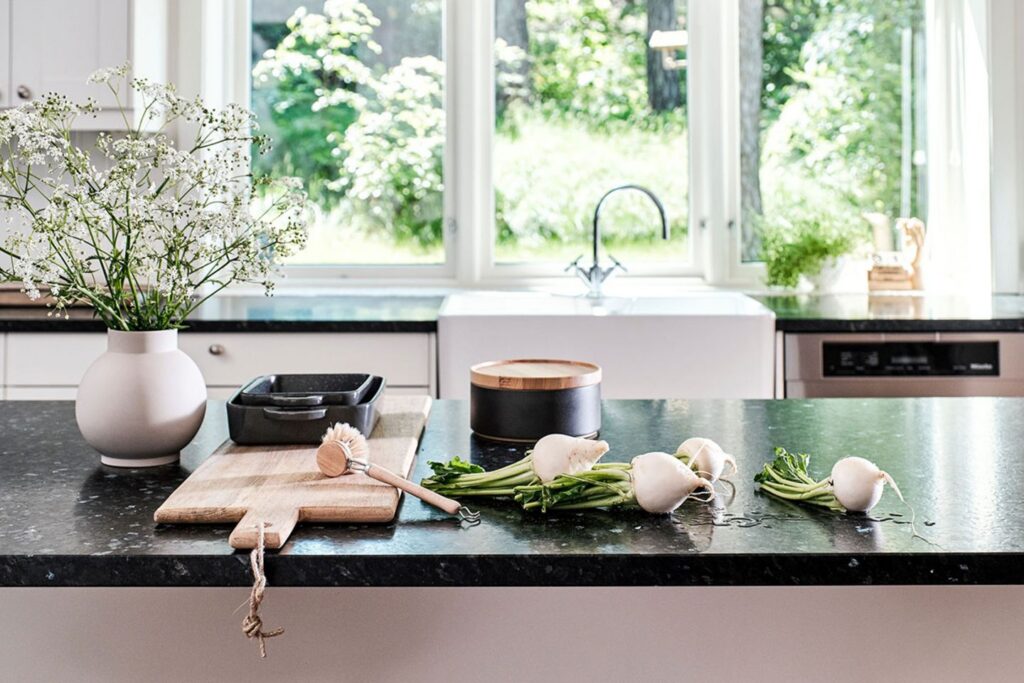
A safe alternative: Materials such as natural stone, quartz, or ceramic have high density and non-porosity. This means: liquids and germs cannot penetrate the countertop due to the closed surface. This property makes the materials extremely hygienic and ideally suited for the healthy home kitchen.
Source: Read the original article | Published: February 18, 2021