

Editor's Note
This editor’s note highlights the key facts and market implications behind “Material Index: The UK’s Expert Group Taking Ful”, with emphasis on sourcing, product fit, fabrication, logistics, or buyer impact.
Reusing building materials—the concept is simple, but its implementation comes with numerous barriers. In the UK, only about 2% of materials from demolition projects are reused.
Identifying reusable materials before a building is demolished and connecting them with the right buyers. This entire process is handled by the UK-based startup "Material Index." This article explores the company's business model and perspective based on interviews with its founders and team members.
The ‘Material Connoisseurs’ Between Demolition and Construction: What is Material Index’s Business Model?
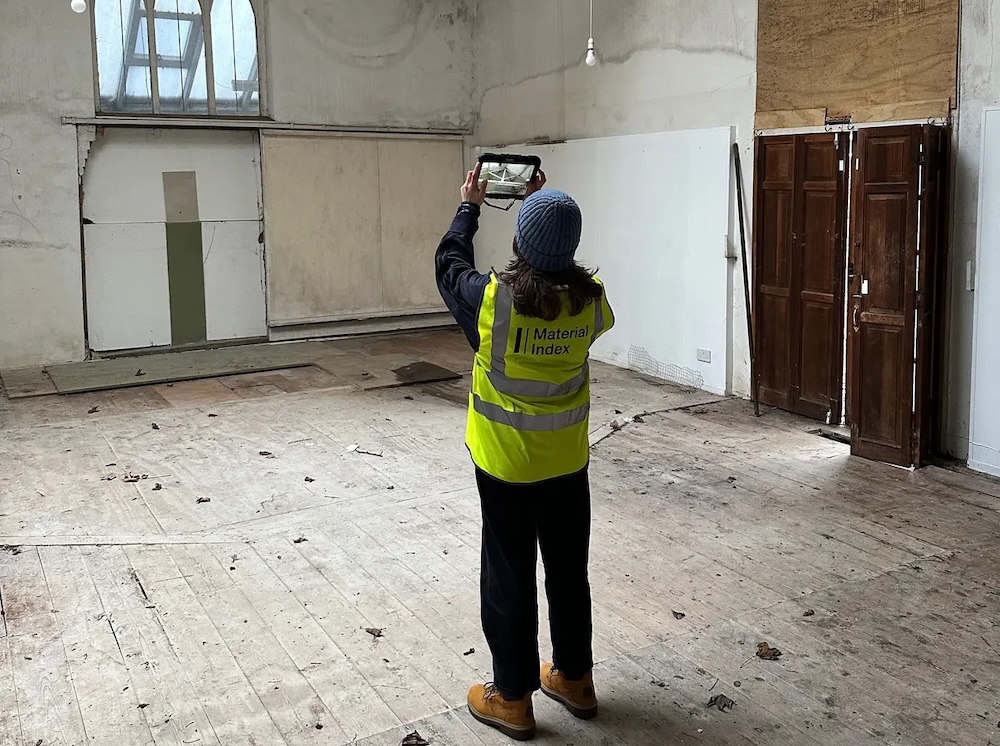
Material Index gets involved with materials before demolition. The company's audit staff visits sites scheduled for demolition to select and evaluate reusable materials. This information is registered in a database, a sale price is determined based on past transactions, and the company then handles the sale, transportation, storage, and re-certification processes. The client selling the materials (the building owner) simply needs to review and approve the sale price offered by Material Index and any additional demolition effort required for reuse, then wait for the company's report.
On the other hand, buyers of materials can search and browse the registered material information in the database through the company's platform, "Material Exchange."
This one-stop solution reduces the burden for both sellers and buyers of reused materials, significantly lowering the psychological barrier to material reuse. The range of materials targeted is broad, including bricks and steel frames, and extends to equipment that is difficult to reuse. The company receives inquiries from various demolition projects, including offices, universities, factories, and hotels. Buyers are also diverse, including contractors, building owners, and individual buyers.
Material Passports for Traceability
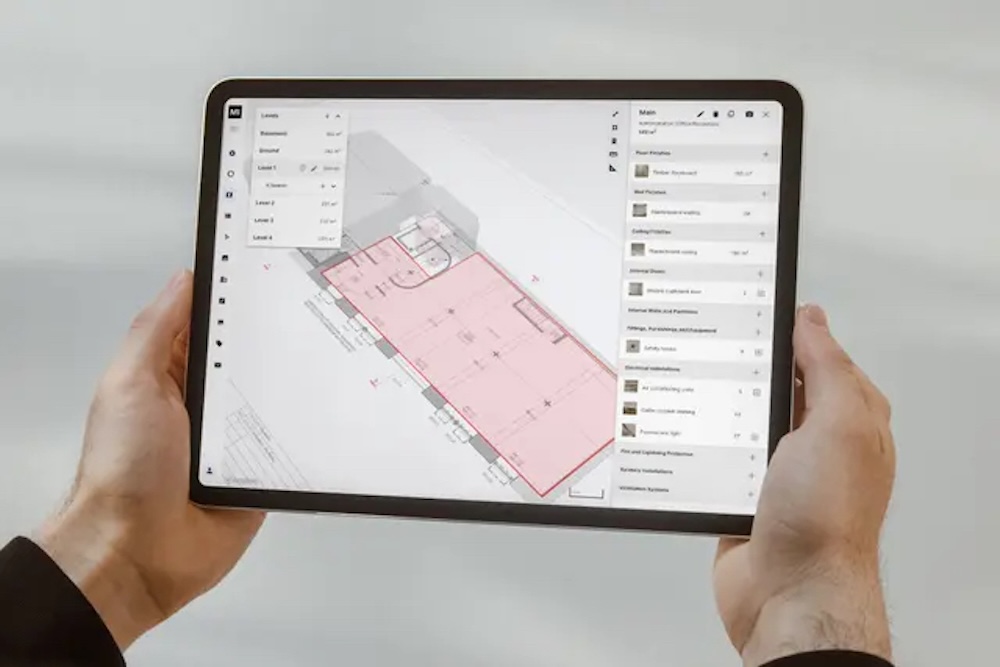
Furthermore, Material Index offers a service to conduct audits during construction or renovation and create "Material Passports." Using a Material Passport developed in-house, the system links photos and material information captured on-site with drawings, etc., to achieve material traceability. At the time of demolition, the data can be connected to "Material Exchange" to deliver information to buyers.
The advantage of conducting audits during construction or renovation is the ability to collect detailed material information, such as product specifications, from suppliers. The more comprehensive the information, the higher the potential for reuse. While Material Passports, like those from Madaster, are often developed for a wide range of purposes—such as future reuse, lifecycle assessment, and real estate value estimation—for new builds or existing buildings intended for long-term use, Material Index's "Material Passport" is distinctly focused on reuse. It's also noteworthy that the company ensures "reliability" for reuse by having staff physically verify the materials. This unique practicality has already attracted significant attention, with many inquiries coming from abroad.
The Founders: One a Seller, One a Buyer of Reused Materials
Material Index was founded in March 2023.
Co-founder Rob Smith was previously involved in facility development and tenant space demolition. "I've had a strong interest in sustainability since I was a child," said Smith, who aimed to reuse demolition materials and resold them on online marketplaces but often couldn't sell them at the desired price.
The other co-founder, Morgan Lewis, was previously an architect. He aimed for sustainable construction and wanted to use reused materials but was frustrated by the limited supply.
"We were on opposite sides of supply and demand. One wanted to sell reused materials, the other wanted to buy them, but the market at the time didn't connect them well. So, we started a business to match sellers and buyers," Smith said.
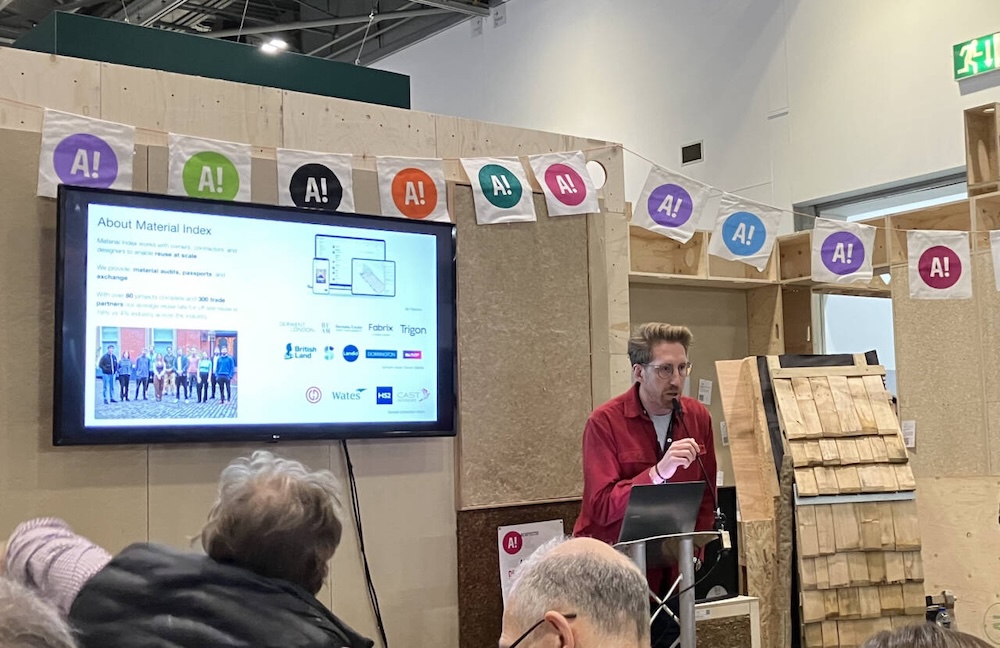
Leveraging the knowledge and networks of the two founders and others, the company is rapidly expanding its client and partner base.
The Key to Success: The ‘Pre-Demolition Audit’
The company places particular importance on the "Pre-demolition audit" within its process.
"For example, tiles that might originally be worth thousands of pounds can appear to be worth only £500 once they're demolished and piled up. The actual sale price might be around £300. I learned from my previous job experience that the value of reusable materials is highest when they are still in their 'rightful place' before demolition," Smith said. Conveying the pre-demolition state of materials to buyers is one of the key purposes of information collection during the pre-demolition audit.
Furthermore, it's crucial to conduct the audit as early as possible after the decision to demolish is made. It can take time to find a buyer for the materials, so an earlier audit increases the chances of a match. According to Olivia Daw, who leads the audit team, materials judged to be reusable are tagged on the spot with paper tags. These tags serve as an important communication tool with demolition contractors to prevent reusable materials from being mistakenly destroyed. This is one of the refinements born from accumulating reuse experience.
All audit staff have a background in construction, using their on-site judgment and understanding of materials to act as "connoisseurs."
Prioritizing a Feasible System Over Sales Profits
The company aims to generate revenue from commissions on material sales. However, for now, audit fees are the main source of income. The reused materials market is far from mature, and many selected materials remain unsold. Nevertheless, there is no shortage of clients wanting to use the company's services.
"The fact that conducting a pre-demolition audit itself contributes to BREEAM (the UK's environmental assessment scheme) scores is one reason clients choose us. But more than that, I feel many clients genuinely want to 'have a positive impact on society'," Smith said.
In BREEAM, conducting an audit before demolition to identify reuse and recycling potential is one of the requirements for earning points. Various entities conduct these audits, with demolition contractors often handling them alongside site surveys. However, how much material actually gets reused depends on the audit staff. For companies prioritizing sustainability, choosing Material Index, which is fully committed to reuse, holds significant value.
Making Reuse ‘The Norm’
Reuse is an environmental measure that should be prioritized over recycling, but on many sites, it is still often considered idealistic. For many businesses, it's uncharted territory, with challenges including quality assurance, distribution infrastructure, and traceability.
Amidst this, Material Index is demonstrating a practical operational method and dispelling the "resistance to the unknown" regarding reuse. For sellers, the ability to outsource tasks like material selection, transportation, storage, and matching to experts is appealing, and financial risks are clearer. For buyers, receiving information directly from Material Index, the party that selected the materials on-site, offers transparency and greater peace of mind.
"There's still a mountain of work to do," Smith said. The market is still developing, and not all challenges related to reuse have been solved. Even so, Material Index is steadily paving the way for the widespread adoption of building material reuse.
Source: Read the original article | Published: August 20, 2025