This editor’s note highlights the key facts and market implications behind “[Report] Designers Discuss the Osaka-Kansai Expo”, with emphasis on sourcing, product fit, fabrication, logistics, or buyer impact.
Sustainability at the Expo from a Building Materials and Materials Scale Perspective
While it's often said that the goal is to recycle the pavilions themselves or the building materials used, upon closer examination, "substance" refers to things with mass like iron, wood, or stone; "material" refers to these processed for a specific use; and "building material" refers to items prepared based on design to create a final product. For example, when using wood as a building material, it's not just about "using a lot of wood." We must understand the environment in which it was grown and consider how to use it without waste. Within this context, we took on the challenge of treating marine plastic waste as a "material."
Sustainability at the Expo from a Building Materials and Materials Scale
— When designing and planning the pavilions and facilities, what criteria were used to select the materials and building materials?
There are many recycled building materials available now, but from a circular economy perspective, recycling is not the end goal. This is because awareness of environmental improvement has stages. For example, looking at the R.LADDER diagram, the circular economy is closer to the top, while recycling is positioned at the end of the consumer society. Recycling is important, but it is a solution within the framework of human consumer society. We must also consider higher-level actions like "refuse" and "rethink."
I want building material manufacturers to consider this as well: it's necessary not just to think with recycling as a premise, but also to REFUSE and RETHINK. In our design practice, we consider whether end-of-life design is incorporated to be crucial, and we approach the sustainability of architectural materials with this perspective in mind for our designs. From the outset, we considered how the Merchandise Pavilion could be reused both in its complete form and at the building material level, which led us to focus on marine plastic as a material. Marine plastic is versatile, with infinite possibilities for use. It can become something artistic or be crushed and remolded. The 5,000 panels from the , which was dismantled last November after being exposed to sea breeze for six months, are currently stored at our company's technical research institute. At this Expo, there are overseas pavilions planning to reuse their building materials in their home countries and architects in Japan working on reuse, but it's truly difficult. There are no established systems, frameworks, or subsidies. When it comes to relocating or reusing a structure, the budget of the receiving municipality or business is naturally required, but each party has its own circumstances, making coordination complex. If relocation ends up costing more than new construction, most municipalities would simply choose to build anew rather than go through the hassle of relocation coordination.
We designed with the aim that the building could continue to be used by returning to its structure, building materials, and constituent materials. When advancing the Expo project, thinking about "after the event period ends" was very important. People might think marine plastic waste is "free material because you just pick it up," but even if the raw material is cheap, labor and research costs are extremely high. It's tough without a system where the organization has a message for society and receives backing.
In that sense, I'm glad the Expo happened. Otherwise, we wouldn't have been able to attempt designs and experiments anticipating reuse from the start, and we wouldn't have seen the challenges. Not limited to the Expo, I believe government and municipal framework development and budgetary support are essential for future reuse and building material recycling.
FEATURE: Sustainability at the Expo 2025 from a Materials Perspective
The 2025 Osaka-Kansai Expo was held under the concept of a "Testing Ground for Future Society." In the architectural field, alongside pavilion reuse, sustainable architecture, and the dissemination of new technologies, numerous proposals for building materials conscious of reducing environmental impact and promoting circularity were seen.
On January 23, a talk event themed "Material Sustainability" was held at the ABC Shokai Osaka Showroom, using pavilions and facilities featured in the 2025 Osaka-Kansai Expo as a starting point. Three groups of architects/designers involved in Expo architecture discussed the environmental and social significance of architectural material choices, introducing their design backgrounds and covering topics like concrete utilizing seawater, upcycling marine plastic waste, architecture using 3D-printed cellulose acetate, and issues related to pavilion relocation. This report covers the presentations and discussions where each approach was explained.
Presentations: Sustainability Initiatives in Pavilion and Facility Design
First, each architect/designer discussed how they became involved with the Expo, the background behind their concepts, and their specific initiatives. Architecture Built Upon Marine Resources
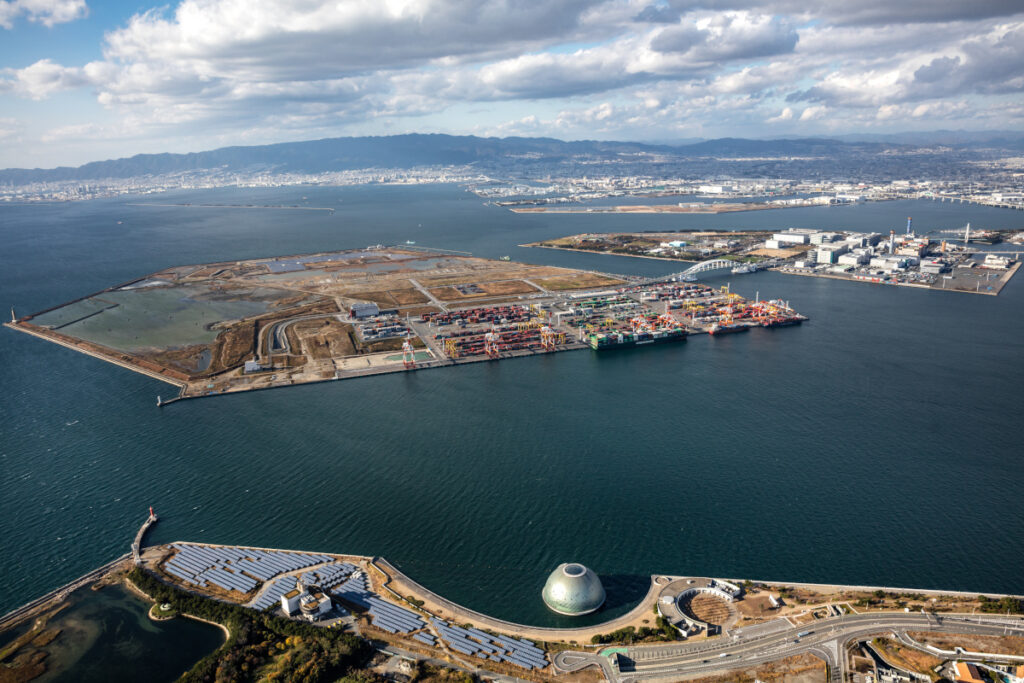
I got involved in the pavilion design from 2021 and first visited Yumeshima in May 2022. At that time, there was nothing around, and standing on the site, you could feel the sea. From that early stage, with "the sea" as a keyword, I worked to visualize through this pavilion the idea that "architecture is not merely an act of [building], but a process that circulates within society and nature."
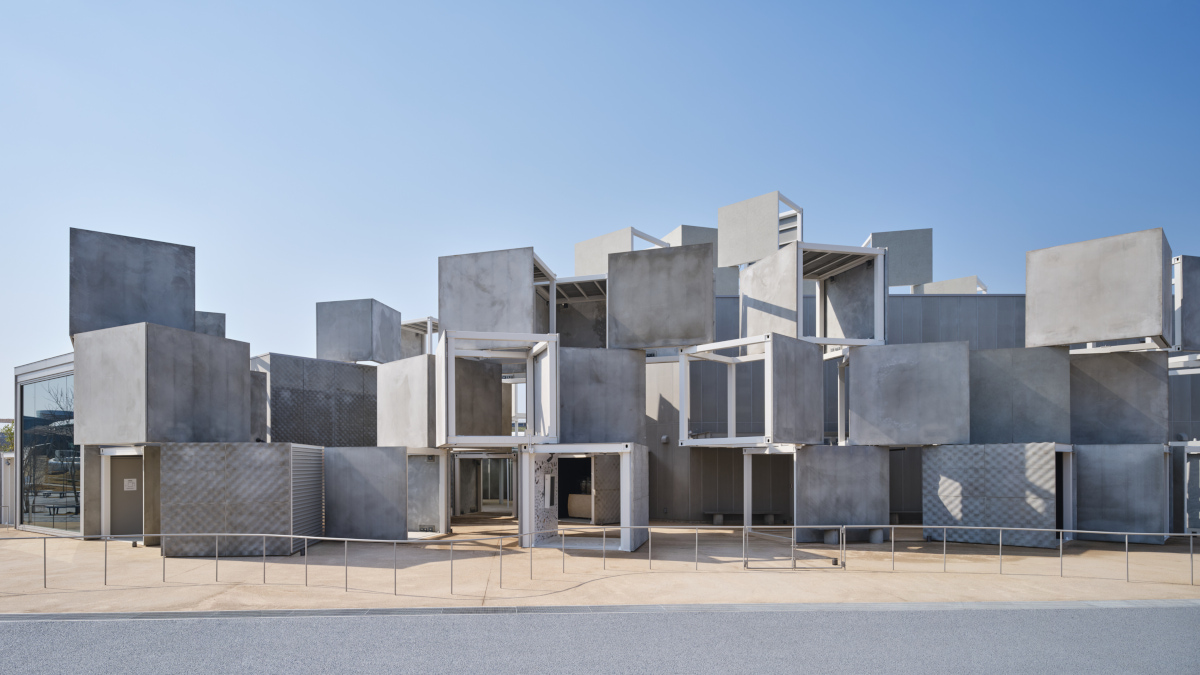
Humans are beings that develop while continuing creative activities, but as a result of anthropocentric thinking, we have plunged the global environment, including flora and fauna, into crisis. Rather than building and demolishing temporary structures like past Expos, I made "absolutely succeeding in reuse" my personal commitment. I formed a research team including a project manager, cultural anthropologist, and environmental engineer, and started the project with the concept of Restorative Design (design for restoring nature). Designing Considering Environmental Impact at Manufacturing and Relocation Stages For , within the exhibition plan of the Expo (which is neither a museum nor an art museum), we conceived architecture that makes you want to spontaneously explore by combining units, like entering crevices in a rocky shore and wanting to go deeper inside. Compared to one large building, the easily constructable and relocatable structural units (cells) are made using container modules with details designed for production in existing factories. They are shipped by boat from Qingdao, where the factory is located, to Osaka Port, and land transport is used only for the shortest distance from Sakishima to Yumeshima, thereby suppressing CO₂ emissions. Demonstrating the Idea of Replacing Freshwater Consumption with Seawater, a Global Challenge Hybrid Prestressed Concrete (HPC®) was adopted for the cubic cell structures. These concrete panels use carbon wires instead of traditional rebar. By not using rebar, they are free from rust, allowing for the potential use of materials containing chlorides like seawater, fly ash from factories, dredged soil (which poses disposal problems), and shells.
Dredged soil from maintaining shipping lanes causes plankton to rise, increasing fish catch, but once brought ashore, it becomes industrial waste, posing a disposal problem. After two years of various material experiments with dredged soil mix ratios and seawater mixing, we found that using seawater resulted in high-performance concrete panels, and we considered it to have the message of using Osaka Bay seawater. Drawing water from Osaka Bay required coordination with various related organizations like the port office and fisheries cooperatives—a difficult task for an architect alone—but was achieved with the research team's cooperation. I anticipated many wood solutions would emerge for an Expo held in this era, so I deliberately confronted concrete, which requires significant CO₂ emissions and energy for production and consumes vast amounts of freshwater. I believe seawater-mixed concrete will become a solution to freshwater depletion issues in the future. Marine Plastic Waste: A Message from the Expo Site
The is a facility next to the EXPO Arena for event merchandise sales etc. With the aim of spreading the concept of a circular economy, the project started with company employees personally collecting marine plastic waste, using upcycled exterior materials. Since Yumeshima was a landfill site, tackling the marine debris problem became the concept, starting from the question, "What kind of architecture could contribute to solving this problem?"
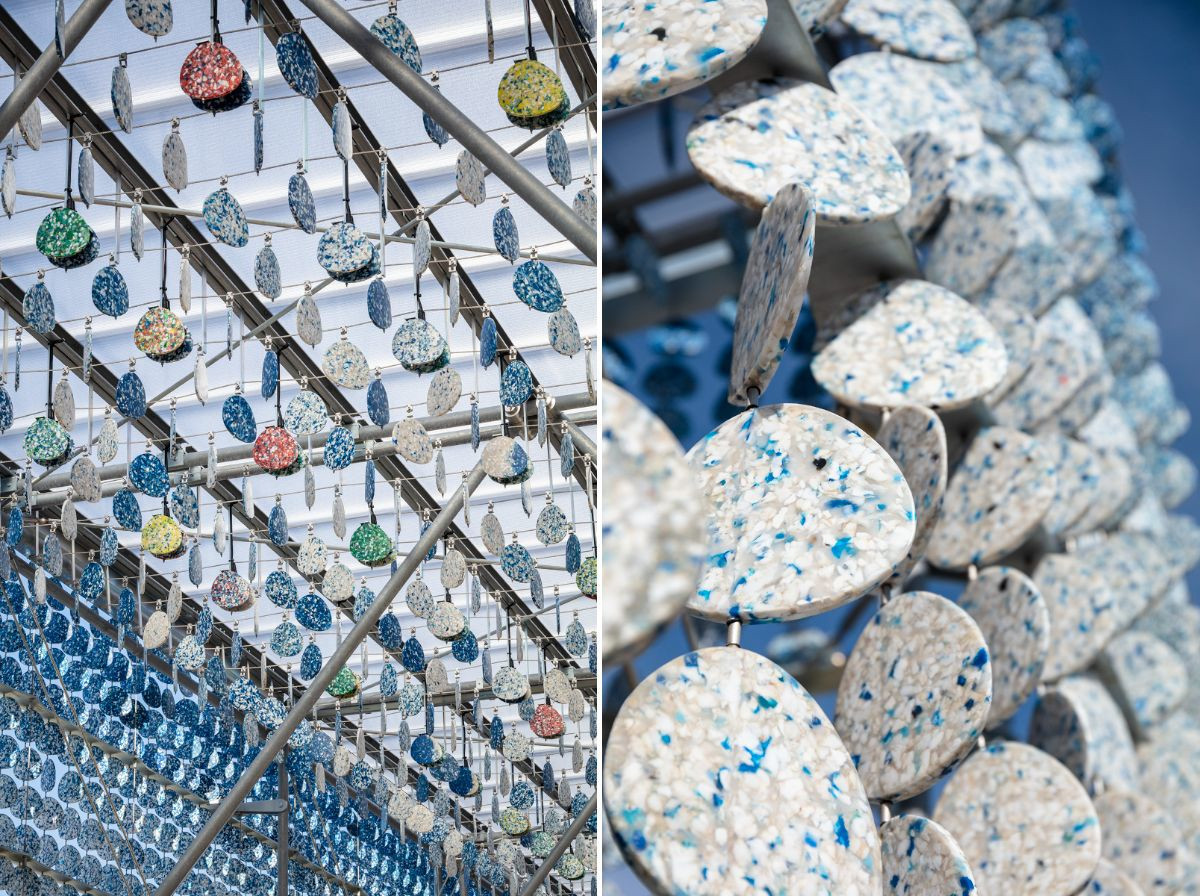
It's said 8 million tons of waste flow into the ocean annually, and by 2050, it will equal the total weight of fish. Our employees actually conducted beachcombing in Tsushima, Nagasaki, where waste drifting from China and Korea due to ocean currents and wind is a serious problem, and collected plastic waste. The collected marine plastic waste was cut and crushed by a disability support group in Itoshima, then weighed and molded. Thus, the exterior material "Umikuru" for the , made 100% from marine plastic waste, amounts to 5,000 panels.
When visiting the Yumeshima site, the blue sky and strong wind were impressive, leading to the idea of architecture resembling a school of fish swimming against the wind. Therefore, "Umikuru" panels were arranged in vertical columns of 16, suspended by SUS wires to create a mechanism that lets wind pass through, with a form that maintains a stable angle against wind direction, verified by wind tunnel testing.
The pipe clamps were also originally designed, allowing transformation into different architectural forms or easy modification at relocation sites. During the Expo period, there was an inquiry from a municipality about relocation and use. Currently, there are internal proposals to repurpose part of "Umikuru" as partitions as a legacy item. I think it's precisely something that allows free consideration of next uses and diverse applications.
If visitors to the see "Umikuru" and wonder, "What is this made of?" then perhaps the material has acted upon people, and giving value to waste has been communicated through architecture.
Fiber Pavement Utilizing Reeds with Water Purification Function
Also, the floor is finished with pavement made of reed chips. Reeds produce oxygen through photosynthesis and have the function of absorbing nitrogen and phosphorus from soil and water to purify it, but dead reeds need regular cutting to promote new growth. Therefore, as a local production for local consumption effort, reeds were sourced from the Udono Reed Bed in the Yodo River, made into chips, and a pavement material "Yoshirug" mixed with resin was developed.
Because resin is mixed in, it has an odor, making indoor use difficult, but since it's made from naturally degrading resin and natural reeds, adoption in facilities like parks or as pavement material is considered feasible. Architecture Thought of Like Biological Cycles
I experienced the Great Hanshin-Awaji Earthquake in elementary school and witnessed an enormous amount of architecture becoming waste. Also, I was shocked by photos of Beijing Olympic venues becoming ruins and piles of waste ten years later. Since then, I've been thinking, "Why does architecture become waste? How can we make architecture something that isn't discarded?"
Considering Architectural "Lifespan" from Earth's Cycles, Not Just Relocation or Reuse
If a building's structure is sturdy, does it mean its lifespan is long? Not necessarily. Horyuji Temple is wooden but has stood for over 1000 years. I realized that even with weak materials, if humans continue to care for them diligently, a building's lifespan can be prolonged. Thus, I began to think, "Perhaps a building's lifespan is influenced by human attachment."
The temporary buildings used in the Expo have a predetermined lifespan of only six months. Therefore, I conceived architecture that, like the "Kusōzu" (Buddhist paintings depicting a person after death, decaying, being eaten by animals, and plants growing there), returns to Earth's cycles through decay, hoping visitors would reconsider the relationship between architecture and people.
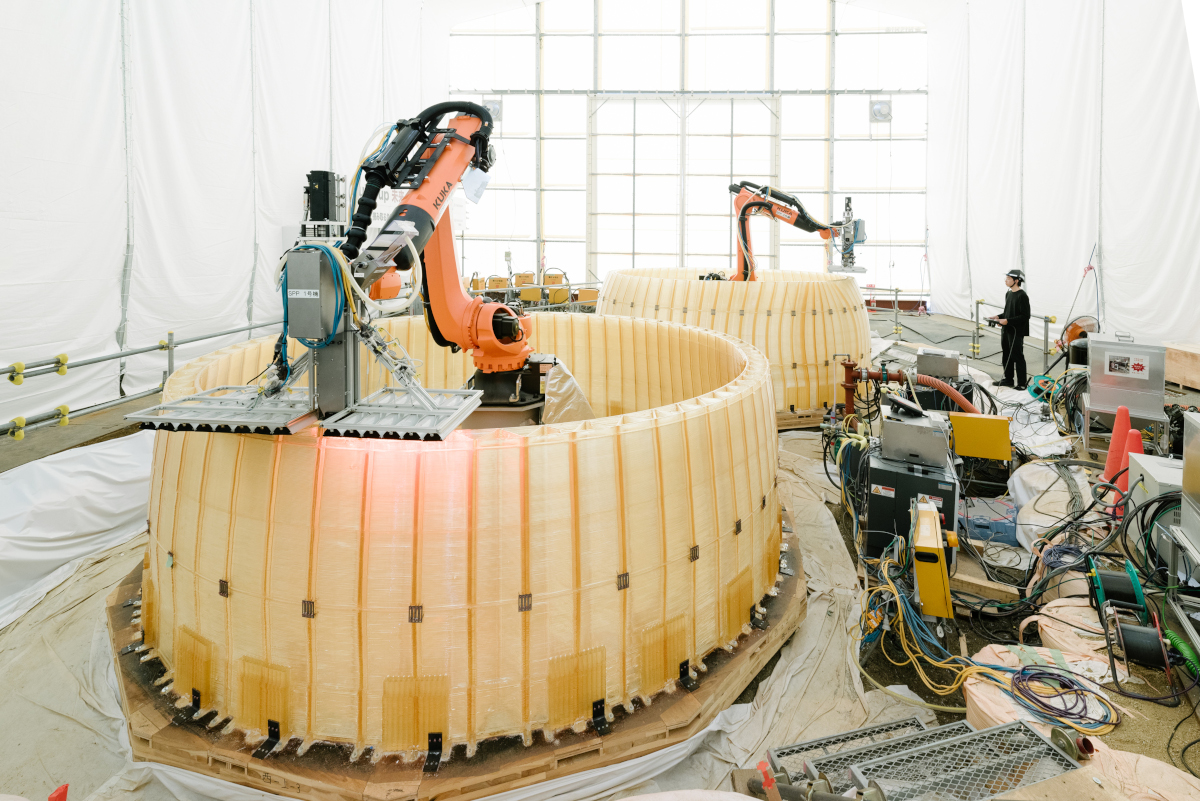
is 3D-printed from wood-derived cellulose acetate resin, forming its own structural body without reinforcement like rebar. As it was to be a rest area freely accessible to the public, building confirmation approval was required. Creating architecture with such a structure was a world-first attempt, so various experiments were repeated to somehow make it in time for the Expo. After its Expo mission ends, this architecture is expected to take about 20 years to be decomposed by microorganisms and return to soil. Architecture that is cared for and used lovingly, eventually decomposed by microorganisms to become a forest.