
Editor's Note
This editor’s note highlights the key facts and market implications behind “The Quartz Watch Revolution Among Collectors: Wh”, with emphasis on sourcing, product fit, fabrication, logistics, or buyer impact.
For watch enthusiasts, collecting has almost always been linked to mechanical movements. The watches that have attracted so many fans over the past decade and a half have been rugged, utilitarian designs. Getting excited about a watch with a quartz movement was not only unusual but sometimes even laughable.
“When you’re a watch enthusiast and make a considered purchase, you might not understand the mechanical movement,” says James Lamdin, founder of the vintage and pre-owned watch marketplace Analog:Shift. “I’d bet most people really don’t. But you want to know it’s there.”
There's a certain romance in gears and springs that doesn't translate to a watch that uses a battery to oscillate a quartz crystal at 32,768 hertz, he explains. It's like cheating. Even after the 'quartz crisis' of the 1970s and 80s shook the industry by introducing a new class of cheap, easy-to-use watches, many manufacturers and collectors remained analog.
Until recently. The surge of interest in watches, along with a natural inclination for novelty, has inspired some potential buyers to seek out new and different categories. Many of these intrepid enthusiasts have moved from the mid-20th century—the historical heyday of watches—to the 1970s and 80s, when more flamboyant styles had their moment.
Designs from Cartier, Bulgari, and Piaget—pieces that were "watches second, jewelry first," as Lamdin says—have seen a sharp rise in popularity. Quartz movements have largely powered these watches. Thinner and cheaper than mechanical ones, they help both in price and design when selling a fine dress watch made with a precious metal that already drives up the cost. Furthermore, while the tradition of mechanical watches is well-known today, quartz was considered cutting-edge when many of these influential pieces debuted.
“Frankly, in terms of collectibility, appeal, and value, they have completely different rules than collector mechanical watches,” states Lamdin.
That's why not even watch enthusiasts bat an eye when they see a quartz Cartier Panthère or a Bulgari Tubogas on the red carpet. Just look at the wrists of figures like Paul Mescal and Colman Domingo to realize these small gold watches have become a staple of pop culture. But it's not just celebrities. Everyday collectors are also buying avant-garde design quartz watches in droves.
“For me, Piaget is the most important brand of the moment,” says Lamdin. Other jewelers and watchmakers are no less valid in terms of collectibility, he continues. “Piaget encapsulated the 70s and 80s in such a way that it’s on everyone’s lips.”
Interestingly, prices for Piaget's flagship pieces, like the Polo and the Warhol, haven't risen yet. They certainly aren't cheap, as you're still typically paying for a good chunk of gold. But compared to the sky-high prices some steel watches commanded just a few years ago, the market for high-fashion watches with quartz movements seems frankly reasonable.
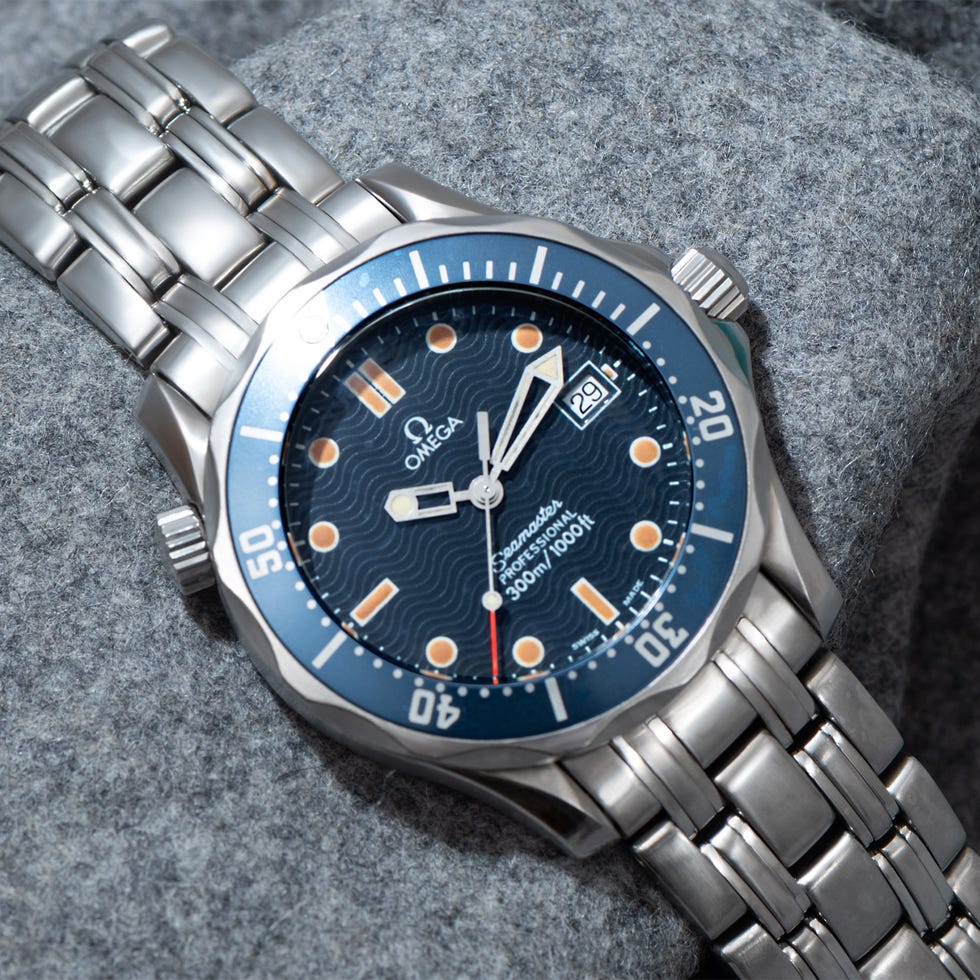
If ostentation isn't your thing, there are some impressive specimens that are much more functional. For example, the quartz Seamaster from Omega released for the 1995 film GoldenEye. While Lamdin acknowledges it's "a nostalgia play," it remains a desirable piece. Similar quartz watches can be found from manufacturers with mechanical leanings like Rolex and TAG Heuer.
Does this mean soon all certified watchmakers will opt for the tick of a quartz movement over a mechanical sweep second hand? Maybe not. But right now, if you want to show you really know what you're doing, having a little piece of quartz in your watch is a good way to do it.
Source: Read the original article | Published: February 06, 2025