
Editor's Note
This editor’s note highlights the key facts and market implications behind “15 Industries That Rely on Quartz and Provide Th”, with emphasis on sourcing, product fit, fabrication, logistics, or buyer impact.
On Thursday, May 25, 2023, President Abdel Fattah El-Sisi inaugurated the quartz production factory complex in Ain Sokhna via video conference. He also inaugurated the primary quartz ore crushing plant in Marsa Alam city in the Red Sea Governorate.
The quartz production factories represent the first project of its kind in the Arab Republic of Egypt, the Arab world, and Africa. It serves as a model for the integration of the entire production process, starting from the extraction of quartz ore, its crushing, and then grinding it into granules of specific sizes and specifications. Part of the output is used in the manufacture of quartz slabs, with the surplus being exported or used in other industries.
The project aims to exploit the natural raw materials available in Egypt, which contributes to maximizing the added value of quartz ore and increasing national income. It meets market needs, saves hard currency, and fulfills the local market's demand for quartz slabs needed for equipping hospitals, hotels, and other facilities instead of importing them. Additionally, it implements manufacturing activities for mineral raw materials, including quartz ore, through various stages to maximize their return and achieve added value, supporting the national economy through the implementation of national and strategic projects to create job opportunities for youth.
Quartz is widely used in a broad range of industries and sectors due to its specific physical, chemical, and electrical properties, creating thousands of job opportunities in the industries it enters. According to the "Geology" website specializing in minerals and geology, the most important industries that use quartz are as follows:
Jewelry and Gemstone Industry
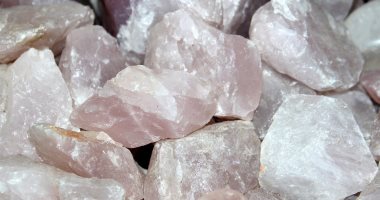
Quartz has been used in jewelry production and as gemstones for centuries. Its hard nature, polishability, crystalline shape, and durability make it an excellent material for this purpose. Examples of quartz commonly used as jewelry and gemstones include citrine, amethyst, rose quartz, agate, opal, and jasper.
Glass Industry
The glass industry is one of the primary uses of quartz. Silicon dioxide (which must be exceptionally pure at 99.9%) is melted and left to cool into any shape desired by the manufacturer. Some quartz crystals are used in the manufacture of lasers, microscopes, telescopes, electronic sensors, and scientific instruments.
Watchmaking Industry
Quartz crystals contain oscillators capable of vibrating at precise frequencies that help regulate the movement of the watch, making them accurate timepieces without delay.
Metal Casting Industry
Quartz sand is mixed with binding agents such as clay, resinous sodium silicate, and oil. It is used for the purpose of casting and shaping metals due to quartz sand's specific properties, such as a high melting point and high heat resistance. Fine-grained (small particle) quartz is used for smoothing the edges of metals after cutting or casting.
Refractory Materials Industry
Quartz sand is used in the manufacture of refractory bricks due to its great strength and heat resistance. It is also used as a flux (fluxing agent) for melting the rough edges on metals after casting or cutting.
Petroleum Industries
Silica sand, along with water and other chemicals, is pumped under high pressure down into a specific rock formation through a well. The high pressure fractures the rocks, and the silica sand is injected into the cracks and fractures, holding them in place. This creates a pathway for natural gas to flow from the bedrock formation to the well. This process is known as hydraulic fracturing or fracking.
Kitchen Countertop Industry
Engineered quartz stones, manufactured from raw quartz, are commonly used as countertops and slabs in residential and commercial buildings. The non-porous property of quartz prevents it from retaining stains. Therefore, quartz surfaces are characterized by easy cleaning, stain resistance, attractiveness, and luxury.
Ceramic Industry
Quartz sand is used in the ceramic industry to make ceramic tiles. The silica present in the sand helps provide the white color for ceramic ware and contributes to the texture and shape of the ceramic.
Synthetic Crystal Industry
Synthetic crystals are grown in laboratories and are characterized by resistance to acids, rust, high temperatures, corrosion, pressure, and bending. Synthetic crystals are used in the manufacture of electronics, semiconductors, solar energy tools, and others.
Tripoli Stone Industry
Tripoli stone (or rottenstone) is composed of silica crystals. It is used for polishing jewelry and removing stains from wood. It is also used as a filler in plastics, paint, and rubber, and is also used in the manufacture of toothpaste and soap.
Electronics Industry
Just as in the production of wristwatches and clocks, quartz crystals are also used in electronics because they generate a current on their surface when bent or pressed. Quartz crystals have been used to provide precise frequency for all wireless transmitters, radio receivers, GPS transmitters, and computers. This accuracy comes because the quartz crystal is unaffected by most solvents and remains crystalline at high temperatures.
Railway and Mining Industries
Quartz sand is used in railway and mining industries due to its durability and large grains that reduce cracking. It is also used on golf courses, volleyball courts, baseball fields, children's sandboxes, and beaches.
Filler for Adhesive Manufacturing
Quartz sand and ground quartz (powder) are used as fillers in the manufacture of adhesives, putty, paint, and rubber due to their durability, strength, non-reactivity with other materials, and corrosion resistance.
Laboratory Crucible Industry
Laboratory crucibles are containers used to hold chemicals when conducting chemical or thermal tests. Quartz has a very high melting point and is chemically inert. Advantages provided by quartz crucibles include low expansion, thermal shock resistance, and excellent dimensional stability.
The mineral quartz possesses a wide range of types and colors, including crystalline quartz, which is usually colorless. According to the Mineral Information Institute, colored varieties of quartz contain impurities which explain their colors. Examples of colored varieties of quartz include:
Milky quartz, which has a white color. Smoky quartz, which has a black color. Purple quartz, usually called amethyst. Pink quartz, also called rose quartz. Citrine, which comes in yellow or orange.
Source: Read the original article | Published: May 25, 2023