
Editor's Note
This editor’s note highlights the key facts and market implications behind “Professional Exploring Design for Space, Store, “, with emphasis on sourcing, product fit, fabrication, logistics, or buyer impact.
Chapter 1: Designing Products and Spaces by Organizing the Invisible, Starting from Thought
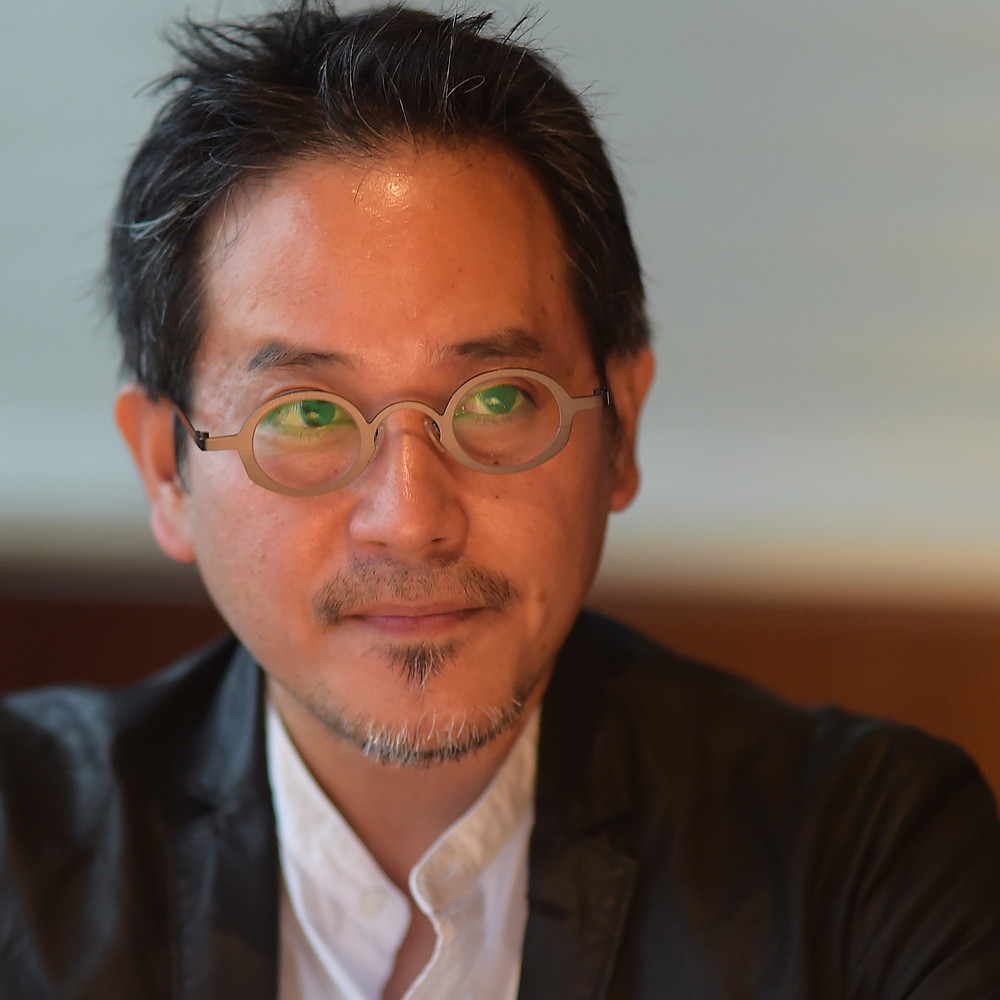
Tomohiro Nabeta, representative of "DesignLab.+Ca" based in Saku City, Nagano Prefecture, supports regions from a design perspective. He designs and produces various products such as tableware, daily goods, and lighting, as well as furniture, spaces including stores, showrooms, medical/welfare facilities, and residences.
“People might think ‘design’ is a means to materialize something, but in reality, the work of organizing invisible elements carries greater weight. The relationships between people, the sense of discomfort lingering on-site, the inconveniences that go unspoken. The very process of carefully reading these through dialogue and observation, and building a structure for problem-solving, is the essence of design, I believe.”
For example, in space design, he begins by spending the first day simply sitting in the location. After observing people's movements, lines of sight, and where they pause, he asks, "Why did you move this way at this time?" He explains that unconscious actions, unnoticed even by the individuals themselves, gradually surface into consciousness.
“In dialogue, we pick up the ‘haziness’ floating in the field. Material and material, person and space, customer and provider. By unraveling and reconstructing the invisible threads of relationships, we enhance convenience and comfort.”
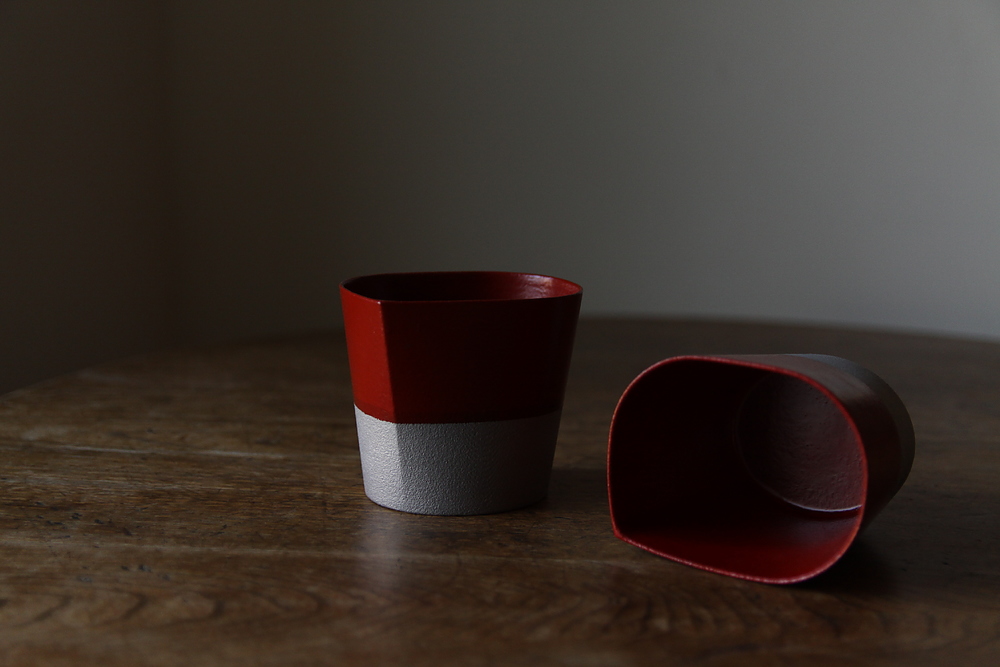
In product development with local companies, he also creates relationships between people, objects, and events. In collaboration with Yoshida Kogyo (Saku City), a company with high technical capabilities in metal processing that also operates overseas, they have produced items like the "SAKU KOIYAKI" carp-shaped baking mold and the "AWAI" sake vessel made from ultra-thin aluminum coated with lacquer from the Kiso region. By uniting diverse local forces such as lacquer artisans, web designers, and support organizations, they have given form to cultivated skills and sentiments.
Chapter 2: Learning and Practicing Design that “Organizes Relationships Between Objects” to Create Space
While enrolled in graduate school at Nihon University, Nabeta belonged to Masayuki Kurokawa's architectural design office. Under Kurokawa, who is active across a wide range of fields from architectural design to product and interior design, he gained experience, collaborated with design departments of major corporations, and stood on the front lines of creativity.
What strongly resonated with him from that time was Kurokawa's philosophy: "It's not that space comes before objects, but that objects create space. The foundation of everything is objects, and design is the act of organizing the relationships between objects."
“Just as we say ‘person-thing’ (jibutsu), people are also a type of object. ‘Human being’ (ningen) refers to the relationships that arise between people. Similarly, I was drawn to the idea of achieving harmony with humans through relationships with buildings, furniture, lighting, and so on.”
Around age 27, when full-time work became difficult due to family caregiving, he decided to become independent. Work for a medical device manufacturer, with whom he had built a connection from his previous job, led him to engage in design aimed at improving medical environments and reducing staff burden.
“In sites requiring urgency, like intensive care units (ICUs), efficient workflows are essential to perform rapid and accurate procedures. It’s important to create a space that is functional yet allows patients to rest and sleep peacefully, with careful adjustments to light, sound, etc.”
In 2016, he moved to Saku City. In 2018, he established the Japan Medical and Welfare Design Association.
“The trade name DesignLab. is an experimental field for posing questions and testing. ‘Ca’ stands for Catalyst. I embedded the wish to be a mediator that supports regional medical care, nursing, caregiving, and daily life, and connects them to value.”
Chapter 3: Researching the Necessity and Effects of Indirect Lighting in Intensive Care Units and Moving Towards Practical Application
Nabeta, who says he "wants to pose questions and implement necessary things and events together with companies and the region," is currently enrolled in a doctoral program at Shinshu University's Faculty of Textile Science and Technology, Department of Advanced Fibro-Science and Kansei Engineering. He is researching the importance and effects of indirect lighting in intensive care units.
“The goal is to document the on-site staff’s feeling of ‘it’s necessary’ as evidence and connect it to practical application. This project, involving power companies, medical device manufacturers, local manufacturers, etc., is also a practice of manufacturing that integrates knowledge from universities, companies, and medical sites and returns it to the region.”
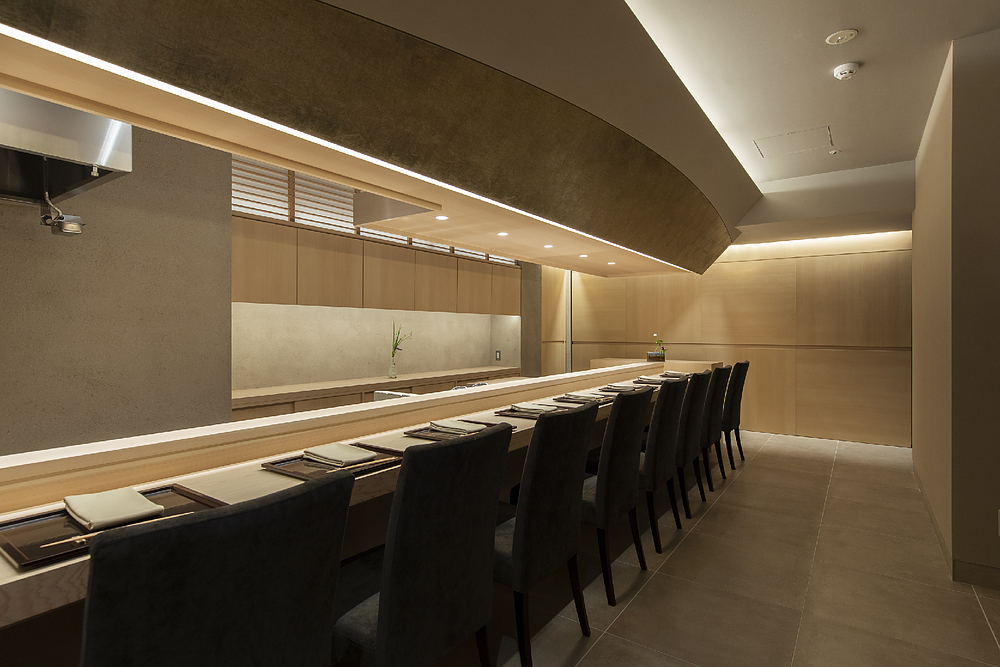
He also focuses on store design. He says that when young people moving into the region set up new shops, he plans while being conscious of relationships, including the street and flow of people, not just individual buildings.
“I myself am also a migrant. Through participating in grass-cutting with local people and renovating and living in an old private house, I have embodied a lifestyle rooted in the land. I have learned firsthand that life, work, and child-rearing are all constituted by relationships, and this overlaps with the guiding principle of my current work: balancing the various elements that compose an environment.”
He views the revitalization of old private houses as an endeavor that not only prepares living spaces but also connects resources inherited from predecessors to the next generation.
“If connecting people and companies living in the same era is horizontal-axis design, then the act of inheriting from past to future is vertical-axis design. I believe a region becomes sustainably rich only when both are present.”
(Interview Date: July 2025)
Source: Read the original article | Published: August 06, 2025