
Editor's Note
This editor’s note highlights the key facts and market implications behind “What is a “Field Engineer”?”, with emphasis on sourcing, product fit, fabrication, logistics, or buyer impact.
What is a “Field Engineer”?
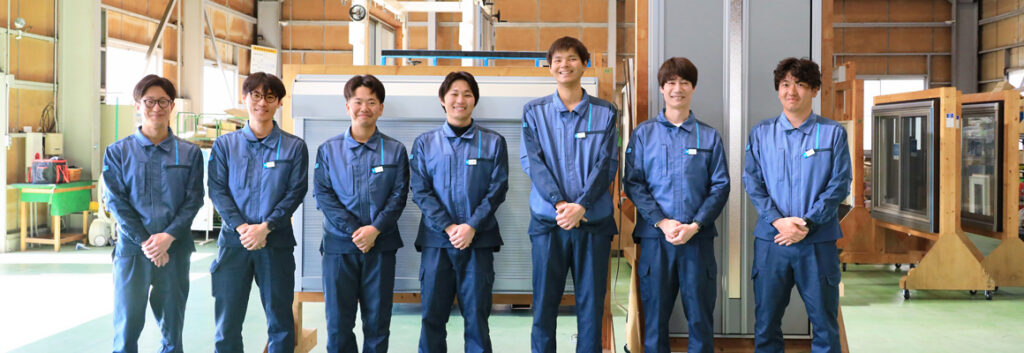
YKK AP believes its role as a manufacturer extends beyond just producing and selling products; it also includes taking responsibility for ensuring products are "correctly installed and perform their value throughout their lifetime" at the customer's site. The professionals executing this philosophy on the front lines are the "Field Engineers" (FE). This time, we learned from Mr. Yamamoto, head of the Field Technical Center (FTC), which serves as the headquarters organization for the FE group, about the role and importance of FEs. We also heard from two FE members, Mr. Ueki and Mr. Sunazawa, about their specific activities and thoughts on their work. The Field Engineer is a technical group responsible for construction quality, improving on-site issues, and contributing to product improvements. To explain the role of Field Engineers, let's first introduce the Field Technical Center (FTC). The FTC handles a wide range of tasks, including developing installation jigs for easier construction and reduced workload, verifying installation methods for new products, providing technical support to enhance the competitiveness of distributors, and conducting training on assembly and delivery to ensure product quality. The FEs are the technicians belonging to this FTC who are active on the front lines of construction sites. There are 39 of them operating from 13 bases nationwide. The FE group provides technical support for the installation of resin windows and renovation/exterior products, conducts quality audits for authorized dealers, and identifies product improvement points for feedback to the FTC. Around 2000, when the predecessor of the FE was established, its role was significantly different from today. At that time, they were responsible for assembling sashes to create finished windows. The assembly know-how cultivated through this experience became the foundation for current proposals to improve the work processes of distributors. Subsequently, the role evolved with the times, and there was a period when product maintenance and defect cause investigation were the main focus. They handled consultations like "the lock doesn't work" on a case-by-case basis for each site. However, realizing that defects wouldn't decrease without addressing the root cause, they strengthened "technical support" such as installation training sessions for installers to prevent defects from occurring in the first place. As a result, since 2016, "technical support" has come to account for a larger proportion than "defect investigation," making up about 80% of their work.
At the core of providing this technical support and handling defects is the philosophy: “As a manufacturer, we are responsible not just for ‘making things’ but also for ‘installation.'” There is a strong sense of responsibility towards the site, believing that the job isn’t finished with shipping the product; they are responsible all the way to the point where it is “correctly installed and performs its inherent capabilities.”
FE Group’s Specific Activities: Responding to On-Site Voices
FE activities are diverse, but their axis always revolves around "the site" and "customer feedback."
Product Installation Training and On-Site Support To ensure products are correctly installed to perform their inherent capabilities, they conduct about 1,800 training sessions nationwide per year for installers like carpenters and distributors who actually install the products, teaching them installation methods. Particularly for interior windows, a renovation product, the number of entrants from other industries has increased due to subsidies from the joint government energy-saving campaign for homes (*) started in 2023. Therefore, training sessions using actual products are held at the company's training facilities or installers' offices to help new installers handle interior windows correctly conduct site surveys and installations. Furthermore, for first-time installation sites, FEs also accompany and support, quietly backing up installers who may feel anxious.
Collecting "Raw Voices" from the Field and Feedback for Product Improvement
Through training sessions and on-site dialogues, they directly collect valuable field information from installers regarding product handling, installation challenges, and improvement requests. Mr. Ueki commented on the dialogue with installers:
“We have a very close relationship with construction companies and distributors, which allows us to hear direct, raw feedback. Sometimes we receive harsh opinions from customers, but the reward of being an FE is receiving words of gratitude when we make improvements.”
This information is all consolidated at the FTC and, along with past trouble information, is utilized during new product development reviews to confirm quality targets.

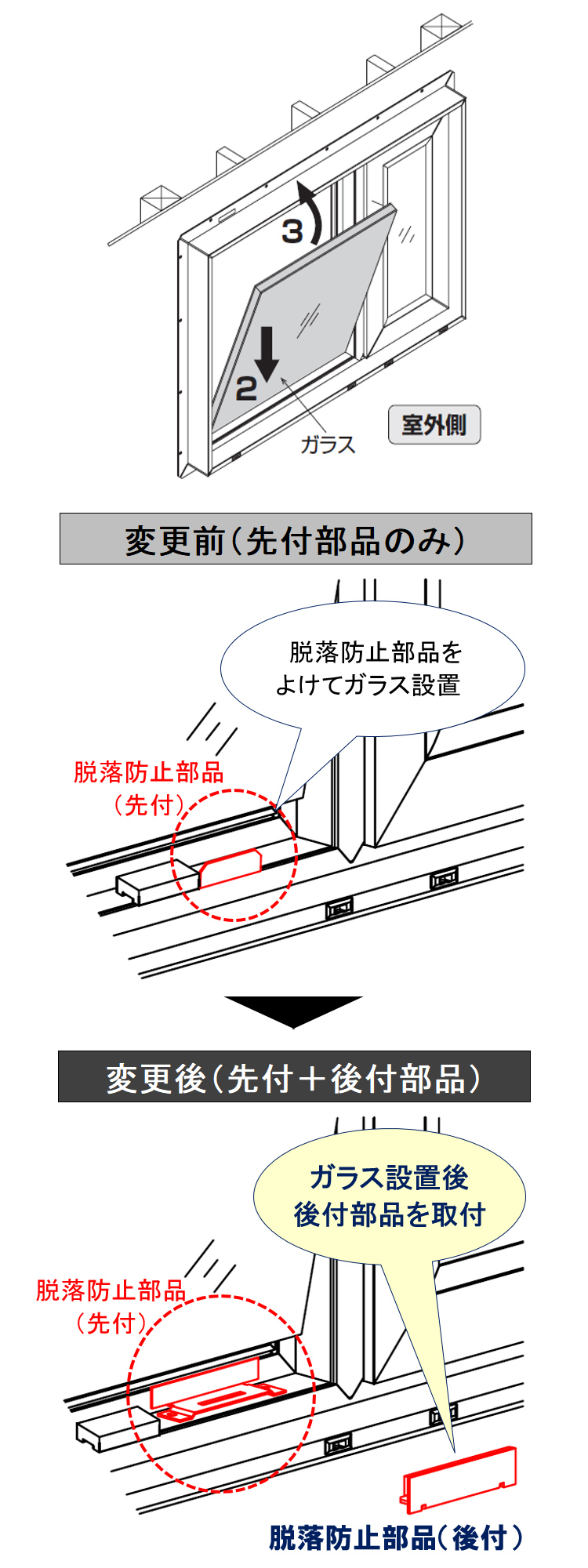
As an example of a product improvement Mr. Ueki was involved in, there was a shape change for the anti-drop bracket of a fixed window in a series window unit. In the original specification, when inserting the glass into the fixed window of the series unit, the glass would hit a bracket that was installed first, posing a risk of glass breakage. An improvement request was raised, and the bracket shape was changed so it could be installed even after the glass was inserted. This reduced the risk of the glass hitting the bracket during insertion, lowered the possibility of glass breakage, and improved workability. Mr. Yamamoto stated:
“We actually look at the products, not just the installation. FEs pick up voices from the field, the FTC consolidates that information and discusses product development and improvement, and we engage in installation and product improvement. If necessary to enable safer and more efficient installation, we request changes to the product shape. We also create jigs to support installation. It’s about wanting to be close to the installers. It might be presumptuous, but we want to make their work even a little easier.”
Proposals for Improving Installation Methods In response to customer challenges, they sometimes propose appropriate installation methods, not just product improvements. Mr. Sunazawa heard field feedback that the notching work (processing like cutting part of a component) for installing the screen rail on resin windows was difficult. When he tried it himself, he realized the difficulty: the cutter blade could warp and easily scratch the window. He then considered a method more efficient and safer than using a marking gauge and proposed it to the installation shop, who agreed. In this way, they tackle on-site problem-solving, including proposals for safer, more efficient "installation methods" and the "tools" used. Through these activities, FEs not only handle on-site responses but also contribute to improving installation methods, product improvements, and developing work-assisting jigs. This supports improved work efficiency and safety for customers and, in turn, contributes to ensuring YKK AP product quality and enhancing trust. Listening to customer voices and thinking from the installer's perspective is the underlying feeling of the FE.
Aiming to be Technicians Who Can Deliver “Impression”

Thanks to FE activities and product improvements, the number of defects has steadily decreased over the 9 years from 2015, dropping by about 80% in FY2024, leading to increased customer satisfaction and trust in the YKK AP brand. Regarding future aspirations, Mr. Ueki said:
“Through FE activities, I want to deliver safety and peace of mind to customers and strive to ensure both installers and property owners are satisfied, thinking ‘I’m glad I chose YKK AP products.'”
In response to the industry-wide challenge of installer shortage due to the declining birthrate and aging population, they are also considering digitalization and AI utilization. Mr. Yamamoto stated his personal goal:
“I want to pass on what we inherited from our seniors to the next generation and cultivate technicians with field experience who can ‘deliver an impression’ to customers.”
FEs are the ones who stay close to customers on the front lines, listen to their voices, and contribute to maximizing product value and solving on-site problems. Through their activities, YKK AP fulfills its responsibility from manufacturing to on-site installation, aiming to enhance corporate value by connecting to improved satisfaction for each individual customer. (*) A collective term for subsidy programs supporting home energy conservation, such as improving home insulation and introducing high-efficiency water heaters, to strongly promote energy saving in the household sector toward achieving carbon neutrality by 2050.
Source: Read the original article | Published: June 27, 2025