This editor’s note highlights the key facts and market implications behind “Sustainable Innovation: Circular Materials and S”, with emphasis on sourcing, product fit, fabrication, logistics, or buyer impact.
With a density of 50 kg/m³ and an A+ sanitary class, the panels guarantee thermal comfort in both summer and winter and contribute to a healthier microclimate. Furthermore, each panel retains the CO₂ captured by the plant for the entire lifespan of the building, supporting a true model of circular and regenerative construction. 2025 is a turning point for green building, marked by a clear push towards truly circular and regenerative materials and processes. From new bamboo panels, to the bio-brick that captures CO2, from cellulose pulp for green packaging, to the latest innovations for photovoltaics. The integration of cutting-edge photovoltaic systems and storage systems defines a new energy standard towards decarbonization in both residential and commercial sectors.
Sustainable Innovation Accelerates
In the world of construction, sustainable innovation is accelerating thanks to research and the use of innovative materials capable of combining high performance and low environmental impact. From cellulose pulp to bamboo, to new technologies for photovoltaic modules, companies and research centers are developing solutions that aim to reduce emissions, promote recycling, and maximize the energy efficiency of buildings.
Bamboo: Natural and Regenerative Insulation
The bamboo supply chain is becoming a reference for European green building. The partnership between Forever Bambù Società Benefit and FIBOO has led to the creation of the first insulating panel composed of 95% natural bamboo fiber and fully traceable. This material combines environmental sustainability and high-level technical performance: thermal conductivity among the best on the market, heat storage capacity exceeding 2000 J/kgK, breathability, and resistance to humidity.
These characteristics offer a valid alternative to traditional insulating materials such as polystyrene or glass wool, which are often problematic to dispose of.
Bio-Brick: The Green Material that Captures CO2 and Saves Energy
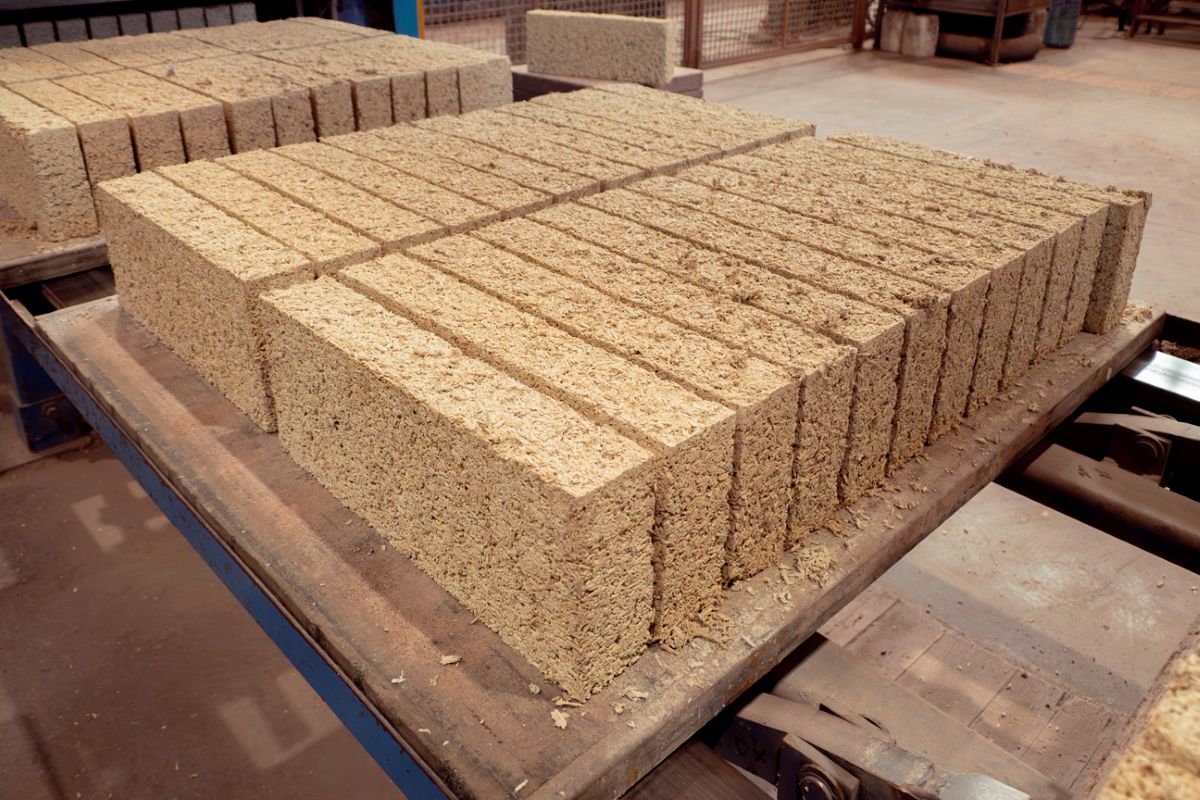
Another element revolutionizing the sector is the bio-brick, an ecological bio-based construction material similar to common building bricks but made from natural, renewable, or waste raw materials, designed to ensure environmental sustainability, energy efficiency, and living comfort. The Tecnocanapa by Senini bio-bricks are made from hemp and lime and represent an industrial material already widely adopted both in Italy and abroad. They are capable of insulating, regulating humidity, and, above all, fixing CO₂, removing between 44 and 105 kg of carbon dioxide from the atmosphere for every cubic meter installed, thanks to the carbon-negative qualities of industrial hemp and natural dolomitic binder. The Tecnocanapa bio-brick stands out for its high performance: it offers thermal insulation (λ 0.044 W/mK), hygroscopic comfort, acoustic reduction (class A), and durability that makes it suitable for new constructions, renovations, and external insulation systems. Over 1,000 buildings have already been constructed using this technology, where the material has contributed to sequestering more than 1,800 tonnes of CO₂, with recognitions and certifications attesting to its sustainability, healthiness, and safety even in case of fire.
Cellulose Pulp: Circular Packaging and Protection
Il biomattone Tecnocanapa by Senini
The Pro-Gest Group, a leader in the paper sector, has launched the PRO-TECT division to produce packaging made from 100% recyclable and biodegradable cellulose pulp. Although the main application is in the packaging sector, cellulose pulp also offers interesting prospects for construction, for example as a protective and insulating element in prefabricated components. This material, obtained from recycled or virgin fibers, is lightweight, resistant, and capable of absorbing shocks, a valuable characteristic for the transport and assembly of building elements. Its total recyclability and the possibility of aesthetic customization make it a concrete example of a circular economy, capable of reducing waste in multiple sectors.
High UV-Transparency Photovoltaics
On the renewable energy front, ENEA has made significant steps in researching encapsulating films for photovoltaic cells, studying materials that combine transparency to UV rays and resistance to degradation. The challenge is to develop encapsulants that do not filter UV, allowing cells to exploit the entire solar spectrum, without compromising their lifespan.
Source: @ENEA
In tests conducted, thermoplastic polyolefin (TPO) showed minimal degradation of 0.2%, confirming it as the most resistant to UV exposure compared to EVA and POE. Furthermore, being recyclable, it represents an option in line with the principles of sustainable construction. These advances make possible more efficient and longer-lasting photovoltaic modules, with a positive impact on energy production and the reduction of the environmental footprint of buildings.
Current Regulations
Sustainable innovation in materials such as hemp and lime bio-bricks, bamboo insulating panels, and cellulose pulp fits perfectly into the European framework for decarbonizing the construction sector, driven by stringent regulations such as the European Energy Performance of Buildings Directive (EPBD), the Green Deal, and the path towards nearly zero-energy buildings (nZEB). These instruments set clear objectives for reducing emissions and improving the energy efficiency of the European building stock by 2050, requiring the adoption of low-environmental-impact materials and construction techniques that favor recycling and regeneration. The assessment of the Life Cycle (LCA) and Environmental Product Declarations (EPD) are key tools in this transition.