
Editor's Note
This editor’s note highlights the key facts and market implications behind “Encouraging Household Waste Sorting and Recyclin”, with emphasis on sourcing, product fit, fabrication, logistics, or buyer impact.
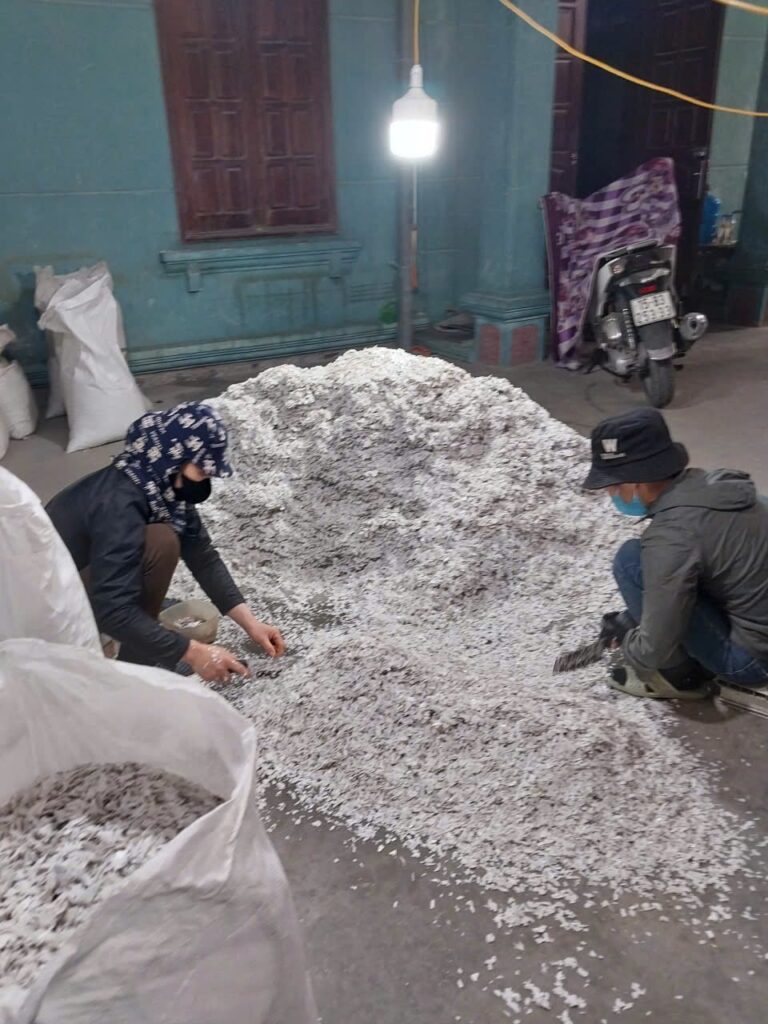
The Trang Minh scrap collection village in Vinh Lien Ward comprises over 100 households engaged in scrap collection and processing. In addition to providing jobs for local residents, the village attracts more than 100 workers from other provinces. Ms. Nguyen Thi Thuy, from the Vinh Quang residential area in Vinh Lien Ward, said: "I have over 20 years of experience in recycling plastic scrap. Before 2021, I collected broken plastic sheets from roofs, steel-reinforced plastic doors, etc., and ground them into plastic pellets. Currently, my family buys these plastic pellets from other companies in the village, filters out impurities, and then resells them."
Many international organizations are exploring and seeking cooperation with Hai Phong City to connect people working in the "recycling" industry.
In the early morning and late evening, it is common to see people on the streets using rudimentary means to collect trash from household waste bags. These are the people who work as scrap collectors. They collect recyclable materials such as cardboard, newspapers, plastic bottles, and other recyclables. Most of this scrap is then sold to small collection points scattered throughout the city's communes and wards, before being transported to small processing and recycling facilities in traditional craft villages.
This "network" for collecting, sorting, processing, and recycling waste contributes to promoting waste sorting at source, gradually forming a recycling industry, and creating jobs and income for a segment of the population.
-0f8e0deaf4c4a7956d259fb7e41b0233.jpg)
Ms. Thuy's factory employs 5-7 regular workers, each earning 200,000 VND per day. Similarly, Mr. Tran Huu Dong's family in Han Phuc area, Vinh Lien Ward, stated that his family works in crushing plastic scrap. The main raw materials include used plastics like rice cooker casings, broken refrigerators, cups, etc. After purchasing the plastic, he sorts and grinds it into pellets, then sells them to other units for further processing and recycling. After deducting expenses, his family makes a profit of nearly 5,000 VND per kilogram of product. The infrastructure and working conditions at scrap processing facilities in Trang Minh craft village are rudimentary and simple. His establishment currently employs about 6 workers, with daily incomes ranging from 280,000 to 350,000 VND. The city produces over 3,300 tons of waste daily, most of which is disposed of via landfilling. In the city center, nearly 80% of urban waste is landfilled, while the rate in the suburbs is about 70%. In the western region alone, the landfilling rate reaches 58%, with the remainder mostly treated by incineration. Notably, a large portion of this total waste consists of recyclable materials like plastic, paper, and rubber.

The city's waste collection system is highly diverse, including public utility units and environmental cooperatives. However, in reality, a large quantity of recyclable materials is collected by informal entities such as individuals, families, and small collection points. Due to their spontaneous nature and lack of strict management, these forces still pose many risks and directly affect the health and safety of the people involved.
“Charting a Roadmap” to Keep Scrap Collection on the Right Track
A large amount of recyclable waste is mixed with household waste. Scrap collectors and waste collection and processing workers play a pivotal role in waste sorting and recycling. However, workers in this sector often face unhealthy working conditions. Furthermore, collection and processing facilities suffer from numerous problems, especially regarding waste management after collection. In Trang Minh craft village, due to limited production capacity and rudimentary machinery and equipment, most families use their homes as production spaces. These spaces are cramped and do not meet environmental safety and hygiene standards. Recycling facility owners either do not provide protective equipment for workers or provide only the minimum; the responsibility of producing families towards environmental protection is limited. This craft village has witnessed numerous incidents of burning recycled waste, causing environmental pollution. Hai Phong Urban Environment One-Member Limited Company sorts, collects, and transports packaging materials and plastic bags to a recycling facility.
.jpg)
On April 3rd, the Hai Phong Department of Agriculture and Environment, in coordination with the United Nations Development Programme (UNDP), the Ho Chi Minh City Department of Agriculture and Environment, and the Quang Ninh Provincial Department of Agriculture and Environment, organized a workshop to exchange experiences under the program "Promoting Solid Waste and Plastic Management According to the Circular Economy Model".
During her speech at the workshop, Ms. Francesca, Deputy Resident Representative of UNDP in Vietnam, stated that Vietnam has many opportunities to exploit the potential of transforming waste into raw materials and resources, thanks to its infrastructure and commercial sector. She expressed a desire to integrate waste collection workers into the urban waste collection, sorting, and recycling system to achieve optimal and effective use of resources extracted from waste.
Jeff Dube, Global Senior Director of The Coca-Cola Foundation, stated: “The Coca-Cola Foundation is a global charitable organization affiliated with The Coca-Cola Company. Founded in 1984, the Foundation invests in environmental protection, women’s empowerment, and improving quality of life. The Foundation is also seeking solutions to support and ensure the livelihoods of workers in the scrap metal industry and help them enjoy better working conditions.”
Providing support and assistance not only helps ensure the livelihoods of workers in scrap metal collection and recycling but also contributes to reducing waste and promoting the development of the city's circular economy.
Source: Read the original article | Published: April 09, 2026