
Editor's Note
This editor’s note highlights the key facts and market implications behind “US-Swiss Tariff Talks: President Parmelin Report”, with emphasis on sourcing, product fit, fabrication, logistics, or buyer impact.
Swiss President Guy Parmelin is keeping his cards close to his chest in the tariff negotiations with the Americans. Five months have passed since Switzerland reached a provisional agreement with the USA, which lowered punitive tariffs on Swiss exports from 39% to 15%.
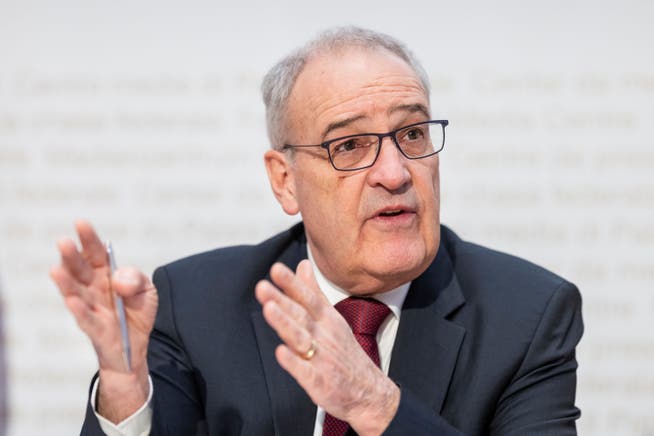
In November, Switzerland was in a great hurry to negotiate down these enormous 39% tariffs; now they are taking a bit more time. Parmelin said on Friday afternoon (local time) in Washington, shortly after meeting with US Trade Representative Jamieson Greer, who is leading the tariff negotiations on the US side, that they had held a "pleasant" discussion covering all "positive and negative" points.
As usual, the Federal Council used the semi-annual high-level meeting of the IMF and World Bank in Washington to hold confidential talks with the Americans on the sidelines. Seco head Helene Budliger Artieda, who is leading the tariff negotiations at the technical level, was also in the American capital.
Switzerland would ideally like to secure a kind of most-favored-nation clause from the USA; that is, the assurance of being treated at least as well as other important trading partners like the EU or the UK. How realistic that is remains unclear – in any case, it will require a lot of persuasion, and in the end, Trump must agree to whatever is negotiated.
The fees threatened from July under Section 301 are thus creating a completely new tariff landscape in the USA: Trump once again has a lot of leeway to set tariffs at his own discretion. Trading partners who fared relatively well under his first tariff regime could suddenly be run over. Trump's ban is likely to hit those countries that do not seek a "deal" with him in advance. For this reason, it remains very important for the Swiss export economy to push forward bilateral negotiations with the USA.
Since then, negotiations have been taking place behind the scenes on a definitive agreement that is supposed to put bilateral trade back on solid ground – after Trump destroyed the previous foundation in April 2025 with his horrendous punitive tariffs against Switzerland.
“Pleasant” Talks
There was no breakthrough to report this Friday either. Parmelin, as in the past autumn, refrained from holding a press conference in Washington and only issued a brief statement. The President did not allow himself to be drawn into commenting on specific negotiation points – "whoever comments, loses" – and also refrained from setting a further timetable. "It's not about going fast or slow. It's about having clarity," said Parmelin.
Fortunately, Bern is no longer under as much time pressure as it was in November. Donald Trump lost a decisive court case before the Supreme Court in February and had to withdraw a large part of the tariffs he had introduced based on an old emergency law.
Instead, his administration has put into force new temporary global tariffs of 10% until the end of July, which also apply to a large part of Swiss trade with the USA. They are only a bridging measure; Trump cannot extend them on his own authority.
Therefore, he has simultaneously instructed Jamieson Greer to launch a series of investigations under Section 301 of the Trade Act of 1974. These formally examine whether other countries are engaging in unfair trade practices and thereby harming the USA. These investigations then provide the basis for new, possibly country-specific tariffs.
The list of possible "sins" is long: The trade representative suspects that other countries might pollute the oceans, do too little against forced labor, or set unfair drug prices. It is to be assumed that Greer will find some reason with every trading partner to justify new tariffs.
Parmelin said that these Section 301 investigations follow a clear process in which one can participate. They will respond to certain claims they consider incorrect. However, this process runs parallel to and independently of the current negotiations.
Source: Read the original article | Published: April 18, 2026