
Editor's Note
This editor’s note highlights the key facts and market implications behind “First Quarter: Los Lagos Region Exports Exceed U”, with emphasis on sourcing, product fit, fabrication, logistics, or buyer impact.
Between January and March of this year, exports from the Los Lagos Region reached US$2.093 billion, representing growth of 5.7% compared to the same period last year. This was driven primarily by the dynamism of the fishing and aquaculture sector, according to the latest Non-Copper – Non-Lithium Export Report from ProChile's Market Intelligence Department.
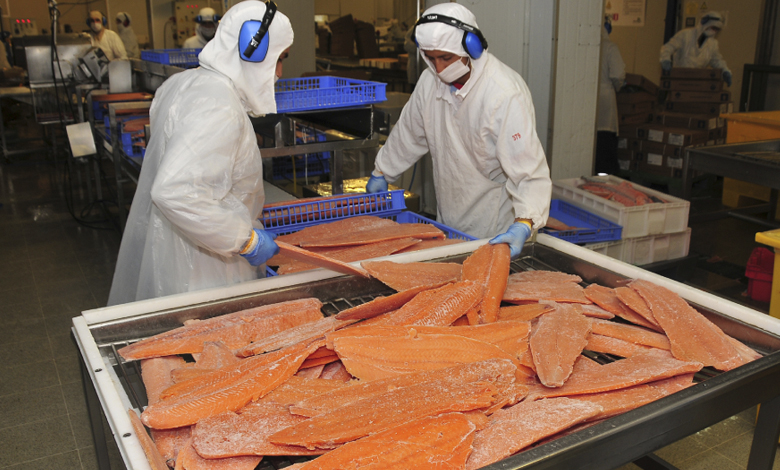
“In this first quarter, the fishing and aquaculture sector reaffirms its leadership in the Los Lagos Region, with salmon and trout representing 82.59% of total exports,” said Ricardo Arriagada, Regional Director of ProChile Los Lagos.
"This is a sector that maintains solid dynamism and continues to consolidate itself as the main regional export engine, thanks to its ability to adapt to demanding markets and a competitive, high-standard supply, key for the region's growth and international projection," he highlighted.
The fishing and aquaculture sector reported shipments worth US$1.964 billion, representing growth of 6.2%. Within this sector, salmon and trout recorded shipments of over US$1.729 billion (+6.0%), followed by Mussels with US$77 million (-10.2%); Fish and crustacean meals, with US$41 million (+15.2%); and Horse mackerel, with US$38 million (+68.5%).
In the case of the agricultural sector, exports of US$89 million (-3.6%) were reported, mainly highlighting shipments of Fresh Cherries with US$20 million (-31.5%), Bovine Meat with US$18 million (+76.9%), and Animal Feed with US$14 million (+37.3%). Further behind are Powdered Milk (-31.5%), Fresh Blueberries (-43.0%), and Infant Food (+76.3%), all with exports of US$7 million.
Meanwhile, manufacturing reached US$10 million (+17.6%), while the services sector recorded exports of US$2 million (+120.9%).
The main destination countries in the first quarter were the United States, with US$646 million (+4.2%); Japan, with US$411 million (-4.2%); China, with US$160 million (+86.4%); and Brazil, with US$149 million (-13.2%).
Source: Read the original article | Published: April 17, 2026