
Editor's Note
This editor’s note highlights the key facts and market implications behind “Archaeology in Times of War: From Iraqi Kurdista”, with emphasis on sourcing, product fit, fabrication, logistics, or buyer impact.
The missions of the University of Milan around the world, endangered sites, and the dream of seeing Palmyra reborn. Discoveries in Mesopotamia are rewriting history through coins and ceramic "factories": "A memory to save."
Archaeology does not just mean "going and digging," but being present, testifying to the necessity and importance of cultural heritage.
What have you discovered?
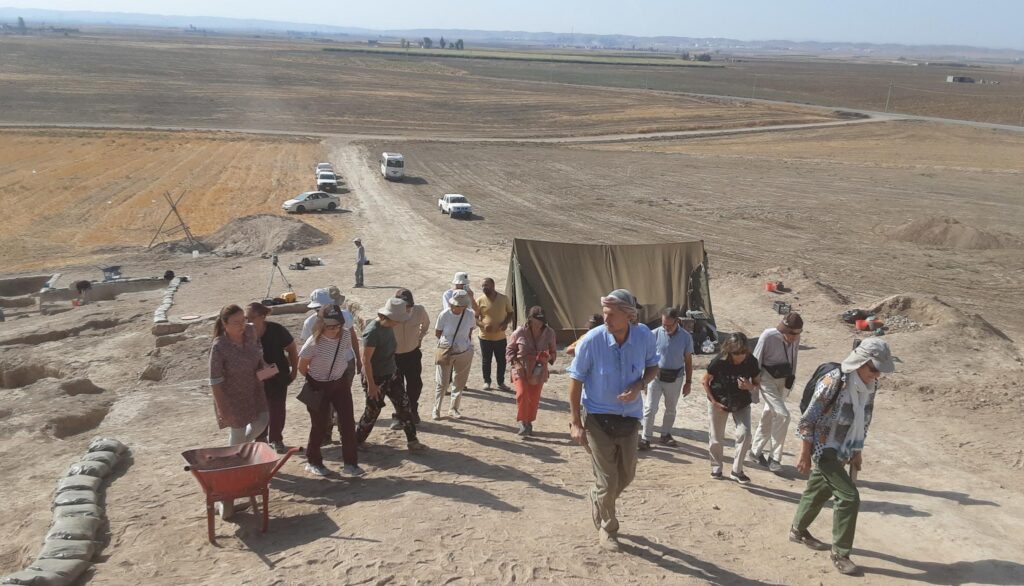
“Investigations in Iraqi Kurdistan have revolutionized our knowledge of this region of ancient Mesopotamia. In our case, we found buildings where resources, especially food, were stored and redistributed, with the first forms of ‘administration’ in human history and urban civilization; large ‘public’ buildings dating back six thousand years! Another unexpected discovery occurred at Aliawa: around 2300-2200 BC, a huge area planned for ceramic production on an industrial or proto-industrial scale had been established. We excavated more than 50 kilns for firing pottery, and one of them still contained the vessels that were being fired when it collapsed. A unique discovery. In more recent phases, we began uncovering a Hellenistic fortress from which came a silver coin with the effigy of Alexander the Great, which would testify to the presence of a military garrison controlling the area: a connection between past and present.”
Are your researchers there now?
“No, our mission takes place between late September and mid-November. We are trying to understand if we will be able to depart with the support of the Ministry of Foreign Affairs, which supports our excavations. We were there when the same area was involved in the conflict with ISIS: even then, while we attested to the importance of studying historical roots and culture, on the other side of the line archaeological sites were being looted and destroyed, as happened to important Assyrian capitals, the Mosul Museum, Palmyra…”
And in Iran?
“As a university, we did not have active archaeological missions there, and in recent years the situation had become complicated even for joint Iranian-Italian missions. Now it is even more so. There have been thousands of attacks on Iranian territory, as well as in Lebanon, where important archaeological sites and ancient Phoenician cities have been hit.”
Do you have missions on standby?
“We have a mission in Cappadocia, Turkey, at the ancient site of Kanesh, which should operate between June and July: we hope to be able to go. And we hope all other missions can resume. In Iraqi Kurdistan, the first tourists were even starting to arrive: enhancing the sites by opening archaeological parks would represent a sign of rebirth, also for local communities. We had just started a very interesting project related to clay processing and ceramic firing: just a few meters from Aliawa are the very last artisanal brick factories using clay taken from the riverbed; only three families remain. We had begun interviewing them to preserve the knowledge of a millennia-old tradition and had asked them to come help us restore, using traditional methods, the buildings we are bringing to light. In this case, it is about conserving heritage but also preserving the memory of culture.”
Archaeology in Times of War
"Reconstructing the past to look at our future in a different way. A commitment that goes beyond pure scientific research: we counterpose culture to violence and the denial of heritage." Luca Peyronel is director of the Italian archaeological mission in the Erbil Plain and delegate for archaeological excavations at the University of Milan.
Archaeology endures in times of war. "It must endure: there is a strong ethical aspect to archaeological research in places affected by crisis, destruction, looting."
What are the University of Milan’s active missions abroad?
“We have missions in various countries including Egypt, Turkey, Oman, Greece, and Iraq. Italy is the country with the highest number of archaeological missions in Iraq, particularly in Iraqi Kurdistan. The University of Milan began working here in 2012 and has been present with archaeological excavations for ten years, with only one interruption during the pandemic. We work in the Erbil Plain, which extends towards the Tigris River valley, at sites never before touched by archaeological excavations.”
What is the situation now?
“Erbil has been targeted by drones in reaction to the Israeli-American attack on Iran. They tried to hit mainly the American base near the airport and the US consulate. At the moment, we know that some parts of the city have been damaged, but not the ‘citadel’ and the archaeological sites. We are in contact with the Directorate of Antiquities of Iraqi Kurdistan and our consulate to get news about the heritage situation and, above all, to know if our colleagues at the Directorate of Antiquities are well.”
Source: Read the original article | Published: April 20, 2026