
Editor's Note
This editor’s note highlights the key facts and market implications behind “Headhunter’s basket, opium pipe… Customs hands n”, with emphasis on sourcing, product fit, fabrication, logistics, or buyer impact.
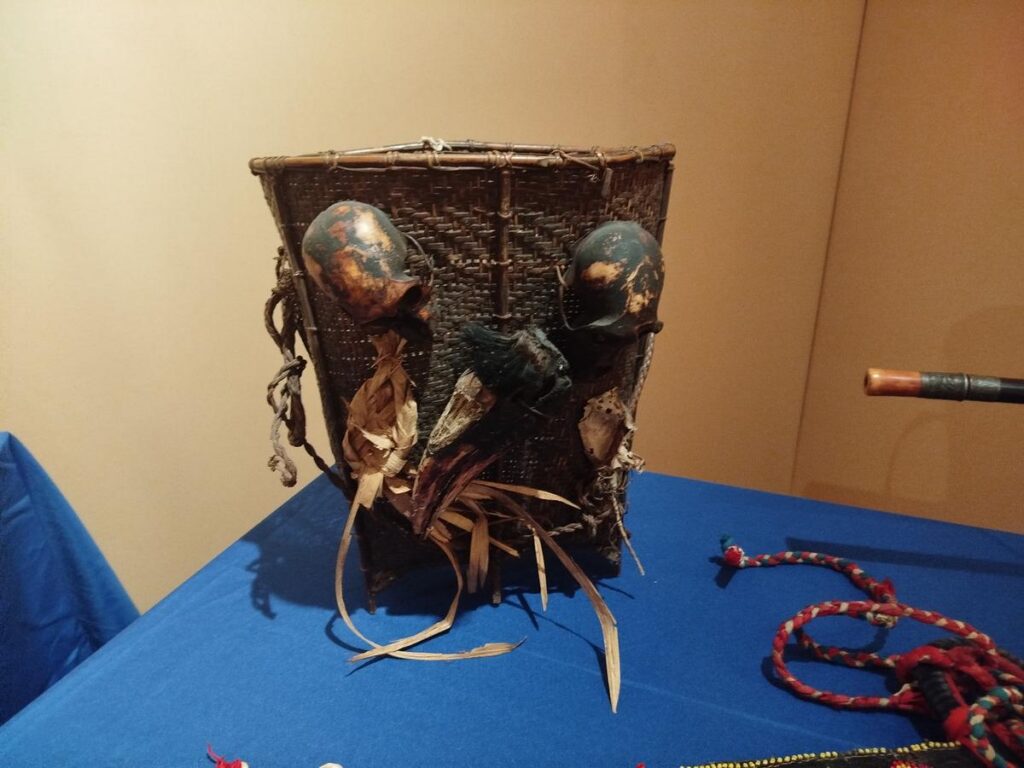
Since Monday, April 20, customs has handed over nine pieces of Asian craftsmanship, mostly dating from the 19th century, to the Museum of Ethnography in Bordeaux. All contain parts of protected animal species. A child once cried in this baby carrier adorned with Malayan sun bear teeth. In the 19th century, a chief from northeastern India enhanced his power with this headdress made of hornbill feathers. A wealthy Japanese man decorated his kimono belt with these ivory netsuke. The value of the nine objects handed over by customs to the Bordeaux Ethnographic Museum on Monday, April 20, goes far beyond a sum in euros. They tell of an ancient daily life. They bear the traces of Asian civilizations. Pasts lost forever.
Frédéric Decout, chief customs inspector in Limoges, whispers, "These pieces are on the level of the Quai Branly Museum. Sending them to the incinerator would have been heartbreaking." Like the crudest counterfeits seized by the administration, these exceptional objects were nevertheless destined for destruction. Their illegality lies in the ornaments.
Threatened species
Skulls, claws, feathers, and other trophies were taken from species threatened with extinction. Since 1973, the Washington International Convention has banned their trade. Frédéric Decout worked hard for a year to find a home for them. "I remembered my archaeology studies in Bordeaux. That museum of ethnography."
Its director, Sophie Chavre-Dartoen, stammers "a big thank you," tinged with emotion. This donation attests to the "trust" placed in the museum. One of the few located in a university, on Place de la Victoire, since 1894. The new pieces fit perfectly with the collections.
“These objects bear witness to spiritual or artistic practices, for some of vanished civilizations. They will also allow us to better raise public awareness about the management of living beings and respect for cultures.”

Their exhibition spaces are already reserved, within the cabinet of curiosities. Explanatory notes will inform visitors about their origin. "I am happy that they can continue their life preserved," smiles Sophie Chavre-Dartoen. "That they escape the market."
If Frédéric Decout had not kept an eye on auction catalogs, they would have been sold to a collector. On March 18, 2025, the customs officer uncovered them at an auctioneer's in Limoges, the day before the sale. "The certifications were announced as 'in progress.' Either you have the authorization to sell, or you don't," states the chief inspector.
14 suspicious lots were seized. Experts from the Paris Museum of Natural History ruled out several, including a Mongolian saddle supposedly adorned with ivory. Nine offenses were finally retained. The 350 pieces put up for sale that day all came from a château in Indre. "The owner, a retired cartographer, worked all over the world," explains Frédéric Decout. This Spaniard had undertaken to sell the 25,000 pieces of his enormous collection with a view to leaving France. Half a century of objects given by the highest authorities of the countries visited, mainly in Asia. Some were acquired during his encounters with some of the planet's most remote ethnic groups. "For me, for fifty years, this man cheerfully plundered the civilizations he encountered," scolds Frédéric Decout.
Out of reach of the authorities, he was not prosecuted. Unlike the auctioneer. Legally responsible for the possession and mandated to sell the illegal objects, the professional had to pay a fine. "Removing these objects from the market, so they stop fueling a trade that no longer has a place. The primary goal is achieved." Thanks to Frédéric Decout's determination, they now sleep in the museum's display cases. Wonder freely accessible.
Bushmeat
In Nouvelle-Aquitaine, in 2025, customs officers recorded 37 violations of international wildlife trade rules. Mainly seizures of bushmeat at Mérignac airport. "For example, antelope or monkey. Smoked, dried meats, mostly imported from Africa or South America," explains Jean-François Rubler. Next, according to the interregional director of customs in Bordeaux, come seizures of corals or shellfish from overseas territories, birds, and reptiles. "They are transported in conditions that are very often unsuitable," specifies Jean-François Rubler. These animals and their derivatives often end up in the legal circuit. Customs officers monitor the antiques or second-hand market, flea markets, garage sales, and auctions.
Source: Read the original article | Published: April 20, 2026