
Editor's Note
This editor’s note highlights the key facts and market implications behind “Alert for Importers: The Amount of Fines for Und”, with emphasis on sourcing, product fit, fabrication, logistics, or buyer impact.
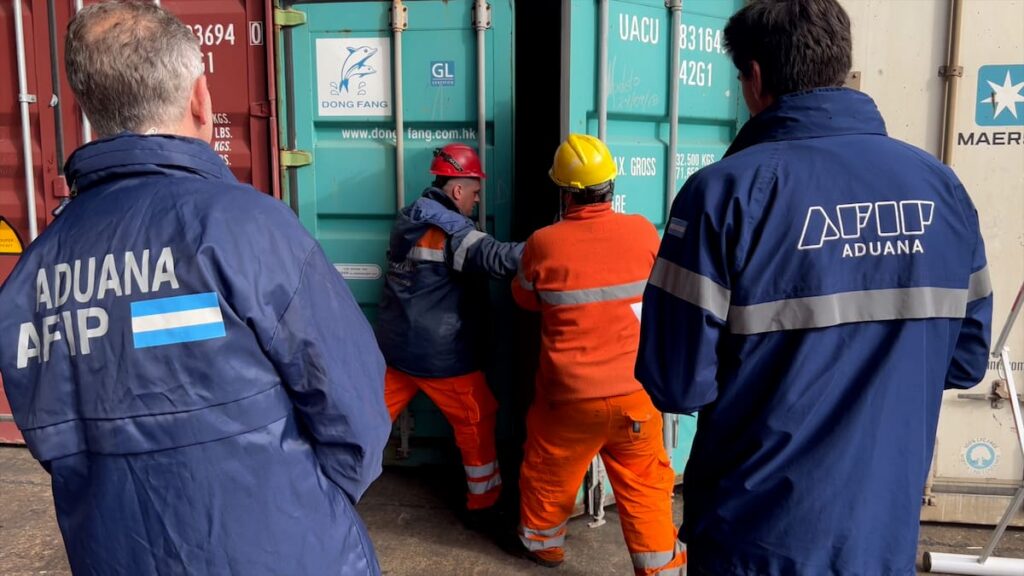
Following the elimination of reference values in the economic opening scenario of the Javier Milei government, the textile sector leads the alerts for declaring prices below cost. However, the initial relief at the port is turning into a flood of legal citations, according to international trade specialists, who warn of million-dollar fines.
What began as a window of opportunity to import garments and fabrics at unprecedented prices—such as jeans for less than a dollar—is turning into a legal problem for hundreds of individuals and companies.
According to Diego Jerez, a customs broker, the apparent "total opening" after the elimination of reference values has a rebound effect that many importers did not foresee: ex-post inspection. Previously, the "reference value" system forced importers to post an economic guarantee if they intended to bring in goods below the reference price. With the current regulations, that barrier has disappeared.
Today, the importer declares the value they wish and retrieves the goods from the port almost immediately. However, Jerez warns that Customs has not lost its control capacity but has changed the timing of enforcement.
“The citations are arriving between 20 and 30 days after the goods have already left the port. That is where the importer must justify a number that, statistically, is indefensible,” the expert points out.
Customs has a robust database that makes declaring a t-shirt at $0.01 technically a red flag. The agency uses three pillars to dismantle under-invoicing.
For those companies—many of them located in the Once commercial district—that fail to justify their prices, the sanctions are not limited to a simple warning. The administrative procedure of Customs involves significant penalties.
Although the expert warned about the sanctions, the Argentine Federation of Textile Industries (FITA) denounces that 70% of products enter under-invoiced while national factories operate with 76% idle capacity. In its latest report, the Federation warned that the prices of imported goods defy any market logic as they do not even cover the cost of the international raw material.
Examples include cotton t-shirts for less than $0.01 per unit; jeans pants below $1; and towels for less than $0.30 per kilo. In February 2026, 12,800 tons were imported for a value of $32 million.
These practices generate "profound distortions" in the market and imply unfair competition for national production, FITA explained.
“In a context of falling activity and employment, the existence of a recurring pattern of imports at strikingly low prices demands actions to avoid distortions in competition conditions,” said Celina Pena, General Manager of FITA.
In this sense, she mentioned that legislation provides tools for these situations.
“Its correct application will safeguard tax collection and enable the recovery of added value and employment in a sector present throughout the entire country,” she added.
In January, with many factories working far below their potential, the sector's capacity utilization was 24%, 11.4 percentage points (p.p.) less than the previous month and 10.2 p.p. less than a year ago, which shows an increase in idle capacity. In contrast, industry in general used half of its capacity (53.6%).
Source: Read the original article | Published: April 20, 2026