
Editor's Note
This editor’s note highlights the key facts and market implications behind “CM Quartz: The Winning Choice of 100% French Bio”, with emphasis on sourcing, product fit, fabrication, logistics, or buyer impact.
From extraction to customer delivery, the company no longer uses fossil fuels.
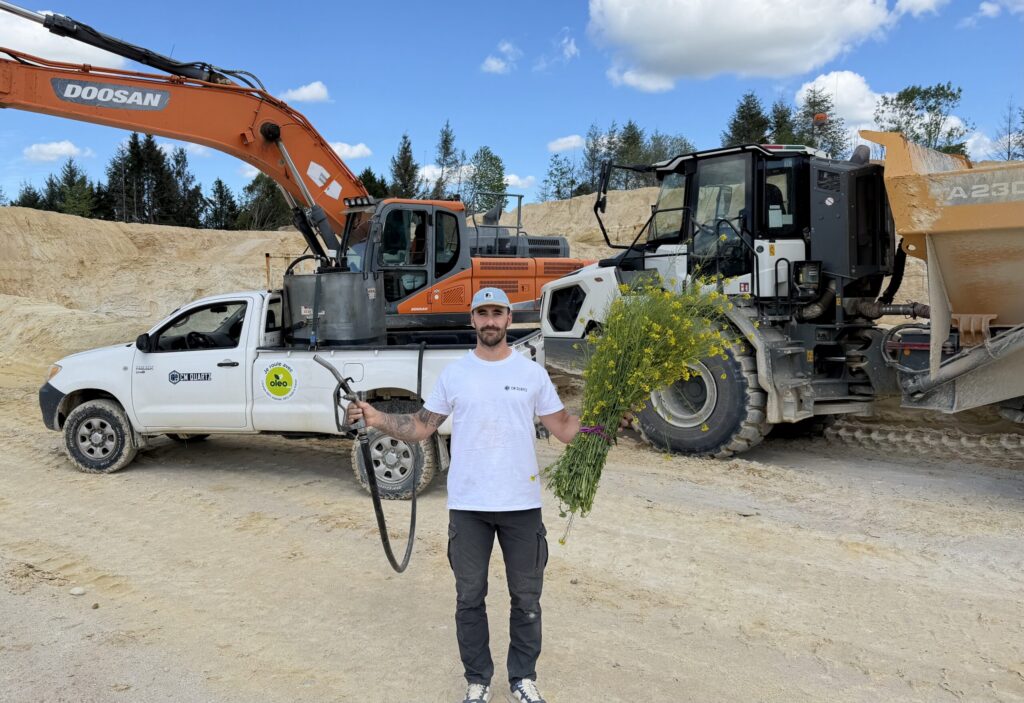
“At CM Quartz, the raw material matters… but the impact matters even more. In a period where the energy transition is becoming a necessity, the company has made an operational choice: to switch to 100% bio biofuels. From extraction to customer delivery, we no longer use fossil energy,” explains Adrian Mangieu, the manager of the company based in Saint-Denis-Catus, Espère, and Cahors.
This change is not just an intention. It is measurable. According to the impact study, the company saves 711,000 kg of CO₂ thanks to the switch to biofuels.
To give this figure meaning, CM Quartz transformed it into visual equivalents:
25,385 kg of beef
7,813% of the carbon footprint of a French citizen
3,267,463 km in a combustion engine car
and up to 81.7 laps around the Earth by car.
And they specify: "Since using green electricity, 5 years ago, we have taken a new step in 2024: the choice of biofuels to accelerate our environmental approach and concretely reduce our footprint. The fuel used is B100, a biofuel made from 100% French rapeseed, produced in Vienne. The benefit of this choice is twofold. On one hand, it allows for a reduction in emissions by acting on the entire life cycle. On the other hand, it contributes to an improvement in air quality, notably thanks to a reduction of up to 80% in fine particles. Beyond the environment, this decision also fits into a logic of energy sovereignty. Being dependent on oil—a fossil and highly polluting resource—is not a sustainable solution. By relying on a French agricultural sector, we limit this dependency while supporting the local economy. Finally, the transformation of rapeseed does not only produce fuel: it also allows for the production of several by-products with high use value, which strengthens the circular approach of the sector."
At CM Quartz, the switch to B100 was done without any external support.
The implementation required significant organization and investment, in a context where the raw material is more expensive and where most manufacturers did not support the initiative.
Concretely, we had to assume the technical adaptations alone, notably the engine reprogramming, to make the system operational and reliable.
At the risk of voiding manufacturer warranties, we had to make decisions; it is a major financial challenge. This transition addresses a major issue: the expected environmental gain, which today is a priority for the industry. And that is precisely what the results demonstrate. Encouraged by these initial results, it is these same actors who are now coming back to us to gather our feedback.
Adrian Mangieu concludes: “This should be a national priority and not a risk taken by a convinced independent.”
Source: Read the original article | Published: April 22, 2026