
Editor's Note
This editor’s note highlights the key facts and market implications behind “Engineered Quartz or Natural Stone: Picking the “, with emphasis on sourcing, product fit, fabrication, logistics, or buyer impact.
(Sponsored) The experts at Selective Stone break down the differences and give us the scoop on the latest surface trends. When it comes to selecting materials for countertops, flooring and other interior applications, engineered quartz and natural stone are two of the most popular options to consider. Each material has its own distinct characteristics, from composition and manufacturing processes to aesthetics and sustainability. Selective Stone owner Kevin Nip highlights the characteristics of each material to help homeowners make the best choice for their specific needs.
Composition: Natural vs. Manufactured
“Engineered quartz is a man-made product made of approximately 90 to 93% natural quartz, combined with silica, polymers and resins. This controlled manufacturing process allows for consistency in texture, color and veining,” Nip explains. He notes that natural stones such as granite and marble are quarried directly from the earth and contain varying amounts of quartz, feldspar, silica, dolomite and other minerals. Because they are naturally formed, each slab of stone is unique in its composition and appearance.
Manufacturing Process Differences
The production processes between materials are uniquely different. “The production of engineered quartz involves a defined formula where raw materials are mixed and distributed through a hopper, then vacuum heat-pressed into uniform sheets,” shares Nip. This process ensures consistency across different slabs.
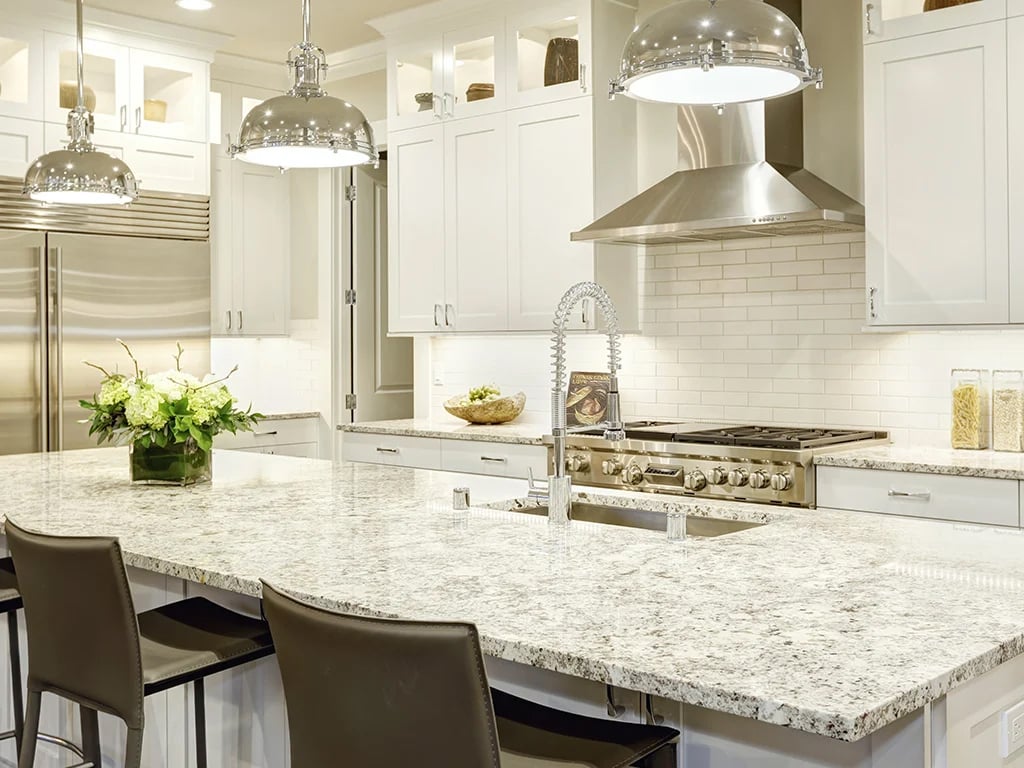
In contrast, natural stone is extracted from quarries in large blocks and then cut into slabs using diamond-blade gang saws, which require significant amounts of water. The natural variation in stone means no two slabs are ever exactly alike, which adds to its beauty. “Some prefer a more controlled product, while others enjoy the natural effects that each stone exemplifies,” Nip says. “It’s a personal aesthetic preference.”
Aesthetic Variations and Preferences

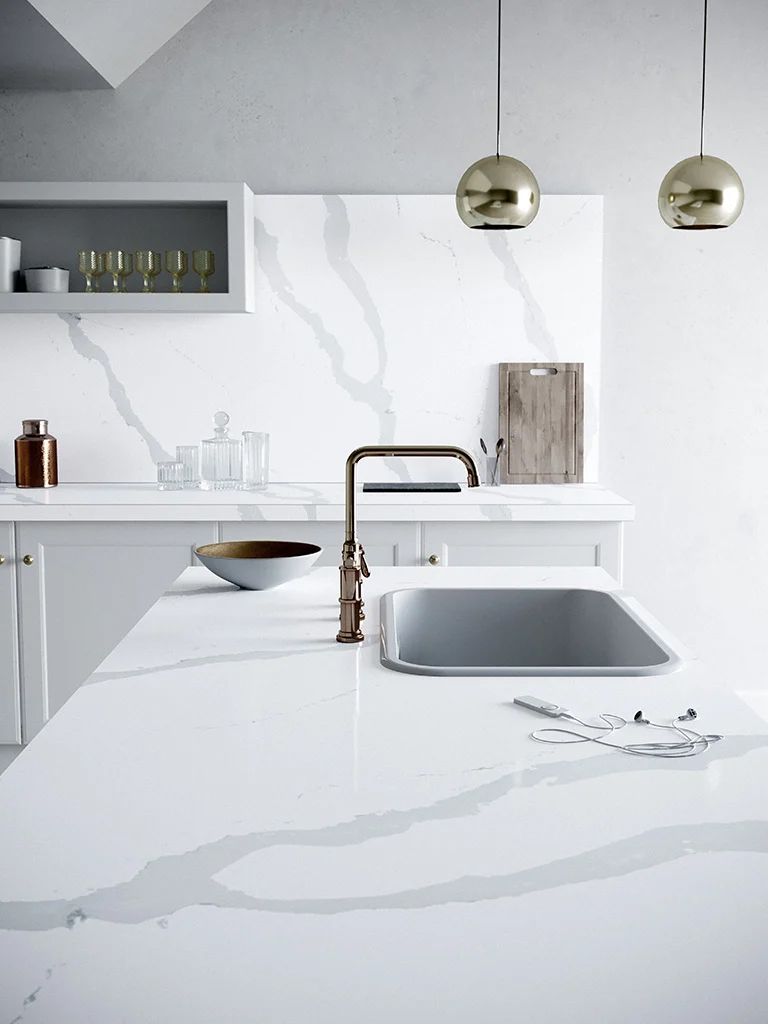
Engineered quartz offers greater control over its veining, color and texture, making it an attractive option for those who prefer a more uniform and predictable aesthetic. Natural stone, on the other hand, showcases the random veining, shading and texture that result from geological processes, giving each slab a one-of-a-kind appearance. Choosing between the two often comes down to personal preference. Some prefer the uniformity of engineered quartz, while others appreciate the organic and unpredictable beauty of natural stone.
Installation and Durability
The ease of installation depends on the hardness of the material. “The general rule of thumb is, the darker the stone, the harder the stone,” Nip details. Darker natural stones tend to be harder and require longer processing times with specialized tools. Because engineered quartz is more forgiving, it can be easier to tool and install. However, for outdoor applications—particularly in places like Hawai‘i where UV exposure is a concern—granite is the preferred choice, as engineered quartz can warp, twist and fade due to its resin content.
Trends for 2025
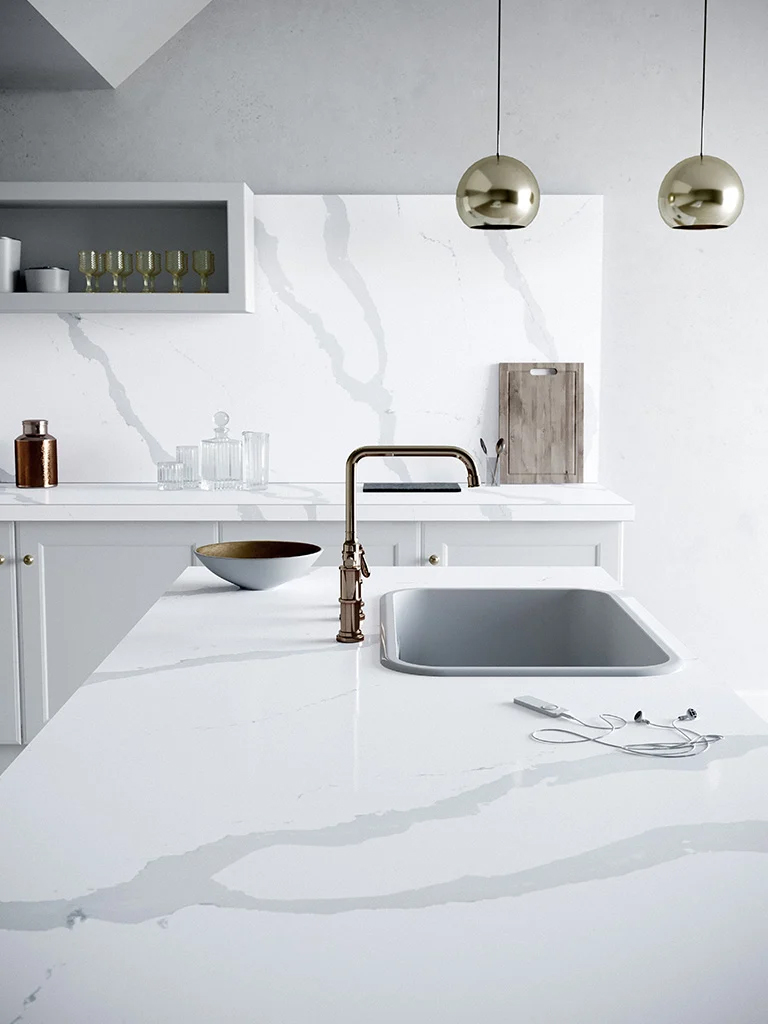
Engineered quartz is expected to continue dominating the market throughout 2025. Its ability to mimic natural stone while offering greater durability and lower maintenance makes it optimal for modern, contemporary interiors.
Nip notes that the most sought-after engineered quartz products feature a white background with light to medium gray veining, mimicking the look of classic Italian marbles. Selective Stone’s signature products are manufactured by Silestone, one of the largest engineered quartz producers in Spain. The Cosentino brand produces premium engineered quartz that is both aesthetically pleasing and eco-friendly, gaining widespread popularity due to their low silica content and sustainable production practices. Selective Stone notes engineered quartz’s popularity as a highly coveted product for its ability to replicate the look of popular white marbles like Calacatta and Carrara while requiring less maintenance. Lighter and whiter colors remain in high demand for surfaces like kitchen countertops and islands, making engineered quartz a durable, low-maintenance solution compared to natural marble, which is more porous and prone to staining. While both engineered quartz and natural stone have specific advantages and ideal applications, the growing popularity of engineered quartz is undeniable. For homeowners prioritizing consistency, low maintenance and a modern aesthetic, engineered quartz is an ideal option to maximize those goals. However, if you appreciate the unique beauty of natural materials and are in search of a durable option for outdoor spaces, natural stone may be a better choice for your home. By understanding the key differences between these materials, you can make an informed decision that best suits your style, budget and functional needs. Selective Stone, 2979 Koapaka St., Honolulu, (808) 839-2979, selectivestone.net
Source: Read the original article | Published: September 30, 2025