
Editor's Note
This editor’s note highlights the key facts and market implications behind “The Survival Story of Domestic Tiles: Once the W”, with emphasis on sourcing, product fit, fabrication, logistics, or buyer impact.
Domestic tiles were once a powerhouse in Taiwan, with peak production ranking fifth globally and 120 domestic tile manufacturers. However, after 2000, domestic tiles faced challenges from Chinese tiles being "laundered" through origin changes, and starting in 2006, low-priced tile dumping from Southeast Asia. Domestic manufacturers successively closed factories, leaving only 22 today. Low-priced tile dumping not only impacts the domestic industry but also creates chaos and difficulty in controlling tile quality in the market. Who will win or lose in this anti-dumping battle?
"Do you know what kind of tiles are used in your home decoration?" Most people carefully check the structure and safety of a house when buying it, but when it comes to choosing tiles, they mostly select based on pattern and price. However, tile quality is also very important.
Taiwan was once a major tile-producing country, ranking among the top five globally. At its peak, there were 120 domestic tile manufacturers. But due to the impact of low-priced tile dumping from Southeast Asian countries in recent years, many tile manufacturers have successively closed factories, leaving only 22 factories. The massive dumping of low-priced tiles not only impacts the domestic industry but also causes chaos and difficulty in controlling tile quality in the market. How should consumers choose tiles? Who will win or lose in this "anti-dumping war" between manufacturers and importers? What challenges does the future hold for Taiwan's tile industry? These issues deserve attention.
How is a tile produced?
The main components of tiles are minerals such as quartz, feldspar, and clay, mixed in different formulas. They are first made into slurry, then spray-dried into powder. Domestic tile factories mix their own raw materials from the start, aiming to control every production step to produce high-quality domestic tiles. Zhang Qingfu, Assistant Manager of Production at a tile factory in Miaoli, told Independent Correspondent , "In terms of materials, the factory first uses a composition analyzer to understand the potassium, iron, manganese, and aluminum content in each ore, and then finds the best combination ratio." These raw materials are then pressed into tile shapes using a high-pressure forming machine. The tonnage of this machine is key to determining the tile's density and hardness. Next, glazing and printing are applied, followed by sintering in a kiln at high temperature. Zhang Qingfu explained that the raw minerals are sintered at high temperature to melt them into tiles. He noted that the factory's sintering temperature reaches 1230 degrees Celsius. "The higher the temperature, the fewer pores remain after melting, because the melt binds these pores together." Zhang Qingfu said that early tiles were not fired at 1230 degrees Celsius; they were mostly just ceramic decorative materials with more pores and poorer water absorption. He also mentioned that with continuous innovation in modern production technology, products are constantly changing.
Domestic tiles were once the world’s fifth largest producer, now only 22 companies remain
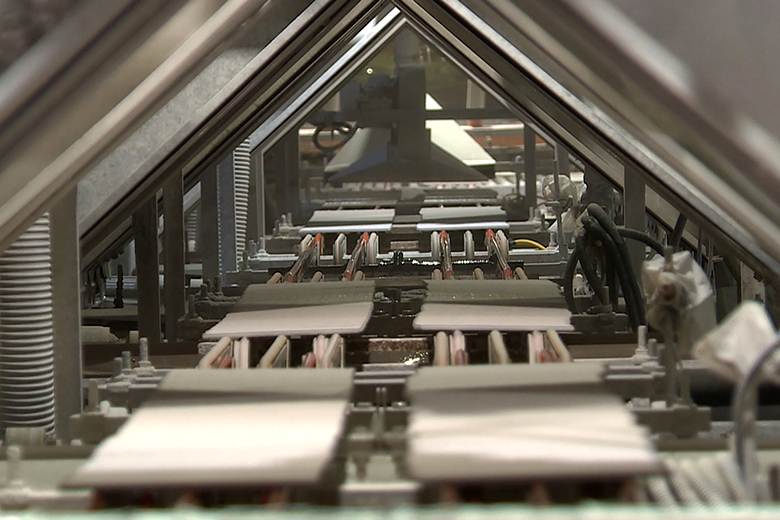
In fact, tile quality depends on the ratio of raw materials and the kiln firing temperature. Domestic tile production technology has continuously improved, from equipment investment by manufacturers to government MIT label product certification, the industry has been upgrading. However, due to the impact of low-priced tile dumping from Southeast Asian countries in recent years, domestic tiles have gradually lost market share, causing a severe blow to the industry.
Lin Rongde, Chairman of the Taiwan Ceramic Industry Association, told Independent Correspondent , "During the peak period in 1987 and 1988, there were up to about 125 domestic tile manufacturers in Taiwan, and Taiwan was once the world's fifth largest tile producer."
"Around 2006, Chinese tiles were smuggled to Southeast Asia to change their origin and then sold to Taiwan," Lin Rongde pointed out that this "origin laundering" incident caused the first wave of impact on domestic tiles. In 2016, low-priced tile dumping from India, Vietnam, Indonesia, and Malaysia caused another, even greater impact. Now, only 22 domestic tile manufacturers remain in Taiwan.
Facing the threat of large-scale dumping of Southeast Asian imported tiles at prices lower than their domestic market prices, the Ceramic Association, to protect its rights, applied to the Customs Administration of the Ministry of Finance in January last year (2020) to impose anti-dumping duties on ceramic tiles imported from India, Vietnam, Malaysia, and Indonesia. After an investigation by the Ministry of Finance, dumping was confirmed in July this year (2021). In September, the Ministry of Economic Affairs' Trade Investigation Committee also held a meeting and determined that the dumping of ceramic tiles from the four Southeast Asian countries had caused material injury to Taiwan's domestic tile industry. Lin Rongde noted that due to the impact of low-priced tile dumping from Southeast Asian countries, the market share of domestic tiles has fallen to about 45%, with about 56% being imported, including high-end tiles from Italy and Spain. Lin Rongde said that the four low-priced dumping countries they are suing account for 76% of the overall import chain, causing losses to domestic tile manufacturers. According to the Trade Investigation Committee's investigation, tile prices from the four Southeast Asian countries continuously decreased by 12%, 6.1%, and 3.4% from 2017 to 2019, and import volumes increased by over 8% annually. Data shows that the current import tariff on tiles is 10%. If the final review confirms the ruling, in addition to tariffs, anti-dumping duties ranging from 0% to a maximum of 20.07% will be imposed on manufacturers from these four countries.
Responding to environmental and testing requirements, domestic tiles are high-quality and higher-priced
Among the four countries dumping low-priced tiles, India's prices are the cheapest, with a price difference of 30% to 50% compared to domestic tiles. Who buys these low-priced tiles? Lin Rongde pointed out that many construction companies use low-priced tiles without caring about brand.
Mason Lin Lvtang also told Independent Correspondent , "From the perspective of small subcontractors like us, when contacting clients, we first understand their needs and budget plans, and explain the pros and cons of domestic and imported tiles." He even said that based on his experience in masonry work, the quality of tiles can be seen over a five-year period.
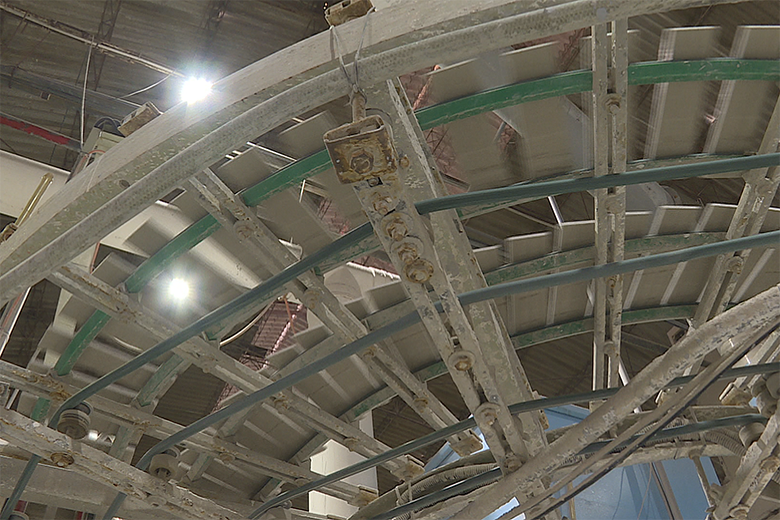
Lin Lvtang explained that from a construction perspective, low-priced tiles do not have the same quality control as domestic tiles, making construction more difficult. He gave an example of imported Southeast Asian tiles: the surface may become foggy and lighter in color after about five years, and the large pores on the surface easily trap dust, making the appearance look foggy and black. Currently, domestic tiles undergo tests for flexural strength, abrasion resistance, and water absorption. In addition to meeting CNS national standards, domestic tiles that apply for MIT certification must pass factory inspections and various product quality tests. However, for imported tiles, except for exterior wall tiles, other types do not require relevant inspections. Lin Rongde called on the government to require that if these Southeast Asian tiles are to be imported into Taiwan, they should be subject to the same testing standards as Taiwan and apply for quality certification before being allowed for import. In terms of the production environment for domestic tiles, Taiwan's tile factories are now different from the traditional image of dusty air pollution. To meet environmental standards, domestic tile factories must invest considerable costs in professional air pollution control equipment, such as using wet scrubbers to absorb and filter exhaust gases during firing, and using wastewater treatment and waste recycling equipment to minimize environmental burden.
Products seek innovation but cannot compete with low-priced Southeast Asian tiles
Therefore, under the layers of domestic testing standards and environmental requirements, the cost of Taiwan's domestic tiles is inevitably higher than that of Southeast Asian countries. Facing the challenge of low-priced dumping, in addition to appealing to authorities to impose anti-dumping duties, domestic tile manufacturers are also actively researching and developing to continuously innovate products.
Domestic tile manufacturer Li Jinshan said that because their tiles are for exterior walls, "safety" is always a priority. They have also collaborated with research institutions and individuals to develop functional products. Li Jinshan noted that since their products are mainly for exterior walls and Taiwan is a hot region, he considers how functional products can improve tile insulation for a better living environment.
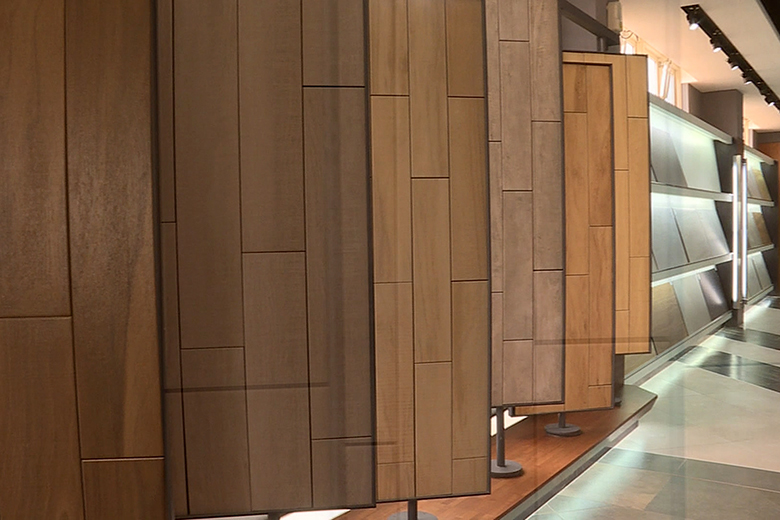
Another domestic tile manufacturer, Wang Tengwei, pointed out that facing competition both inside and outside the Taiwanese market, they try to find demand in the domestic market. For example, he found that Taiwanese people like the feel of wood in their homes, so they attempted to develop tiles with wood grain surfaces to create realistic wood-like effects. But even though Wang Tengwei strives to innovate products and observe current popular decoration styles to develop corresponding tile types for the market, he believes that even with continuous product innovation, domestic tile prices are still 30% to 40% higher than Southeast Asian products. Given that builders have cost considerations and consumers have no choice, Wang Tengwei said that the current unfair trade barriers are very detrimental to Taiwan's industry. Wang Tengwei emphasized that what domestic tile manufacturers care about is simply being able to compete under fair market conditions. He pointed out that tiles produced domestically must comply with environmental regulations and undergo regular national standard inspections. Wang Tengwei noted that when Taiwan's domestic tiles are sold to Southeast Asian countries, those countries require manufacturers to apply for their national standards—and even when applying, their authorities come to Taiwan for factory inspections.
"But Taiwan does not require the same from these countries," Wang Tengwei observed. When Southeast Asian tiles are sold to Taiwan, they only need to be imported and pay tariffs before being sold on the market. He emphasized that these low-priced tiles do not need to pass Taiwan's national standard inspections. "Without regular inspections, there is no quality control."
Source: Read the original article | Published: November 08, 2021