
Editor's Note
This editor’s note highlights the key facts and market implications behind “Military Commentary: Lv Qi – Cheap but Good? Chi”, with emphasis on sourcing, product fit, fabrication, logistics, or buyer impact.
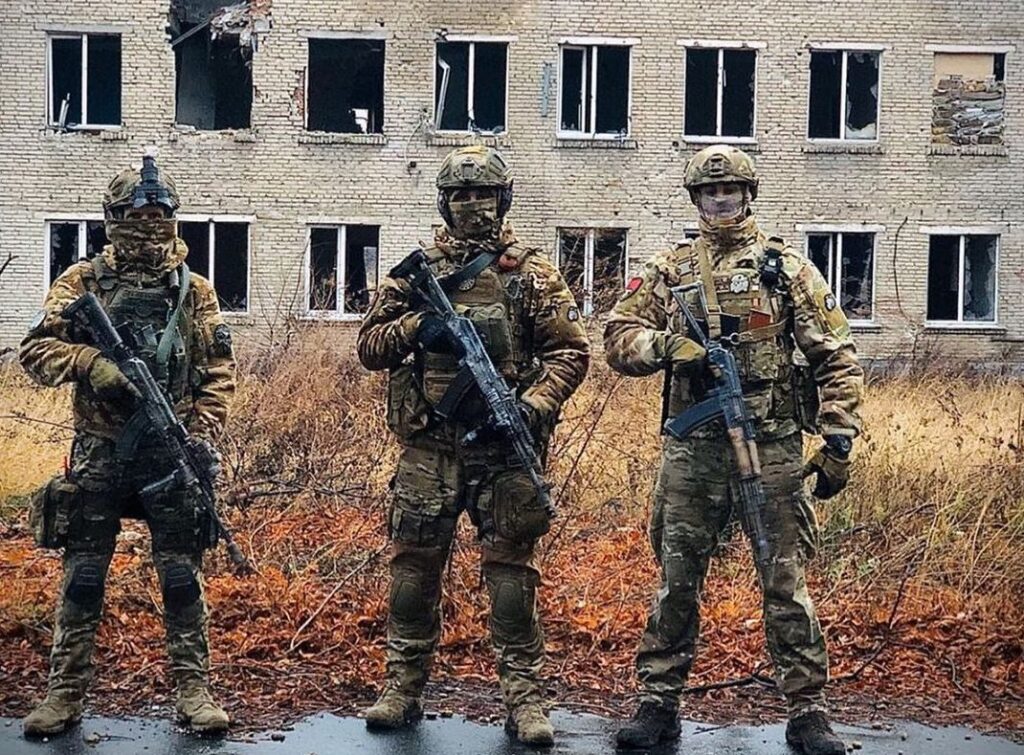
Recently, a YouTube video went viral on Chinese mainland networks: it showed a Russian soldier participating in the Russia-Ukraine war expressing the brutality of war, and also stating that a body armor he purchased from China had saved his life twice in the past month of fighting. Is Chinese body armor really that miraculous? Let's find out.
First Encounters with Body Armor
As an imported product, body armor has a relatively long history in China. During the 1940s Liberation War, the People's Liberation Army (PLA) captured US-supplied body armor multiple times while fighting the Nationalists. In the Korean War, they directly captured many body armors from US forces and shipped them back to domestic factories for research or imitation. However, at that time, body armor was seen as another sign of US soldiers being 'cowards,' and PLA officers and men were reluctant to wear it. But in the late 1950s, in response to ongoing armed sabotage and assassination plots against senior leaders by spies, the public security system developed China's first body armor. Its main protective materials were fiberglass and kapok. Due to limited design experience and poor material performance, it could only provide some protection against common small-caliber pistols and grenade fragments. However, the first-generation body armor was uncomfortable, weighing 6–7 kg per piece, so it was not widely adopted and mostly ended up in storage. Nevertheless, PLA generals who had participated in the Korean War and the war in Vietnam recognized the importance of body armor. In the 1960s, a PLA-led research team began developing a new generation of body armor. Besides improving comfort, they focused on materials, creatively using chrome corundum. Chrome corundum's main component is alumina, and high-performance alumina ceramic (used in early composite armor) is a key material for most main battle tanks. This shows how advanced the design concept was at the time—the US only first completed ceramic composite armor in 1962, and today's popular body armor plates are all ceramic composite armor. However, this generation was expensive and not mass-produced, only used in limited key military units.
Forging an Invincible Armor
In the 1980s, during the prolonged and intense border war with Vietnam (the two mountains campaigns—Faka Mountain and Laoshan), close-quarters combat increased soldier casualties. Some units improvised by combining old fragmentation vests with the standard 56-style tactical vest to create a DIY body armor. This unnumbered product unexpectedly became the PLA's first integrated carrying and protection system—a battlefield-born creation.

Soon, the PLA General Logistics Department's Quartermaster Equipment Research Institute developed the 'TF90-54' and 'TF90-79' body armor vests. Both used high-performance special bulletproof steel, capable of withstanding fire from a Type 54 pistol at 5 meters and a Type 79 submachine gun at 10 meters. These became the legendary 'Hushen' series. On July 1, 1997, when the PLA garrison entered Hong Kong, they wore this body armor. However, it was still not widely issued because the 'Hushen' series could not stop rifle bullets, limiting its combat effectiveness. After the 1990s, with the emergence of various composite materials, Chinese-made body armor entered a major development phase. Representative models include the Type 04 and Type 06 body armors. The Type 04 is a lightweight model, the most widely issued in the PLA and with the most civilian derivatives. The Russian soldier in the video used a civilian version of the Type 04. The Type 06 heavy body armor uses a soft-hard composite material, consisting of seven panels: throat, neck, shoulder, arm, rib, groin, and front-back protection. It offers large coverage and weighs about 8 kg, making it the most advanced model in PLA service at the time. The Type 06 uses two types of ballistic plates: one made of ultra-high molecular weight polyethylene (UHMWPE), a typical soft defense material with strength about 20% higher than ordinary aramid fiber and 5–10 times that of steel wire, but only one-eighth the density. The other is a ceramic plate made of silicon carbide or boron carbide, a new-generation ceramic composite armor material with excellent ballistic performance, also used in Chinese military and police bomb disposal suits. CCTV's military science program once tested the new ceramic composite armor material in Chinese body armor. Testers used Chinese 5.8mm steel-core bullets and 53-type 7.62mm armor-piercing incendiary rounds at 15 meters. They compared a 3.9 kg steel plate and a 2.8 kg ceramic plate. The steel plate was penetrated by the 5.8mm steel-core bullet, but the ceramic plate effectively stopped it. In the second round, using the more powerful 7.62mm armor-piercing incendiary round, the ceramic plate only showed paint damage, with no penetration. Notably, Chinese 5.8mm steel-core bullets are extremely penetrating—they can pierce light armored vehicles at 15 meters—so the new material's performance is remarkable.

Chinese Body Armor Popular Overseas
Chinese body armor sells well abroad due to its good quality and low price. According to statistics, China exports over 3 million pieces of body armor annually, with sales rising during conflicts. A US网友 once doubted the quality of a $100 Chinese body armor and conducted a destructive test on a Level IV plate. He fired 7.62mm intermediate rounds and Mosin-Nagant rifle bullets at close range. The plate withstood all attacks without any penetration. He posted the video online, and many netizens marveled at the quality. A foreign trade company in Ningbo produces the highest-spec body armor that can stop machine gun bullets at 7 meters—a distance at which machine gun fire can penetrate 20mm steel plates. Their products have been used in armor protection, aerospace, marine cables, deep-sea anti-wave cages, and sports equipment. As early as 2005, they became a supplier to the British government. In response to Chinese body armor appearing on battlefields worldwide, the US recently had to purchase 100,000 high-power rifles. However, China's latest 'Pangolin Body Armor,' inspired by pangolin scales, can recover its structure after being hit. After rinsing with water for about five minutes, it returns to normal, with no trace of the impact. This is because the material uses a unique connection method that allows molecules to retain shape memory. After effectively blocking external physical impact, water injection awakens the molecules' original memory, gradually restoring the original shape, enabling multiple uses. On battlefields and in countries where civilians can legally own guns, a cheap and sturdy body armor can save lives. No wonder Chinese body armor sells globally. While we may not need to buy one, keeping an eye on listed companies that produce body armor might yield a small profit.
Source: Read the original article | Published: December 02, 2022