
Editor's Note
This editor’s note highlights the key facts and market implications behind “A Slab Priced at 1.28 Million NTD: ‘Princess Blu”, with emphasis on sourcing, product fit, fabrication, logistics, or buyer impact.
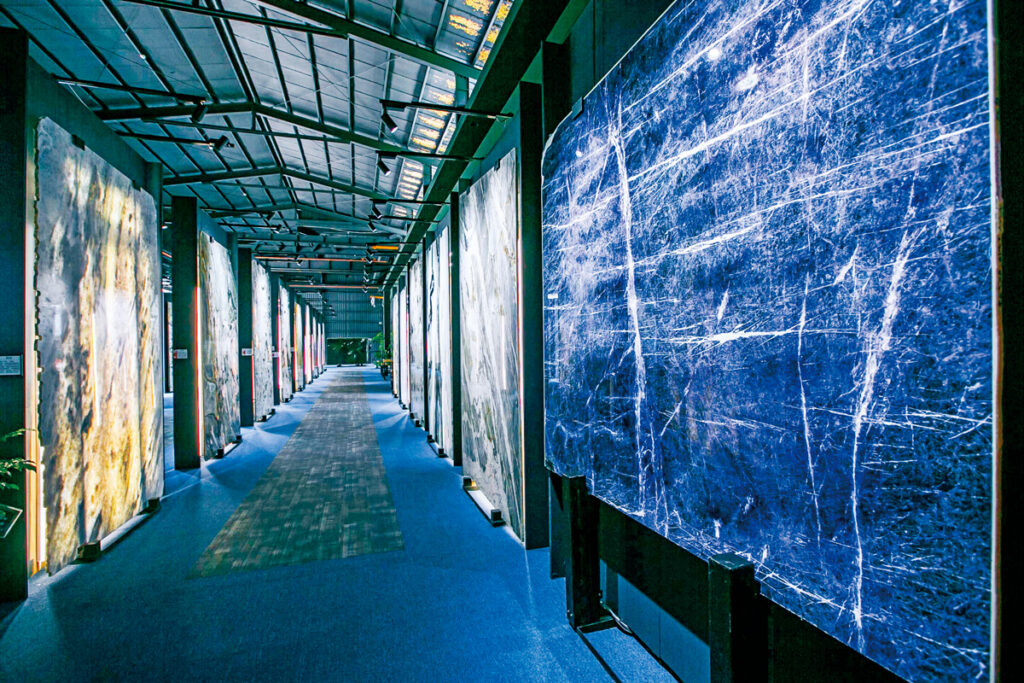
Stone decoration has long been the go-to choice for luxury homes and high-end brands to create grandeur and texture, and recently the 'luxury stone' trend has gained even more momentum. According to a survey by Grand View Research, the global natural stone market is expected to reach approximately USD 69.2 billion (about NTD 2.15 trillion) by 2030, with a compound annual growth rate of 4.7%. Luxury stones refer to more extravagant and expensive types of stone. In the domestic market, stone is priced per 'cai,' where one cai equals an area of 30 cm by 30 cm. Entry-level marble typically costs between NTD 180 and 380 per cai, while luxury stones range from NTD 5,000 to tens of thousands. Most luxury stones have undergone compression, high temperature, or high pressure changes beneath the Earth's surface, so they contain precious metal content such as crystal formations. Their appearance includes various colored crystals, titanium gold threads, agate, and jade-like textures. Due to their high hardness, low yield, and the fact that they often take billions of years to form, they are frequently referred to as 'semi-precious gemstones.' The patterns on each luxury stone are naturally formed, with most originating from Brazil or Italy. High-quality stones often require competitive bidding. During the Renaissance, artist Michelangelo once lived for two years in a quarry on the Carrara mountains in Italy, waiting for the marble he deemed most suitable. Hollywood actor Johnny Depp also visited the area, snapping up two slabs of 'Statuario,' known as the king of Italian stones, within five days. In Taiwan, luxury stones are gradually transforming the industrial image of stone merchants. On 'Stone Street' in Bali, New Taipei City, many businesses have converted their purely factory-style management into museum-like layouts, displaying slabs vertically one by one instead of stacking them, with lighting at different color temperatures to enhance the stone's color and translucency.
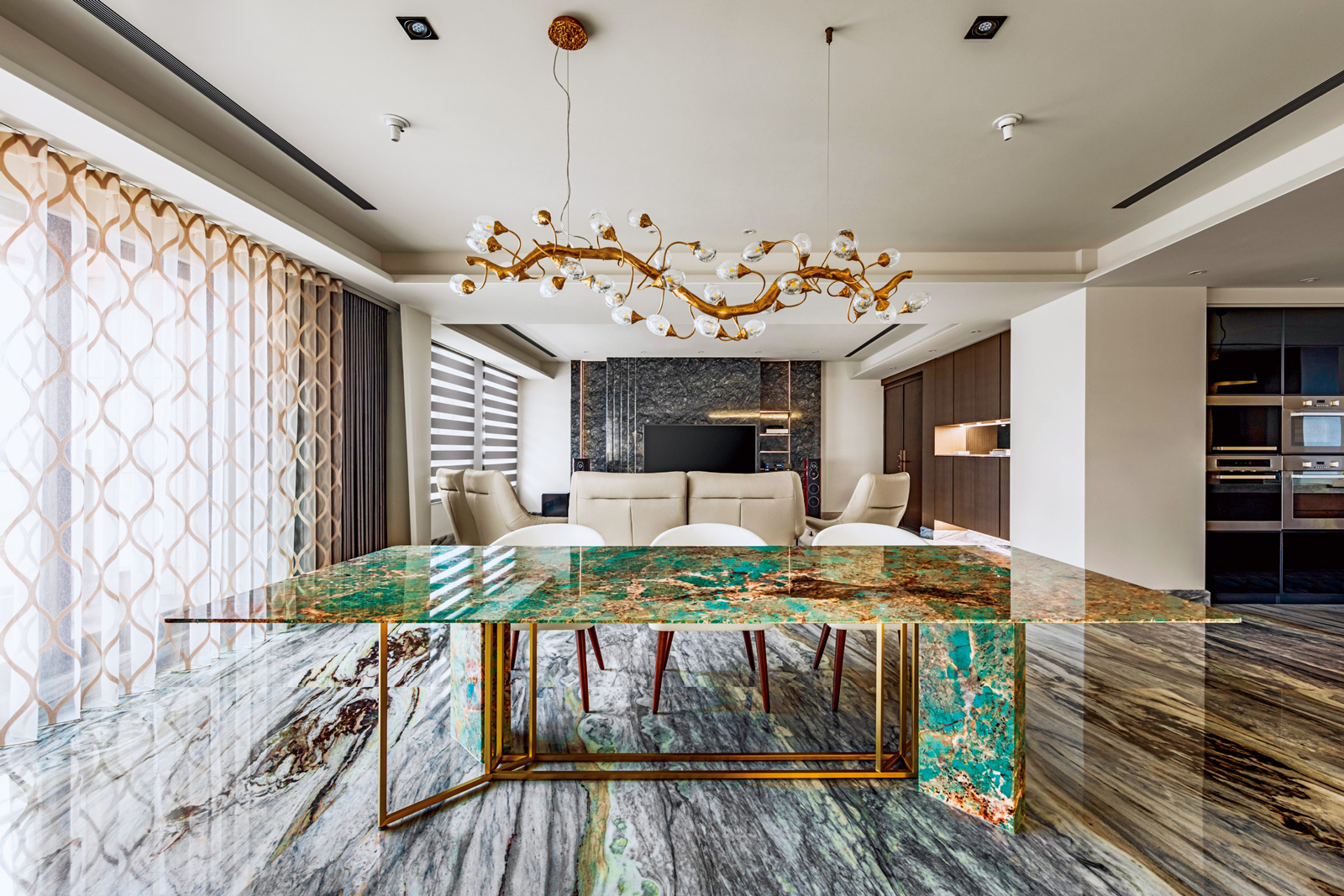
Opened in June this year, the M Museo Stone Aesthetics Hall spans 500 ping and combines an art gallery format to showcase hundreds of stone pieces. Upon entering, visitors immediately see the 'Princess Blue' (Sodalite), which once set the record for the highest import price per slab in Taiwan at NTD 1.28 million. This is an extremely rare sodalite in nature. In 1891, British Princess Margaret visited the Lake Ontario region of Canada, where sapphire deposits were excavated, and she used the stone to decorate royal residences. Wu Xuanmin, CEO of M Museo, revealed that luxury stones abroad are often used as design centerpieces for walls and bathrooms. However, due to the generally limited living space in Taiwan, large island counter designs are difficult to achieve, so the most popular applications are dining tables, followed by welcome walls or bathrooms. Younger consumers prefer bright, vivid colors like blue and green, while older individuals favor understated black and gray solid tones.
Luxury Homeowners Gift Tiffany Tables
For example, Amazonite (also known as Microcline), renowned for its natural blue-green hue, is one of the most representative luxury stones. Initially resembling the brand color of luxury brand Tiffany & Co., it was selected as the uniform decoration material for global counters, earning the nickname 'Tiffany Stone.' Middle Eastern royal palaces also use this stone for decoration. Chen Yukai, Brand Director of Cheng Hao Stone, shared that a male Taiwanese client custom-ordered a table made from this luxury stone as a gift for his wife, offering an alternative to giving jewelry.
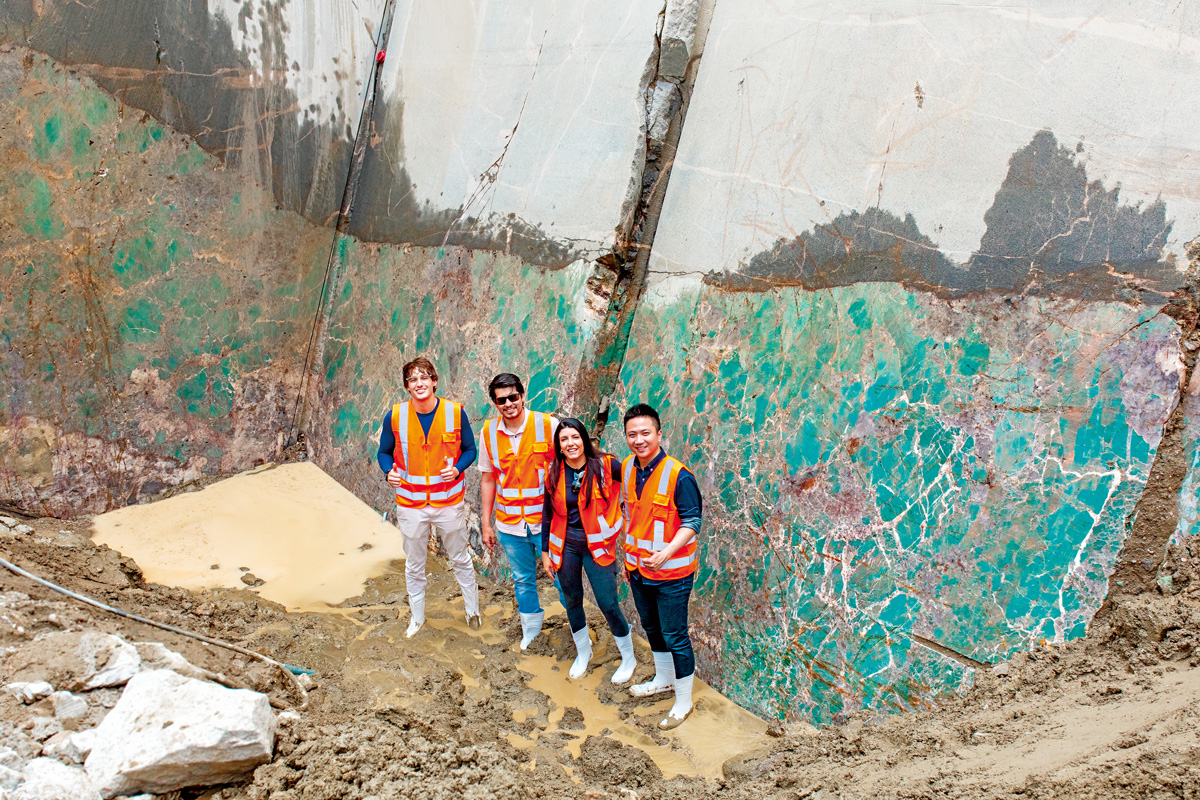
Given the high cost of luxury stones and the difficulty of altering custom pieces, selection requires careful planning. Several industry insiders unanimously emphasize that the first consideration is visual appeal, followed by touching the stone's surface to check for cracks—the more intact, the better. Then, carefully inspect for black spots or rust marks, which could lead to future damage. Selection also involves luck, as each stone slab has its own serial number, intended to align the natural grain patterns for a seamless match. Consumers must purchase slabs in sequential order to achieve this effect. In the past, stone was merely a part of decoration materials, but recently, many businesses have shifted from stacked displays to gallery-style setups. For instance, Jialian Stone Industry has launched a luxury stone gallery, and Cheng Hao Stone has collaborated with Double Square Gallery to provide raw stones for artists to create. Interestingly, some visitors even hesitate to touch the stones, as the atmosphere truly resembles an art museum. When entering these transformed stone showrooms, one can also ponder what else stone can offer beyond furniture and decoration.
Source: Read the original article | Published: August 13, 2023