
Editor's Note
This editor’s note highlights the key facts and market implications behind “Eight Must-See Foreign Pavilions at the Osaka Ex”, with emphasis on sourcing, product fit, fabrication, logistics, or buyer impact.
The World Expo 2025 officially opens this Sunday (April 13) on the artificial island Yumeshima in Osaka, running for six months until October. This marks Japan's third time hosting the Expo, following Osaka in 1970 and Aichi in 2005, under the theme "Designing Future Society for Our Lives," bringing together 158 countries and regions.
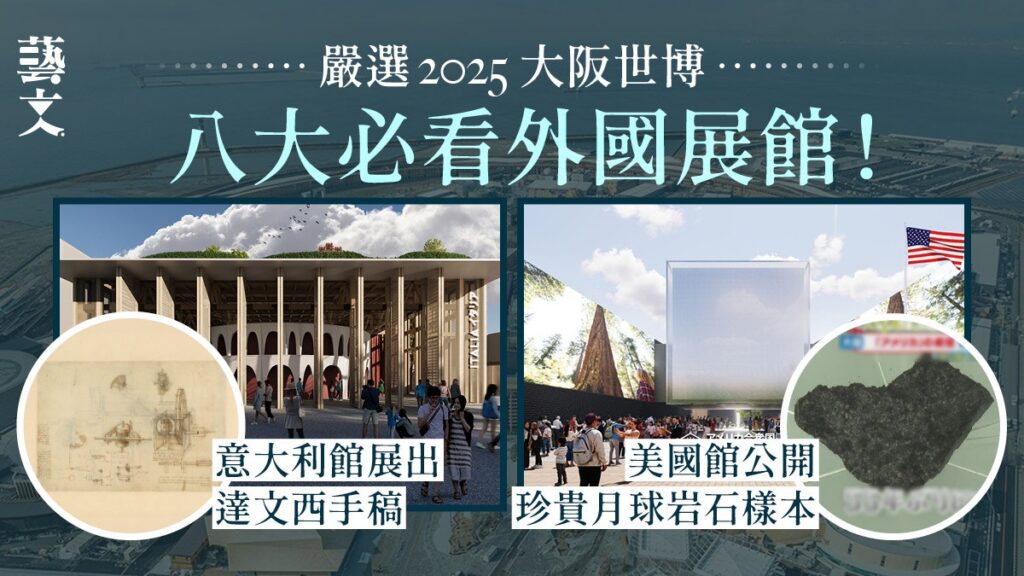
The giant structure of the Osaka Expo, "The Grand Ring," is a standout feature. Beyond this, each country's pavilion offers unique characteristics. Below, we highlight eight must-see pavilions, showcasing their architectural concepts and interior exhibits.
Italian Pavilion Displays Works by da Vinci and Caravaggio
The Italian Pavilion at the Osaka Expo is a must-visit for its luxurious exhibits. The architecture blends classical elements such as theaters, arcades, plazas, and Italian gardens, designed by architect Mario Cucinella under the theme "Art Regenerates Life," reinterpreting the Renaissance ideal city with modern techniques.
The Vatican section will feature Caravaggio's masterpiece "The Deposition of Christ," conveying the theme "Beauty Brings Hope" through profound religious emotion and exquisite painting skill. The painting is placed just 30 cm above the ground, allowing viewers to appreciate it at eye level and feel its impact.
Additionally, the Italian Pavilion will display four pages of Leonardo da Vinci's "Atlantic Codex" manuscript, lent by the Biblioteca Ambrosiana in Milan, including designs for flying machine gears and architectural perspective diagrams. The Farnese Atlas sculpture, showing the Titan Atlas carrying a celestial sphere engraved with constellations, makes its first trip to Japan, symbolizing humanity's eternal pursuit of knowledge. An AR device next to the sculpture allows visitors to compare ancient astronomy with modern star maps.
Jago's installation "Circulatory System" combines scientific knowledge with artistic skill, featuring 30 ceramic hearts suspended in a ring, with liquid ceramic simulating heartbeat waveforms. Floor projections translate pulses into audio, symbolizing the continuity and infinity of life.
Precious Moon Rock Sample Returns to the US Pavilion
With recent news of Katy Perry going to space trending on social media, space enthusiasts should not miss the US Pavilion at the Osaka Expo. The pavilion consists of two triangular wooden structures and a floating cube, with LED screens on the exterior displaying iconic US imagery and landmarks.
Inside, the pavilion features five immersive exhibition zones themed around Connecting, Innovation, Travel, Space, and Launch, guiding visitors to think about future possibilities from new perspectives. The most anticipated is the "Space" zone, where visitors can see a precious moon rock sample. This moon rock was exhibited at the 1970 Osaka Expo and returns to Osaka, symbolizing US commitment to Japan-US space cooperation.
The "Launch" zone inside the cube is equally important, recreating the thrilling scene of a NASA rocket launch through immersive visuals, surround sound, and cinematic lighting, making visitors feel as if they are aboard a rocket heading into space. It also displays stunning images from the James Webb Space Telescope.
China Pavilion Brings Lunar Soil Samples
Speaking of space, the China Pavilion also features space-related exhibits. The pavilion, themed "Building a Community in Harmony with Nature – Green Development for a Future Society," has an exterior shaped like bamboo slips, engraved with 119 famous Chinese poems, reflecting the fusion of traditional Chinese culture and modern architecture. Inside, the narrative is divided into three chapters: "Harmony between Heaven and Humanity," "Lucid Waters and Lush Mountains," and "Endless Life," showcasing China's concepts and practices in nature, environmental protection, and sustainable development.
The most eye-catching exhibits are lunar soil samples brought back by Chang'e-5 and Chang'e-6, marking the first time samples from the moon's near and far sides are displayed side-by-side for comparison. The background of the lunar soil display area features Dunhuang-style murals copied by artist Chang Shana, connecting traditional aesthetics with space technology.
Kengo Kuma Designs the Qatar Pavilion
If you are interested in the designs of Japanese architect Kengo Kuma, the Qatar Pavilion, designed by him, is a must-see. The pavilion's exterior is covered with white fabric over a wooden structure, inspired by the traditional Qatari dhow sailboat.
The pavilion is divided into two areas, "Ocean" and "Land," recreating the gradient landscape where sea and sky merge when sailing to Qatar. Outside the Qatar Pavilion, the Portugal Pavilion at this Expo is also designed by Kengo Kuma's architecture firm.
Saudi Arabia Pavilion
The Saudi Arabia Pavilion, designed by the renowned British architecture firm Foster + Partners, draws inspiration from traditional Saudi village structures, guiding visitors to explore Saudi Arabia immersively. The pavilion is built with low-carbon materials, equipped with energy-efficient lighting, rainwater harvesting systems, and solar power technology, aiming for net-zero carbon emissions.
Visitors pass through gardens planted with native Saudi species, entering the core exhibition area "Heart of Saudi" along narrow alleys. During the day, the courtyard offers a peaceful resting place for contemplation; at night, it transforms into an event venue hosting over 700 events, including daily music and theater performances, film screenings, performing arts, and storytelling.
Czech Pavilion Showcases Dreamlike Glass Art
If you see a spiral glass corridor exterior, you have arrived at the Czech Pavilion. The exterior wall features Bohemian crystal inlaid on a CLT wooden structure corridor, with light refraction creating a dreamlike effect, showcasing Czech innovation in glass art, craftsmanship, and technology.
The pavilion features the Venice Biennale work "Trees Grow from the Sky," using transparent crystal to replicate real tree trunks. The corridor walls are painted by artist Jakub Matuška with a 200-meter-long scroll, using comic style to metaphorically depict humanity's journey from daily trivialities to cosmic truth. Czech art master Alphonse Mucha's unfinished work "The Three Ages" is transformed into a multimedia installation, inviting viewers to reflect on how creativity drives civilization.
Poland Pavilion Pays Tribute to Chopin
When thinking of Poland, many people recall composer Frédéric Chopin, a key theme of the Poland Pavilion. The pavilion's wave-shaped wooden exterior symbolizes the flow of human creativity. The central stage will feature daily piano performances of Chopin's works, while the animation "Timeless Chopin" presents the musician's life frame by frame in oil painting style, telling how Chopin's music influences the present, with scenes including his birthplace in Żelazowa Wola.
The pavilion, themed "Creative DNA," features multiple interactive installations. For example, "Seven Herbs" introduces Polish herbal traditions, allowing visitors to mix virtual herbs through animation. "The Most Polish Landscape" uses AI to generate images of Polish landscapes, showcasing ecological diversity from forests to wetlands. "Aura" uses digital control to produce sounds from natural materials like wood and stone, combined with projections to interpret Polish folk songs.
Bahrain Pavilion Resembles a Sailing Dhow
Bahrain, meaning "two seas" in Arabic, refers to both the salty Persian Gulf surrounding the island and the freshwater springs flowing beneath the desert. F1 racing fans may be familiar with it.
The pavilion is shaped like a wooden sailboat, with architect Lina Ghotmeh drawing inspiration from the traditional Bahraini dhow. The design incorporates Japanese woodworking techniques, highlighting cultural ties between Bahrain and Japan and honoring the country's maritime heritage. The structure blends traditional shipbuilding techniques, covered with an aluminum layer, using passive cooling technology, and is easy to disassemble and recycle, aligning with environmental principles.
Source: Read the original article | Published: April 16, 2025