
Editor's Note
This editor’s note highlights the key facts and market implications behind “Aesop Revives Old Taipei Memories with ‘Flower T”, with emphasis on sourcing, product fit, fabrication, logistics, or buyer impact.
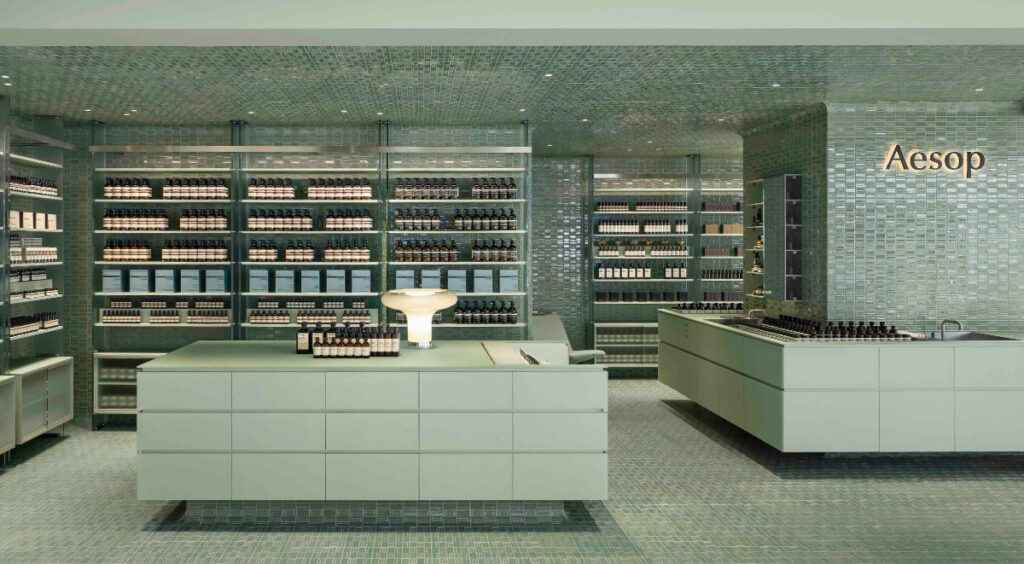
'Flower tiles' are commonly found in old Taiwanese houses. These tiles are not just decorations; they carry the craftsmanship of artisans and the memories of the city. Although traditional craftsmanship is gradually fading, some artisans still dedicate themselves to preserving these stories of Taiwan. Recently, Aesop collaborated with the ceramic tile studio 'Pianpianhua' to create the Taipei Fuxing SOGO store space using thousands of handmade flower tiles, embedding the memories of old Taipei into contemporary daily life and giving new vitality to traditional craftsmanship through the gentle luster of celadon green.
Continuing the Craft of Flower Tiles, Preserving City Memories
Strolling through the old districts of Taipei, one can see traditional flower tiles on the exterior walls of old houses everywhere. These tiles either recreate animal patterns or depict folk tales passed down by word of mouth. Each piece is a slice of time and memory. Over the decades, despite numerous urban renewals in Taipei and drastic changes to the city's appearance, some artisans have carefully preserved the flower tiles and the stories of home and memory they carry. The local Taiwanese ceramic tile studio 'Pianpianhua' is such a 'memory guardian.'
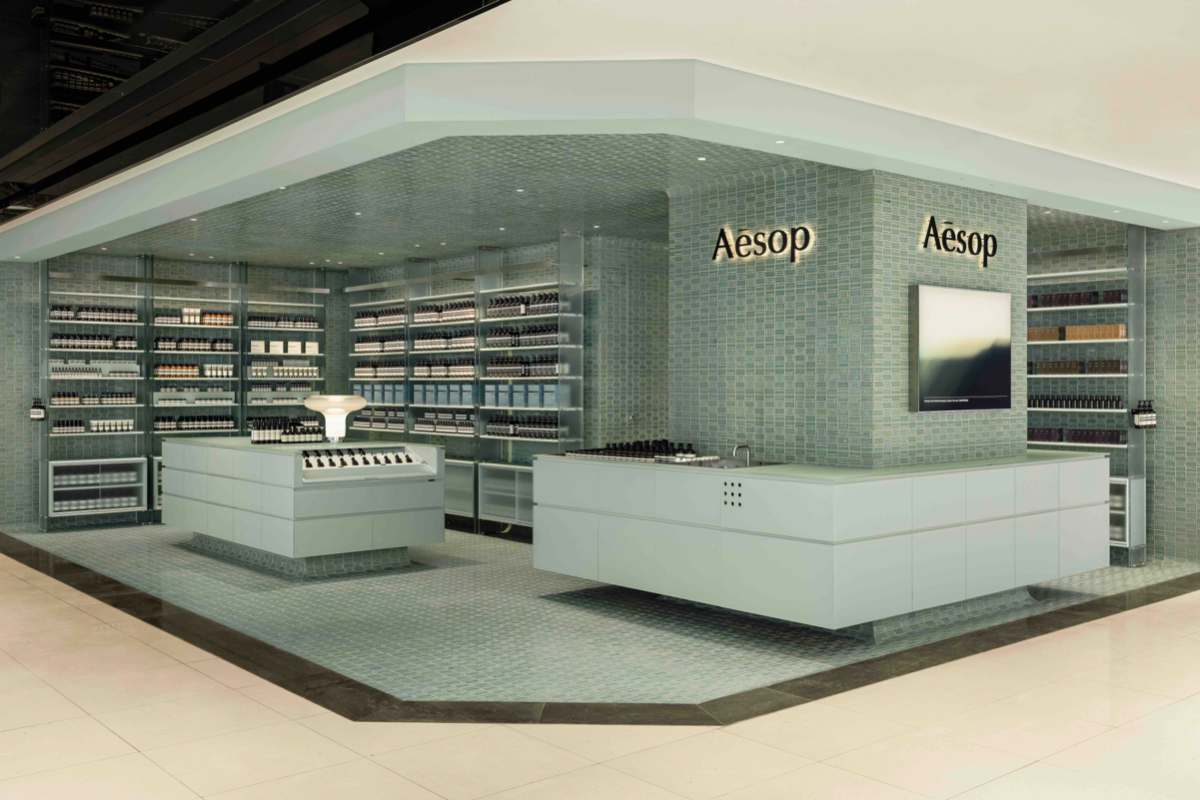
Aesop Taipei Fuxing SOGO Store: Condensing the Scenery of Old Taipei with Handmade Flower Tiles
Since the 1950s, old brick factories have gradually closed, and traditional brick-making techniques have nearly been lost. To bring these precious old flower tiles into contemporary life, Pianpianhua walked through the alleys of Taipei, photographing and recording various old ceramic tile patterns, attempting to piece together their historical context. At the same time, they continued traditional craftsmanship by making flower tiles by hand to sustain local aesthetics. This collaboration between Pianpianhua and Aesop for the Taipei Fuxing SOGO store space design is a gentle response to the cultural memories carried by flower tiles. The entire store is enveloped in celadon green, a color inspired by classic Asian ceramic colors—warm, steady, and intriguing. Pianpianhua handcrafted approximately 1,700 flower tiles for Aesop, covering the store's ceiling, walls, and floor. The tile patterns are inspired by the common patterns on the pillars of old Taipei apartment arcades, condensing the city's memories within the store. The space also incorporates hammered and frosted glass materials to balance the solid texture of the tiles, adding a touch of lightness; the corners are rounded to soften the spatial contours.
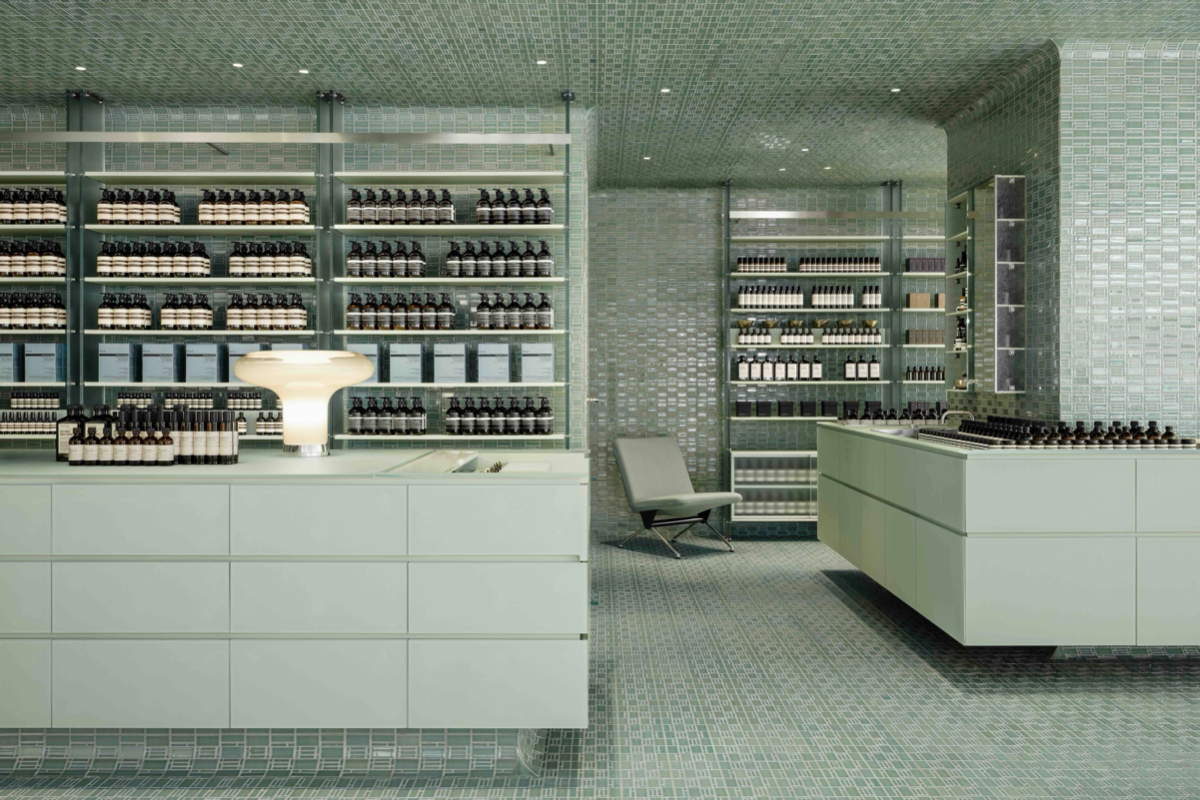
Presenting Classic Flower Tiles with New Techniques
It is worth noting that when Pianpianhua created the tiles, they differed from the early dry mechanized mass production methods by adopting a wet-forming process: vacuum-pressing raw clay into 3D-printed molds, followed by hand cutting, bisque firing at 800°C, glazing, and glaze firing at 1230°C. While continuing traditional craftsmanship, they also incorporated contemporary techniques to offer a different interpretation.
Modernist Master Charlotte Perriand’s Works Adorn the Space
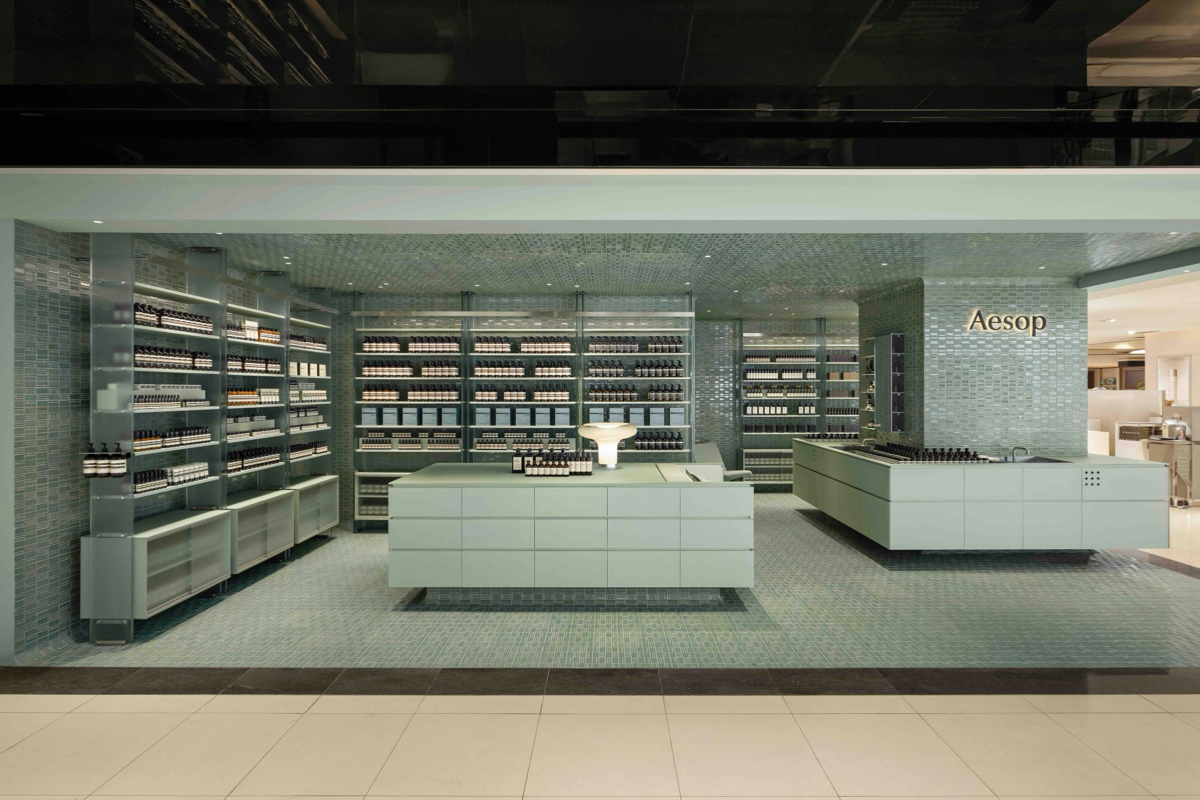
The furniture selection in the store is also worth seeing, especially the silver circular wall lamp above the sink. This aluminum lamp is a work by 20th-century modernist design master Charlotte Perriand, created around the 1960s. Made of solid aluminum, it features a simple flat disc shape that breaks traditional lamp impressions and still looks avant-garde today. If you are a loyal Aesop fan, you should be familiar with the name Charlotte Perriand—Aesop's popular woody rose fragrance 'Rōzu Eau de Parfum' was inspired by her! Aesop has always been adept at translating neighborhood stories through its store spaces. This time, using flower tiles as a guide, it blends the memories of old Taipei into the store, quietly narrating the past and present of Taipei's architecture. Next time you visit the store, take a moment to appreciate the artisan craftsmanship and delicate stories hidden in the tiles.
Source: Read the original article | Published: November 17, 2025