
Editor's Note
This editor’s note highlights the key facts and market implications behind “AMD Seizes AI Opportunity, Liquid Cooling Techno”, with emphasis on sourcing, product fit, fabrication, logistics, or buyer impact.
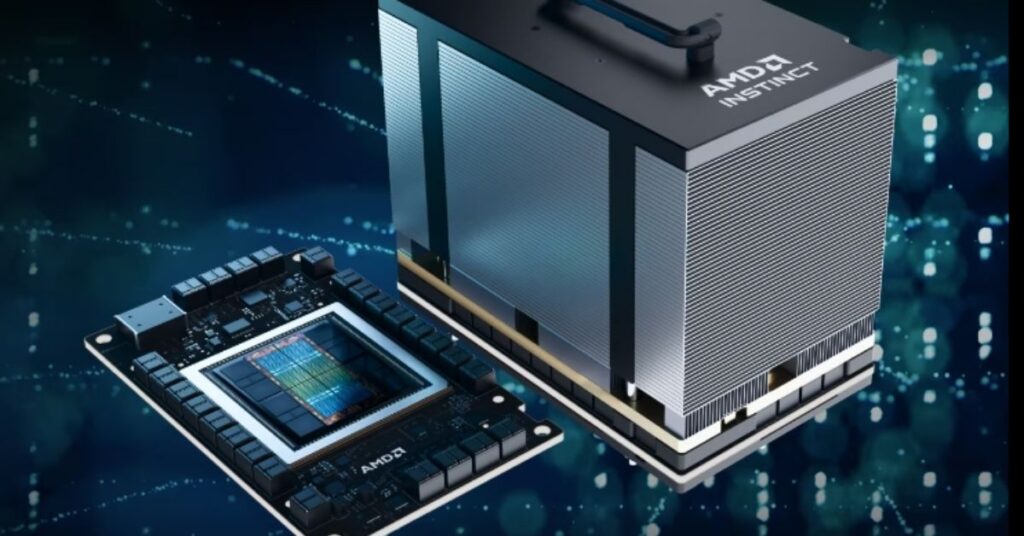
AMD (AMD.US) held a data center and AI technology conference in the early hours of Taiwan time. The most anticipated products, the MI300X and MI300A, are seen as potential competitors to NVIDIA (NVDA.US) and represent a strong expansion into AI servers.
From a power consumption perspective, both the MI300 series and NVIDIA's A100, H100, and the newly launched GH200 have increased power requirements, raising the complexity of thermal solutions. Liquid cooling has become a key focus for OEMs. Current suppliers of thermal modules and components include Auras (3017), Sunon (2421), Kaori (8996), and others.
In fact, in AI servers, NVIDIA's A100 chip consumes about 400W, while the high-end H100 chip exceeds 700W. Depending on the number of chips used by customers, total power consumption scales accordingly.
For thermal solution providers, although the volume of AI servers is still small and revenue contribution remains limited, solutions range from 3D VC to hybrid liquid-air cooling and immersion cooling. Beyond 3D VC, liquid cooling systems—including pumps, fans, and water blocks—enhance cooling capacity.
In liquid cooling technology, industry insiders note that the manufacturing process involves several critical factors, such as optimizing water flow distribution in the water block, material processing yield, and the firmware control system within the liquid cooling cabinet. As many players seek a share of the liquid cooling market, expertise in pump technology and firmware control systems may be decisive.
Most AI servers now adopt liquid cooling solutions, and the average selling price (ASP) is higher than for general servers. The price difference between air cooling and liquid cooling can exceed tenfold, gradually boosting revenue contributions.
Kaori's immersion cooling products are being designed into various customer products. The company believes that as chip performance improves, demand for immersion cooling will increase. With adoption by a major Chinese cloud provider and four years of proven use, significant contributions could emerge as early as the fourth quarter, with larger contributions next year.
Overall, for brands and OEMs, developing multiple thermal technologies—including both air and liquid cooling—helps diversify risk and provide more options.
(This article is authorized for reproduction by Money DJ.)
Source: Read the original article | Published: June 14, 2023