This editor’s note highlights the key facts and market implications behind “From 200% Debt to a Market Cap of 31.6 Billion: “, with emphasis on sourcing, product fit, fabrication, logistics, or buyer impact.
Today, the company employs over 3,000 people, operates 18 production lines, has an annual production capacity of 25 million square meters, annual sales of over one billion yuan, and exports approaching 100 million USD. Huang Jianping took the product back, but internally he bore great pressure, sweating nervously. However, since the words had been spoken, he had to turn his boast into reality. He worked overtime every day, from product design and mold development to producing a sample, all within just one week. The result satisfied the client. After delivering the product, trust was established, and for over twenty years, that company has been one of Huang Jianping's best clients.
Back to Top
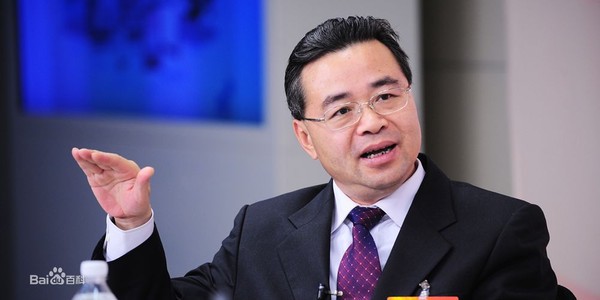
▲ Huang Jianping, Chairman of Winner Group. (Photo source: Baidu Baike) Finance Center / Comprehensive Report Marco Polo tiles enjoy a strong international reputation. The name might suggest a high-end European tile brand, but it is actually a mainland Chinese tile brand, the creation of Huang Jianping, Chairman of Winner Group, known as the 'Tile King.' Huang Jianping is a prominent figure in the building ceramics industry, having built the globally sold brand Marco Polo tiles. He gave up a stable government job to go into business, simply to fulfill his dream of 'becoming a factory director.' He revived a nearly bankrupt ceramics company, growing it into one of the largest building ceramics manufacturers and sellers in mainland China. He invested 30 million yuan to build the industry's first national-level museum, the China Building Ceramics Museum, achieving the goal of making building ceramics artistic and art ceramics popular. He was also the first mainland Chinese tile company to set up a factory in the United States. [Advertisement] Please continue reading below…
Dedicated to Ceramics, Hoping to Fulfill the ‘Factory Director Dream’
According to comprehensive mainland media reports, Huang Jianping was born in Puning, Guangdong. In the early 1980s, he was admitted to South China Institute of Technology (now South China University of Technology). Due to his passion for the ceramics industry, he resolutely switched to the Inorganic Materials Department's ceramics major in his sophomore year, forging an unbreakable bond with ceramics. This focus stemmed from a deep-seated dream:
‘At that time, I thought about managing an enterprise myself, to be the factory director. This goal was very clear.’
So he remained dedicated to his studies, only getting closer to his goal. During his four years of college, Huang Jianping had no other pastimes, focusing solely on his studies. Upon graduation, each classmate had a notebook where they pasted photos and wrote blessings. In Huang Jianping's notebook, over 90% of the messages wished him to become a 'factory director.' Among his classmates, only two ended up working in fields directly related to their major after graduation, and Huang Jianping was one of them.
Huang Jianping's first job was in the ceramic capital of Foshan, at the cradle of the ceramic industry, the Foshan Ceramics Group. Through work practice, he found that township private enterprises were more flexible, competitive, and profitable than state-owned ones. So, when an opportunity arose in Dongguan, he boldly chose to resign and start his own business.
200% Debt at Startup, Three Months Without Payroll
In 1988, the predecessor of Guangdong Winner Ceramics Co., Ltd., the Dongguan Building Decoration Materials Factory, was established, with Huang Jianping as deputy factory director in charge of production technology. However, by 1995, the company faced a near-bankruptcy crisis.
The company’s debt reached 80 million yuan, while total assets were only 40 million yuan,
making it severely insolvent. At this critical moment, Huang Jianping took on the heavy responsibility of factory director. Facing a 200% debt-to-asset ratio, the company had no credibility. Banks didn't trust it, suppliers didn't trust it. In his most difficult time, Huang Jianping couldn't pay wages for three months. He is still especially grateful to the factory workers:
‘If we couldn’t pay wages, we issued meal cards, free meals in the cafeteria, first ensuring they were fed. There was indeed a group of hardworking employees and brothers who fought together and got through that difficult period with the company.’
Later, Huang Jianping turned the situation around. Under his leadership, the small factory that once owed 80 million yuan and had only 300 employees grew into a large enterprise.
Bold Challenge, Earning the First Pot of Gold
At that time, a building in Shenzhen needed exterior wall tiles of 10×10 cm specifications, but no mainland company produced them. The developer planned to import from Taiwan, with a high cost budget. After learning about this and seeing the product, Huang Jianping confidently said, 'I can make this.' But Winner had not even started R&D at that point. This was Huang Jianping's first pot of gold.
This incident boosted the confidence and courage of him and his team to overcome difficulties on their entrepreneurial journey.
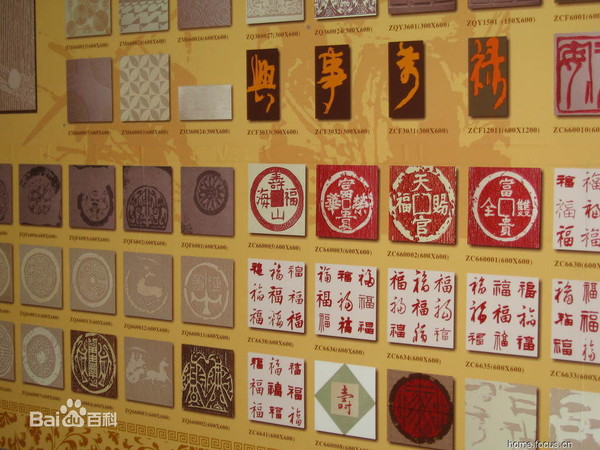
▲ Marco Polo tiles integrating Eastern culture. (Photo source: Baidu Baike)
Adding Cultural Value to Products, Marco Polo Goes Global
Winner Group's turnaround was entirely due to Huang Jianping's business acumen. After taking over Winner, he innovated in market strategy and brand operations. Changes in product strategy made Winner's development more suited to market economy operations. The creation of the 'Marco Polo' brand brought great success to Winner Group's brand operations. Previously, Winner's business model was high output, low grade. Huang Jianping realized this model could not adapt to the new market environment. He proposed the concept of 'small market, large share,' targeting Winner at 'entering the mid-to-high-end market as a well-known brand.' Marco Polo tiles pioneered the ceramics industry with the fully independently developed and innovative 'China Impression' series, marking the beginning of original design in building ceramics.
‘Product innovation is the foundation of branding,’ Huang Jianping said.
Antique tiles were a breakthrough in product innovation at the time. The subsequent question was what name to choose that had depth and room for interpretation. 'Marco Polo' was conceived in this context. 'Marco Polo came from Italy, which represents the highest level of ceramics, and became a messenger of cultural exchange between East and West, carrying deep significance,' Huang Jianping later summarized. Marco Polo was already a famous name, and using it saved Winner millions of yuan in advertising costs. After adopting the 'Marco Polo' name, Winner has consistently followed the path of inheriting Chinese and Western cultures in product operations. Unlike many companies that solely emphasize product quality in their marketing, Huang Jianping places more importance on 'cultural marketing.'
Because product quality is just the foundation; cultural factors are the unique corporate traits that others cannot imitate.
In 1989, when the company needed to import Japanese production equipment, Huang Jianping visited Japan and by chance toured the Toyota Automobile Museum, planting the seed for building an industry museum. In 2002, when renowned calligraphy artist Chen Fucheng came to Dongguan for mural creation, the creative mode of 'using a knife as a pen and porcelain as paper' inspired Winner's innovative thinking. Huang Jianping seized this opportunity to put the plan for a building ceramics museum on the agenda. In 2006, Huang Jianping invested 30 million yuan to build the industry's first national-level 'Building Ceramics Museum,' promoting the artistic transformation of the traditional tile industry. While competitors were solely focused on fierce market competition, Huang Jianping's move surprised everyone. Investing 30 million yuan to build a museum was astronomical for Winner at the time. With no immediate returns, there was opposition among senior management. However, as the museum developed and improved, upgrading from 'Winner Ceramics Museum' to 'China Building Ceramics Museum,' Winner successfully built a cultural marketing platform.
It developed the unique original cultural ceramic product ‘China Impression’ with Eastern charm. By infusing products with cultural and artistic genes, the added value of its products increased 10 to 20 times compared to ordinary tiles,
and they were used in important urban windows and landmarks such as Dongguan Metro Line 2 and the Dunhuang Art and Culture Center. The interior decoration of the two artificial islands of the recently opened Hong Kong-Zhuhai-Macao Bridge also uses Marco Polo tiles. In 2014, Marco Polo tiles' postdoctoral research workstation signed an agreement with Dr. Wang Shaohua, specializing in materials science at South China University of Technology, officially bringing him into the station. The aim was to leverage the company's strong resources to enhance technological R&D, effectively solve key core technologies, and strengthen the company's scientific research innovation capabilities to maintain technological leadership. Signing contracts with craft artists, introducing art ceramics into building ceramics, and building a building ceramics museum—these seemed unrelated to the core business to many. But behind it, Huang Jianping had his own ideas.
‘If products have no culture and cannot serve as carriers of culture, it’s hard for culture to take root,’ Huang Jianping said.
Looking back, the construction of the ceramics museum and art gallery infused the 'Marco Polo' brand with cultural DNA.
It is this unique cultural trait that gives Winner Group greater competitive strength,
even enabling it to expand production bases to the United States. The Chairman of the German Ceramics Association and ABK Ceramics Company once came to China to find partners. When he visited Winner Group's headquarters and toured the China Building Ceramics Museum and 'China Impression' cultural ceramic products, he praised the profound cultural heritage and national essence of Chinese building ceramics, immediately signing an order worth tens of millions of dollars. He said that a company that values history and culture is a sustainable one. In 2015, Winner Group invested $150 million to build a 500,000-square-foot (about 46,000 square meters) factory in Lebanon, Tennessee. In 2016,
the Governor of Tennessee visited Winner Group and was equally impressed by the culturally rich ceramic products with historical heritage, expressing welcome and support for Winner Group’s investment and factory construction in the U.S.
On April 11, 2017, Winner Group's production base in Tennessee officially began operations, making Winner the first mainland Chinese ceramics company to invest in the U.S. This laid the foundation for the group's vision of 'World Brand, Industry Leader' and marked a solid step in its internationalization. Huang Jianping believes that Winner's ability to develop its traditional industry in the U.S., known for its scientific research and brand strength, relies on its cultural confidence and brand cultural influence. From a highly indebted, doomed company, Winner Ceramics has grown into one of the largest building ceramics manufacturers and sellers in mainland China. In 2017, the brand value of Marco Polo tiles reached 31.589 billion yuan, ranking first in the mainland ceramics industry for six consecutive years. This commendable achievement is inseparable from years of hard work, as well as Huang Jianping's strategic vision and cultural practice. The honors he has received also showcase the style of a tile industry leader from different perspectives.