
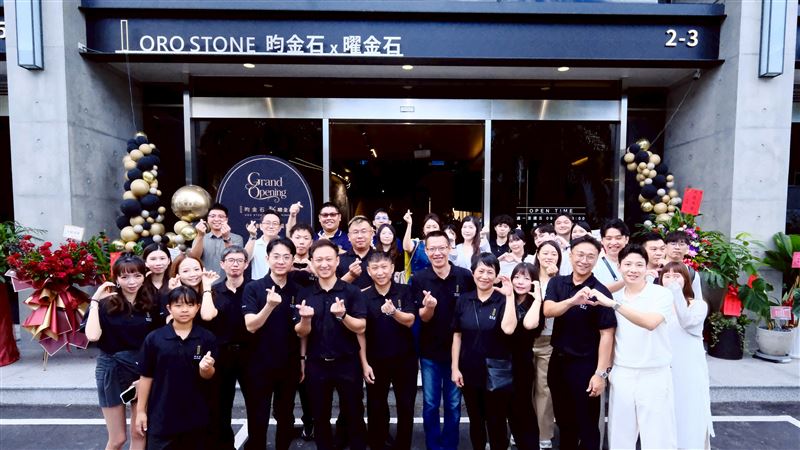
Editor's Note
This editor’s note highlights the key facts and market implications behind “Water Absorption Approaches Zero! Large-Format S”, with emphasis on sourcing, product fit, fabrication, logistics, or buyer impact.
The Real Estate Center / Comprehensive Report In contemporary interior space design, breakthroughs in materials science are sparking a revolution in durability and structural mechanics. Traditional surface materials are often limited by the capillary water absorption of natural stone or the joint and structural brittleness of ordinary ceramic tiles. Modern materials engineering has given rise to large-format slabs through ultra-high-temperature sintering technology, leveraging their near-zero porosity physical properties and excellent mechanical stability to become a new focus in cross-disciplinary material applications. Orostone, a company long dedicated to this field, along with its sub-brand Yaojin Stone, has recently pushed the application scope of this material to new heights through systematic technology integration. From a materials engineering perspective, the superior performance of large-format slabs stems from their rigorous manufacturing process. By selecting inorganic non-metallic mineral raw materials and subjecting them to ultra-high-pressure crystallization sintering at temperatures exceeding 1200°C, the internal material achieves a fully vitrified state. This high-density microstructure directly determines its macroscopic properties, reducing water absorption to below 0.1%, far lower than traditional ceramic tiles and natural stone. The microscopic zero-porosity state means that liquids can hardly penetrate through capillary action, fundamentally preventing stain retention and mold growth. Additionally, its silicate network structure possesses strong chemical bond energy, exhibiting excellent chemical inertness against acidic and alkaline substances frequently encountered in kitchens and bathrooms, thereby maintaining its original gloss and color over the long term. Moreover, the thousand-degree high-temperature quenching endows it with an extremely low coefficient of thermal expansion, enabling it to withstand severe thermal shock without easily developing internal stress concentrations, effectively avoiding cracking and deformation.
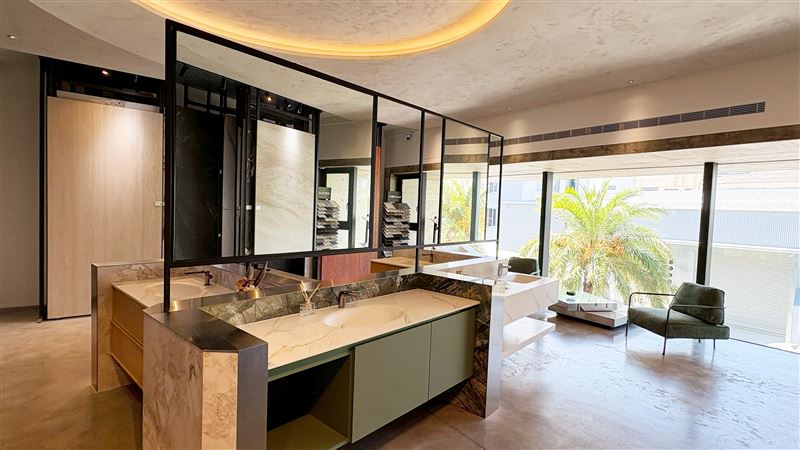
Beyond its physical and chemical advantages, large-format slabs have also achieved significant breakthroughs in processing engineering. Modern precision technology, through thermal stress control of large-format slabs, has developed high-end nonlinear processes such as hot-bent integrated basins. Under specific high temperatures, the slab undergoes plastic deformation to achieve seamless curved transitions, eliminating joints and greatly enhancing the structural integrity of the object. At the same time, the low magnetic permeability and high-temperature resistance of large-format slabs allow them to perfectly integrate with hidden IH induction heating cooktops, where electromagnetic waves can penetrate the slab to directly act on cookware. In this regard, the Orostone team has also strengthened the physical integration of such materials with smart home appliances through cross-disciplinary R&D and collaboration with international brands, showcasing the diverse physical roles of materials science in future smart homes. However, the large individual surface area of large-format slabs imposes extremely high requirements on the flatness of the substrate, the rheology of the adhesive, and the geometric precision of on-site installation. From geometric measurement and laser cutting to on-site joint aesthetic finishing, every step essentially involves precise control over material stress and geometric deformation. Through a one-stop, systematic integrated construction model, cumulative errors from multi-interface connections can be significantly reduced, ensuring that the mechanical properties and high-end aesthetic level of large-format slabs are maximally realized in real spaces.
Source: Read the original article | Published: May 28, 2026