This editor’s note highlights the key facts and market implications behind “Scientific Research – Ehime University and Other”, with emphasis on sourcing, product fit, fabrication, logistics, or buyer impact.
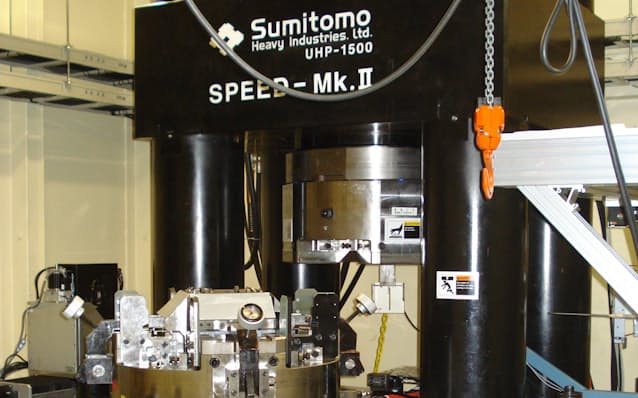
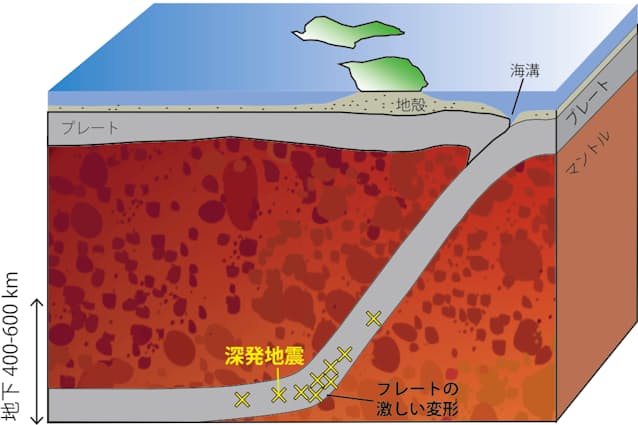
A research team led by Associate Professor Tomohiro Ohuchi of Ehime University has clarified part of the cause of deep-focus earthquakes that occur at depths of 300 kilometers or more underground. The study found that heat released when olivine, the main component of the Earth's mantle, undergoes a crystal structure transformation is an important factor triggering such earthquakes. Ehime University and others clarified part of the cause of deep-focus earthquakes through experiments (Image provided by Associate Professor Tomohiro Ohuchi, Ehime University) Deep-focus earthquakes occur within subducting slabs (rock plates) that sink deep underground. Compared to the surrounding mantle, slabs are harder and transmit seismic waves more easily. Their characteristics include: tremors can propagate to locations far from the epicenter, and they are particularly frequent in the 400 to 600 kilometer depth range, where earthquakes are usually rare. Because it is difficult to reproduce the process of deep-focus earthquake occurrence through experiments, their true nature has long been a mystery. Associate Professor Ohuchi and his team used an experimental apparatus to apply high pressure to olivine, simulating conditions at depths of up to about 580 kilometers underground. The results revealed that the crystal structure of olivine changes in two stages, releasing heat. The study indicates that this causes a local decrease in slab strength, which may trigger earthquakes. Ehime University reveals the possibility of olivine structure changes inducing deep-focus earthquakes (Image provided by Associate Professor Tomohiro Ohuchi)
Furthermore, the study found that the first stage of olivine crystal structure change is more pronounced in regions where the slab undergoes greater deformation. This helps explain the frequent occurrence of deep-focus earthquakes in areas with intense slab deformation, such as the Izu-Bonin Islands. Associate Professor Ohuchi stated: "This will help clarify regions prone to deep-focus earthquakes, thereby enabling efficient advancement of research."
The related research results have been published in the American scientific journal Nature Communications . Original article: Nikkei , 2026/5/12 Translation: JST Objective Japan Editorial Department [Paper Information] Journal: Nature Communications Paper: In situ X-ray and acoustic observations of deep seismic faulting upon phase transitions in olivine DOI: 10.1038/s41467-022-32923-8