
Editor's Note
This editor’s note highlights the key facts and market implications behind “Couple Builds Complete Wooden House from Scratch”, with emphasis on sourcing, product fit, fabrication, logistics, or buyer impact.
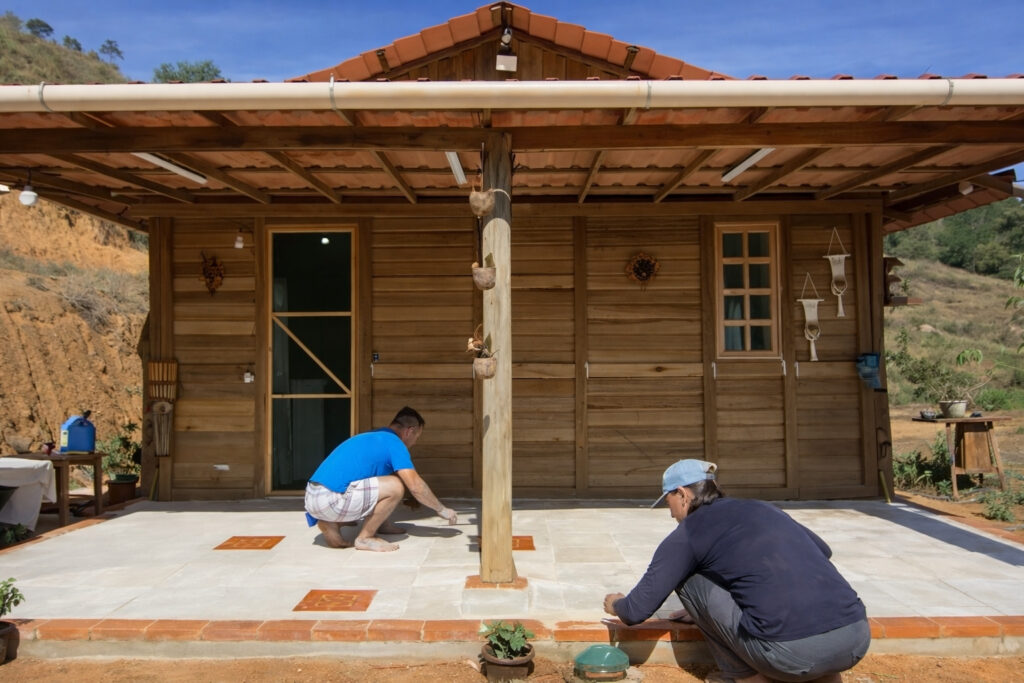
With significant talent and creativity, a couple has built a house completely from scratch. They used ceramic tiles for the roof, a cement base to level the ground, and wood for the flooring, ceiling, and entire structure. The construction features interlocking slats and has resulted in an impeccable final product.
The project demonstrates how to build a wooden house with a ceramic tile roof using simple techniques and adaptations for sloped, irregular land. The space was transformed into a functional and organized structure with a raised floor, firm walls, and well-fitted roofing.
Excavation and Leveling Transform Inclined Land into Usable Base
The first step involved removing soil to create a flat area. The inclined ground was transformed into a leveled space with a compacted surface ready for construction. The work was done with manual tools like shovels, hoes, and a wheelbarrow. The repetition of movements ensured the terrain remained uniform, creating a solid, usable base.
Cement Base Defines the Perimeter and Supports the Structure
After leveling, a cement base was outlined on the ground to form the construction's contour. The alignment of the pieces defined the house's shape. Slats were placed around the base with manual adjustments and mortar for fixation, each piece repositioned until correctly leveled. This created a firm base that supports the entire structure, with careful fitting between materials to avoid misalignments.
Wood Structure Raises Walls and Supports the Roof
With the base ready, assembly of the wooden structure began. Vertical pillars were fixed and connected by horizontal beams, forming the house's skeleton. This required precise positioning and constant adjustments to keep everything aligned. The structure defined the internal space and allowed progress to the roofing stage.
Ceramic Roof Protects the House and Defines the Final Volume
The roof was assembled with slanted beams and covered with ceramic tiles fitted one over the other. The installation followed a repetitive pattern to ensure all tiles were aligned, requiring balance and attention during positioning. The alignment creates a uniform visual pattern, indicating care in execution. The roofing covers the entire structure, providing protection from direct exposure.
Wooden Floor Elevates the Interior and Improves Space Use
Inside the house, wooden boards were installed over beams to form an elevated floor, separating the interior from the ground. The installation involved cutting, fitting, and fixing the pieces to prevent movement, with alignment adjusted throughout the process. The result is a regular internal space that facilitates circulation and use.
Final Adjustments to the Terrain
In the final phase, the terrain around the house was adjusted. Small ditches were opened and soil redistributed to avoid accumulation near the structure, using simple tools and care not to compromise the pillars. This improves external space organization and reduces direct soil contact with the structure.
The complete process shows that the most important points are preparing the terrain and following the correct sequence of stages. This type of project reveals it is possible to adapt inclined terrain with simple techniques and continuous effort. The final result reinforces the importance of organization, repetition, and care in each stage.
The information was released by Rancho do Chapéu, an independent channel of content about practical construction, which follows the entire evolution of the work. The case shows in practice how to adapt the terrain and build without complex industrial structures.
Source: Read the original article | Published: September 04, 2026