
Editor's Note
This editor’s note highlights the key facts and market implications behind “Building in the US Too Expensive? Homeowners Imp”, with emphasis on sourcing, product fit, fabrication, logistics, or buyer impact.
As residential construction costs continue to climb in the United States, more homeowners are seeking ways to cut expenses. According to CNN, one engineer bypassed local suppliers and imported most of his home materials directly from China, estimating savings of up to $100,000. Social media has also seen a surge in Chinese suppliers directly marketing to US consumers, offering low prices on kitchen cabinets, tiles, and other materials. However, while this approach is highly attractive, it involves complex risks such as tariff fluctuations, language barriers, and shipping delays, making it unsuitable for everyone.
Engineer’s Personal Experience: Cutting Out US Middlemen
Gypsy, an engineer from Baltimore, decided to skip local suppliers and big-box retailers like Home Depot, importing nearly all of his home renovation materials directly from over 20 factories in China. His dream home features gray fiber cement siding, floor-to-ceiling windows, and an open-plan kitchen, with even the smallest details—such as magnetic-lock silent doors and European-style windows—sourced from China. In 2024, Gypsy traveled to China in person to select some products. He described building a house as a once-in-a-lifetime project, which he treated as an adventure and found enjoyment in.
Gypsy estimates this approach saved him up to $100,000, and his home is currently seeking LEED certification. However, he emphasized that the process is far from "cheap," with each container of custom goods from China costing an average of $13,000 to ship. Builder IronGate Builders told CNN that materials can account for two-thirds of a custom home's total cost, with the remainder being labor. Gypsy noted that the brown siding panels for his home were priced 150% higher on Amazon than at the source, and most of these products are originally imported from China anyway. In the US, floor-to-ceiling windows are unaffordable, and magnetic-lock soundproof doors are nearly four times more expensive based on website listings.
Social Media Trend: Chinese Suppliers Directly Target US Homeowners
With rising US building material prices, more homeowners are discussing direct imports from China on social media. According to the National Association of Home Builders (NAHB), residential building material prices have risen 3% year-over-year. The association's chief economist told CNN that metal forms and trim prices have increased 45% year-over-year, driving up window costs. Lumber prices have risen 8% over the past year, and aluminum prices have also increased due to trade and tariff policies. Against this backdrop, a woman shared on social media that she rejected a local quote of $50,000 for kitchen cabinets and instead imported them from China. The post garnered over 165,000 likes, and others began sharing supplier lists.
Chinese sellers are well aware of the appeal of low prices to consumers. Many aspiring homeowners see Chinese sourcing agents promoting luxury bathroom models and cabinets in English on search engine recommendation pages. Chinese manufacturers also directly advertise on social media, claiming they can deliver cabinets, tiles, and any other materials to your doorstep. On TikTok, one Chinese sourcing agent claimed they could buy all materials for an entire house in one day for under $10,000. Another Chinese manufacturer with nearly 30,000 TikTok followers said they could replicate an entire house based on floor plans at half the cost.
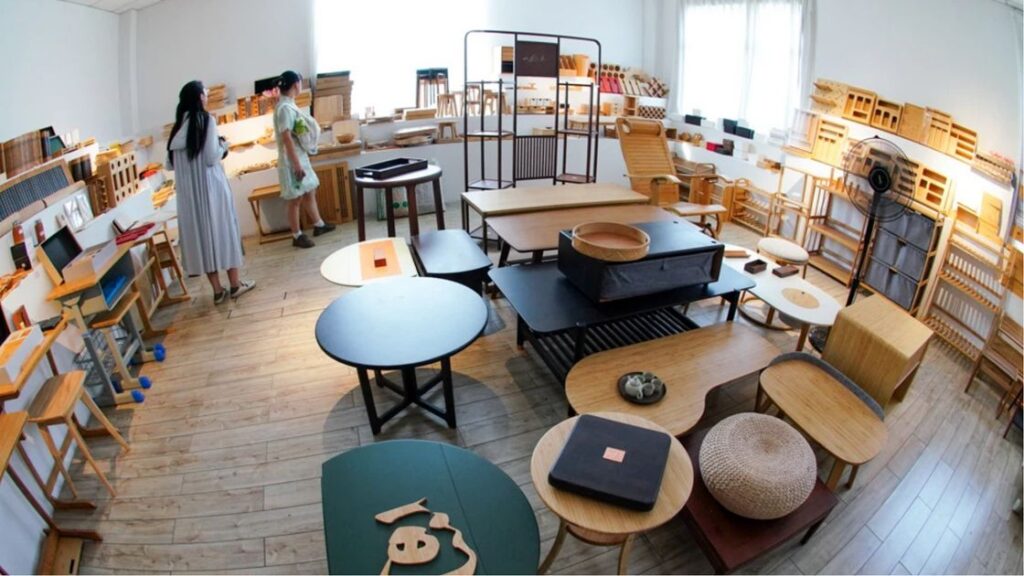
Many of these sellers are based in Foshan, a city known for its home decor and building materials industry. A professor at the University of Southampton in the UK noted that Foshan likely produces many products available at Home Depot and Amazon. As China's domestic real estate market slows, factory owners are more actively seeking overseas markets. A sourcing agent operating under the account name "Cody Sourcing" on social media said he receives about 300 US home-building clients per month, with 5 to 10 of them traveling to China to visit showrooms and order products. Even amid trade tensions, more people have been buying from Chinese manufacturers in recent years.
Complex and Risky Process: Tariffs, Language, and Logistics as Barriers
While direct imports from China save costs, the actual process is fraught with challenges and risks. Gypsy admitted the initial process felt like "fumbling in the dark," as he had to search for products on sites like Alibaba and contact Chinese manufacturers with US certifications. This research eventually led to his 2024 trip to China. CNN noted that this approach is not for the faint of heart, as materials can be affected by volatile tariffs. Last year, US tariffs on Chinese goods reached as high as 145%. Additionally, shipping times are longer. Gypsy's home construction began in October 2024, and returns or repairs can take months. He acknowledged that problems always arise with orders of this scale.
Domestically, Gypsy also had to find builders willing to work with designs unfamiliar to the US market. His builder revealed that while material quality surprised them, there were other hassles, such as craftsmen needing to translate Chinese instruction manuals and adjust for dimensional differences. Those looking to follow suit also need to invest in expensive equipment like telescopic forklifts. The builder said this was a first for their company, and they actually tried to dissuade Gypsy but ultimately respected his decision, as it was his money and his house. Gypsy concluded that the main benefit of direct imports from China is access to products that are hard to find or expensive in the US market. He described it as a "once-in-a-lifetime" opportunity, but also one that is "complex and risky."
Source: Read the original article | Published: May 09, 2026