
Editor's Note
This editor’s note highlights the key facts and market implications behind “Acrylic Solid Surface Market Size, Share, and Gr”, with emphasis on sourcing, product fit, fabrication, logistics, or buyer impact.
Corian Quartz unveils nature-inspired innovation with its 2024 color release, drawing inspiration from the classic, timeless appearance of stone and quartzite. The new aesthetic of Corian Quartz, inspired by the brilliant beauty of nature's canvas, elevates design spaces further. Its aesthetic brings the grandeur of nature into interior spaces, whether residential or commercial.
Acrylic Solid Surface Market Outlook
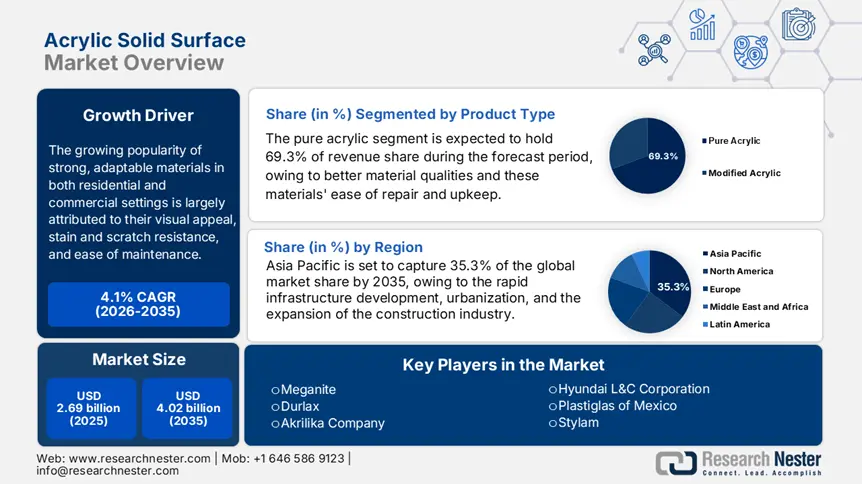
The acrylic solid surface market size surpassed USD 2.69 billion in 2025 and is projected to reach USD 4.02 billion by 2035. It is expected to grow at a CAGR of approximately 4.1% from 2026 to 2035. The acrylic solid surface industry size is estimated to be USD 2.79 billion in 2026. The acrylic solid surface market is expanding due to increasing demand for robust, adaptable materials suitable for diverse applications. Its popularity in both residential and commercial spaces stems from its visual appeal, stain and scratch resistance, and ease of maintenance. Key components are alumina trihydrate (ATH), extracted from bauxite ore, and acrylic polymer. This blend gives the surface non-porous and long-lasting properties. DuPont, the inventor of Corian, is a pioneer in the acrylic solid surface market. Acrylic resins and natural minerals constitute the majority of this solid, non-porous surface material. Unlike other engineered stone materials, Corian contains no crystalline silica, known to cause silicosis. Corian exerts significant global influence through its extensive distribution network and well-known brand. DuPont, with net sales of USD 12.4 billion in 2025, has established a strong position in materials science. The acrylic solid surface market is growing significantly worldwide, widely used in wall panels, bathroom vanities, and countertops. Its superior durability, ease of maintenance, and aesthetic versatility, which differentiate it from traditional materials like natural stone, are driving market growth.
Key Acrylic Solid Surface Market Insights Summary
Regional Highlights The Asia-Pacific region, driven by infrastructure development, urbanization, and construction industry expansion, holds a 35.3% share of the acrylic solid surface market and is expected to show strong growth from 2026 to 2035. The North American acrylic solid surface market is expected to maintain steady growth from 2026 to 2035, fueled by rising construction demand and sustainable design practices. Segment Insights The pure acrylic segment is expected to dominate the market with a 69.3% share by 2035, due to its superior durability, non-porosity, and ease of repair, making it suitable for high-traffic and hygiene-critical applications. The commercial spaces segment is expected to experience significant growth from 2026 to 2035, driven by increasing demand for durable, low-maintenance solid surfaces in modern, aesthetic commercial environments. Key Growth Trends Increasing demand from the construction industry. Growing importance of sustainability. Key Challenges Intensifying environmental concerns. Competition from alternative materials. Key Companies Mexican Plastiglas, Stylam, Meganite, Durasein, Acrylica Company.
Global Acrylic Solid Surface Market Forecast and Regional Outlook
Market Size and Growth Outlook Market Size 2025: USD 2.69 billion. Market Size 2026: USD 2.79 billion. Projected Market Size: USD 4.02 billion by 2035. Growth Outlook: 4.1% CAGR (2026-2035). Key Regional Dynamics Largest Region: Asia-Pacific (35.3% share by 2035). Fastest-growing Region: Asia-Pacific. Dominant Countries: China, United States, Japan, Germany, South Korea. Emerging Countries: China, Japan, South Korea, India, Brazil.
Acrylic Solid Surface Market Growth Drivers and Challenges
Growth Drivers Increasing Demand from the Construction Industry: In construction, acrylic solid surfaces are frequently used for furniture, wall cladding, sinks, and countertops. Demand is rising particularly due to expanding construction activity in residential and commercial sectors. Architects and designers prefer these surfaces for their strength, aesthetics, and ease of maintenance. Increased urbanization in developing countries has boosted demand for new residential facilities, workplaces, and public infrastructure, increasing demand for versatile building materials like acrylic solid surfaces. Growing Importance of Sustainability: Consumers and businesses value eco-friendly materials, and acrylic solid surface manufacturers are producing various products using recyclable materials. Another factor driving the acrylic solid surface market is innovation in production technology. Acrylic solid surfaces are becoming more versatile with the introduction of cutting-edge technologies enabling more multifaceted and personalized designs. Additionally, modern methods of integrating LED lighting into the material are gaining popularity, creating useful and visually appealing surfaces.
Challenges Increasing Environmental Concerns: Despite perceptions of being more eco-friendly than other materials, acrylic surfaces raise questions about environmental impact. Petrochemical products from non-renewable resources are used in their production. Furthermore, recycling and waste management can be difficult at the end of an acrylic surface's life cycle. As consumers place greater value on sustainable materials, these environmental issues could lead to reduced demand. Competition from Alternative Materials: The adoption and expansion of the global acrylic solid surface market is significantly influenced by competition from alternative materials. Materials like granite, quartz, and laminate pose considerable challenges due to their unique advantages. Quartz is well-known for its strength and variety of patterns, resembling real stone but requiring less maintenance and offering high durability. Granite, while more demanding to maintain, appeals to customers seeking permanence and natural beauty. Laminate offers a cost-effective option with various designs and colors, though it is less durable and repairable than acrylic solid surface.
Acrylic Solid Surface Market Size and Forecast
Report Attributes Base Year: 2025. Forecast Period: 2026-2035. CAGR: 4.1%. Base Year Market Size (2025): USD 2.69 billion. Forecast Year Market Size (2035): USD 4.02 billion. Regional Scope North America (United States and Canada). Asia-Pacific (Japan, China, India, Indonesia, Malaysia, Australia, South Korea, Rest of Asia-Pacific). Europe (UK, Germany, France, Italy, Spain, Russia, Nordic, Rest of Europe). Latin America (Mexico, Argentina, Brazil, Rest of Latin America). Middle East & Africa (Israel, GCC, North Africa, South Africa, Rest of Middle East & Africa).
Acrylic Solid Surface Market Segmentation
By Product Type (Pure Acrylic, Modified Acrylic) In the acrylic solid surface market, the pure acrylic segment is expected to hold a 69.3% share by 2035, due to better material quality and easy repair and maintenance. Pure acrylic solid surfaces are made from 100% acrylic resin, offering enhanced durability, non-porosity, stain resistance, and chemical resistance. These properties make them particularly suitable for high-traffic spaces or applications requiring strict hygiene standards, such as kitchens or medical facilities. Pure acrylic surfaces are non-porous, making cleaning and maintenance simple. Furthermore, minor scratches can typically be addressed by sanding or buffing, extending their lifespan and appealing to budget-conscious customers. Modified acrylic solid surfaces (also called blended acrylic solid surfaces) are made by blending acrylic resin with other materials like polyester or epoxy resins. This blending process alters the material's properties, creating a solid surface with enhanced qualities suitable for specific applications. Compared to pure acrylic, modified acrylic solid surfaces with added resins often offer better impact, scratch, and heat resistance. Modified acrylic solid surfaces can provide aesthetic properties similar to pure acrylic at a lower cost, making them a suitable alternative for budget-constrained projects. By End-Use (Commercial Spaces, Hotels & Restaurants, Healthcare & Medical Facilities, Residential, Public Buildings) By end-use, the commercial spaces segment in the acrylic solid surface market is expected to hold a significant share by the end of 2035. Growth in the commercial industry is driven by expanding global urbanization and sustained demand for better commercial spaces. Solid acrylic surfaces are well-known for their high durability and minimal maintenance requirements. These properties make them suitable for high-traffic commercial environments like retail stores or office buildings where surface durability is paramount. In hotels and restaurants, acrylic solid surfaces can be fabricated into almost any shape with seamless joints, making them ideal for custom bars, reception desks, and cooking facilities. In healthcare facilities, infection prevention is a critical factor when building medical and scientific environments. Acrylic solid surfaces are designed with smooth, uniform joints, making cleaning and disinfection easy. During fabrication, there are no gaps or cracks where bacteria can hide, and they do not deteriorate with frequent cleaning and disinfection. This material is available in various colors and designs, allowing businesses to create custom interiors reflecting brand identity. This flexibility is particularly useful for designing spaces that appeal to customers, enhancing a company's overall visual appeal. Acrylic solid surfaces are non-porous, preventing liquid absorption and microbial growth. This characteristic is essential for places requiring high levels of hygiene management, such as public venues or residential buildings. A deep analysis of the market includes the following segments: By Product Type: Pure Acrylic, Modified Acrylic. By End-Use: Commercial Spaces, Hotels & Restaurants, Healthcare & Medical Facilities, Residential, Public Buildings, Others.
Vishnu Nair, Global Business Development Head: “Customize this report to your requirements — consult our consultants for tailored insights and options.”
Asia-Pacific Market Analysis
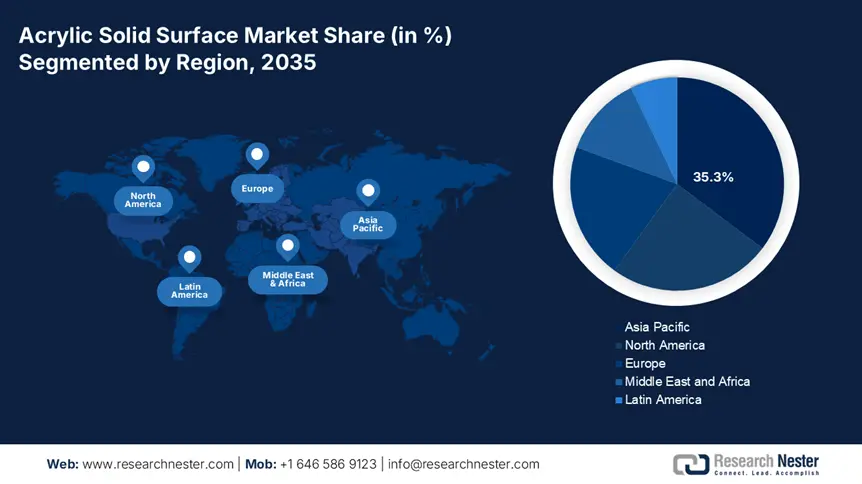
The Asia-Pacific region is expected to lead the acrylic solid surface market with a 35.3% share during the forecast period. This is because rapid infrastructure development, urbanization, and expansion of the construction industry are key factors driving demand for acrylic solid surfaces. Their excellent strength and aesthetic adaptability in modern architectural projects contribute to market growth. China: The acrylic solid surface market is expanding due to increasing demand for adaptive materials driven by growth in residential and commercial construction projects. Acrylic solid surfaces are widely used for various applications like furniture, wall cladding, and counters due to their diverse designs and low maintenance requirements. Economic development in the region is leading consumers to increase investment in premium interior materials. India also plays a significant role in the acrylic solid surface market, particularly through modern interior design solutions requiring raw materials needed for acrylic solid surface manufacturing. This market is expected to show steady growth due to the continuous expansion of key end-use industries and ongoing advancements in materials science. The bathroom vanity and kitchen countertop markets are also growing. Preference for durable, low-maintenance, and visually appealing solid surface materials that meet building codes and design trends is one of the key outcomes.
North America Market Analysis
Source: Read the original article | Published: August 25, 2025