
Editor's Note
This editor’s note highlights the key facts and market implications behind “Northeast Argentina Citrus Industry Organizes to”, with emphasis on sourcing, product fit, fabrication, logistics, or buyer impact.
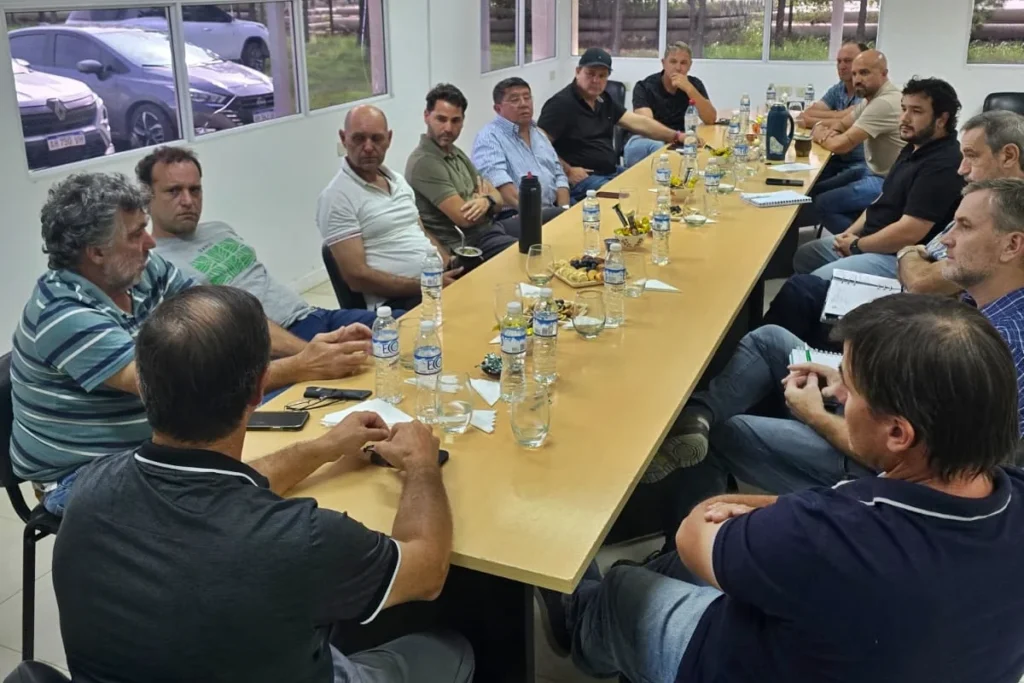
Industrialists from Corrientes and Entre Ríos emphasize the need to comply with requirements. The citrus industrial sector of northeast Argentina has taken a key step toward reorganizing its activity, with the formation of a strategic alliance between the main juice and derivative processing industries. The initiative seeks to respond in a coordinated manner to new demands from international markets, especially regarding safety and sanitary control. The central objective is to raise quality standards and guarantee compliance with increasingly strict regulations, in a global scenario that demands greater traceability and reduction of chemical residues in food.
Joint Objective
In this context, the sector confirmed that the main citrus juice industries of the NEA have united to improve the quality of their products and be able to meet the demands of the world's strictest markets.

The work is focused on adapting to new international limits for agrochemical residues, with special control over substances such as Benomyl, Carbendazim, and Methyl Thiophanate.
Furthermore, they emphasize the importance of working together with producers to ensure traceability and health from the field to the industry. The goal is to "improve efficiency and consolidate the region as a competitive citrus hub, capable of responding to current export demands."
Greater International Demands
The initiative is framed within an increasingly rigorous international scenario, where markets such as the European Union impose strict limits on agrochemical residues and sanitary conditions that must be met to export. In particular, Maximum Residue Limits (MRLs) have become a determining factor for the entry of agro-industrial products, forcing the entire production chain to adjust its practices, from the use of phytosanitary products in the field to industrial processes.

This is compounded by the trade agreement between Mercosur and the European Union, which, while opening opportunities to expand exports, also requires higher standards in sanitary, environmental, and traceability matters.
Articulation
In this global context, industrialists emphasize that the articulation between all actors in the citrus chain appears as a central axis to sustain the competitiveness of the NEA citrus sector. They insist on the need to guarantee controls from origin to final product, which forces closer coordination between all links. Among the citrus industries that took this first step are COSANFRA (Cooperativa de Transformación y Comercialización Agropecuaria Colonia San Francisco Ltda., Corrientes); TICCM (Cooperativa de Transformación, Industrialización y Comercialización Citrícola Mocoretá Limitada); JUCOFER (Cooperativa de Provision Transformacion y Comercializacion Citricola del Noreste Entrerriano Limitada); GREEN GO S.A. (Villa del Rosario); ECA S.A. (Concordia); and UTE BV S.A. (Bella Vista, Corrientes).
Source: Read the original article | Published: April 09, 2026