
Editor's Note
This editor’s note highlights the key facts and market implications behind “Australia Bans Kitchen Countertops Made from Qua”, with emphasis on sourcing, product fit, fabrication, logistics, or buyer impact.
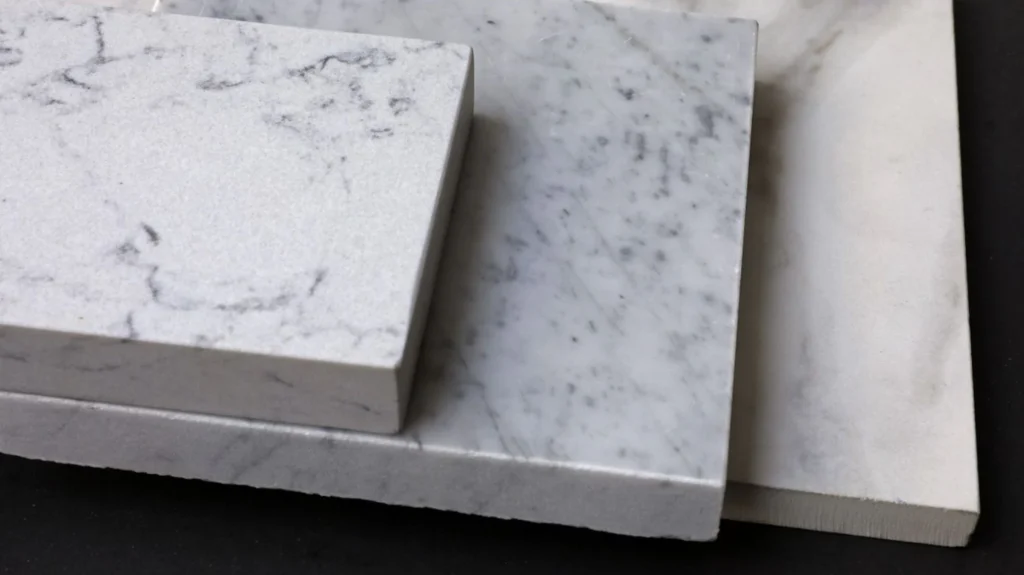
Countertops made from quartz composite are durable and available in many patterns. But how dangerous is their production? Like marble, but not as expensive: Countertops made from engineered stone are installed in tens of thousands of German kitchens. They are also popular in Australia – and will soon be banned. What is driving the authorities to this globally unique ban? They come in all possible colors and patterns. Marketed under decorative names like "Starlight Blue," "Blanco Stellar," and "Risotto Crema," tens of thousands of them are installed in German kitchens: countertops that look as if they are cut from stone, but are actually made from engineered stone, also called quartz composite. The material, developed in the 1980s, in which natural quartz particles are bonded with dyes and synthetic resin, has many advantages: it is hard and durable, can look as noble as real marble or granite, but is far less expensive. In Australia, it is now banned. Last week, the work ministers of the Australian states decided to prohibit the use of engineered stone without exception. From next July, the countertops, also popular Down Under, may neither be manufactured nor processed. This globally unprecedented step follows a recommendation from the national work safety agency, which classified handling the material as too dangerous for stonemasons and other involved workers.

Indeed, the findings from the other end of the world read alarmingly. According to them, almost every fourth stone worker employed in the industry there until 2018 fell ill with silicosis or similar lung diseases, which are caused by inhaling fine quartz dust particles. Silicosis, also known as stonemason's or miner's lung, is considered incurable and can lead to lung cancer and death. The Australian union AMWU therefore calls quartz dust the "asbestos of the 21st century."
The ban hits an industry that, according to market analyses, generates more than 20 billion euros worldwide with engineered stone, with a strongly rising trend. In Europe, however, the news from distant Australia has so far had no consequences. "From a German and European occupational safety perspective, bans are only very rarely indicated," the Federal Ministry of Labour stated upon request.

In the office of Labour Minister Hubertus Heil (SPD), they instead rely on protective measures as prescribed by the Technical Rule for Hazardous Substances TRGS 559 for handling quartz-containing materials. Adhering to this rule "enables safe work," it says. Indeed, the German Statutory Accident Insurance counted only 295 new cases of silicosis recognized as an occupational disease in 2022. In the year 2000, there were still 1,627 such cases. However, Australian occupational safety experts consider the prescribed limit value of 0.05 milligrams of crystalline quartz dust per cubic meter of room air to be too high. But controlling a significantly lower value is technically hardly feasible at workplaces – hence the complete ban.
Australia's largest retailers, such as furniture giant Ikea and the hardware store chain Bunnings, have already removed composite slabs from their assortments. In German Ikea stores, however, such products are supposed to be available again from January. The company stated upon request that it works closely with suppliers "to ensure they adhere to the highest safety standards for environmental and working conditions."
Source: Read the original article | Published: December 19, 2023