
Editor's Note
This editor’s note highlights the key facts and market implications behind “Baths with Character: How to Choose Bathroom Til”, with emphasis on sourcing, product fit, fabrication, logistics, or buyer impact.
The integration of the bathroom into the home interior was one of the great advances of modern architecture. Before the 19th century, hygiene was addressed in a fragmented way: isolated washbasins, portable tubs, or shared spaces outside the home. With the arrival of plumbing and sanitary systems, the bathroom began to consolidate as a fixed room.
The shift began when modern design championed material honesty and the relationship between function and form. The bathroom began to receive architectural attention: it was opened to natural light, properly ventilated, and clad with materials designed to last. The first bathroom washbasins integrated into the design and bathtubs as permanent elements appeared.
For a long time, bathrooms were conceived as merely utilitarian spaces, resolved at the end of the architectural project with standardized decisions. Their main function was clear: to address basic hygiene needs, without further aesthetic or spatial reflection. This reductionist view marked for decades the way they were designed, built, and inhabited.
However, changes in lifestyles, the increased value placed on domestic comfort, and a new perspective on interior architecture have completely transformed this space. Today, the bathroom is understood as a place of pause, introspection, and personal care, a point where design has a direct impact on quality of life. Bathroom tiles, bathroom washbasins, or bathroom mirrors are no longer chosen solely for their functionality, but for the sensory experience they create.
In the contemporary home, the bathroom dialogues with the rest of the spaces. It shares material languages, extends atmospheres, and, in many cases, becomes one of the most sophisticated spaces in the project. Thinking about it from the start and not as an add-on is one of the keys to current design. Looking towards 2026 means designing bathrooms that withstand the test of time, both technically and aesthetically. Spaces with character, where every element from bathroom floors to bathroom accessories responds to a clear and coherent vision.
The Bathroom in the History of the House: Evolution, Technique, and Symbolism
In its early stages, the bathroom was a technical space. The priority was to hide pipes, ensure drainage, and maintain minimum cleanliness conditions. Aesthetics were secondary. Even in large houses, bathrooms were usually small, dark, and secluded.
Today, the bathroom not only fulfills a practical function but a symbolic one. It represents body care, personal time, and the relationship with water. It is, in many ways, one of the most intimate spaces in the house.
Bathroom Tiles that Define Atmospheres
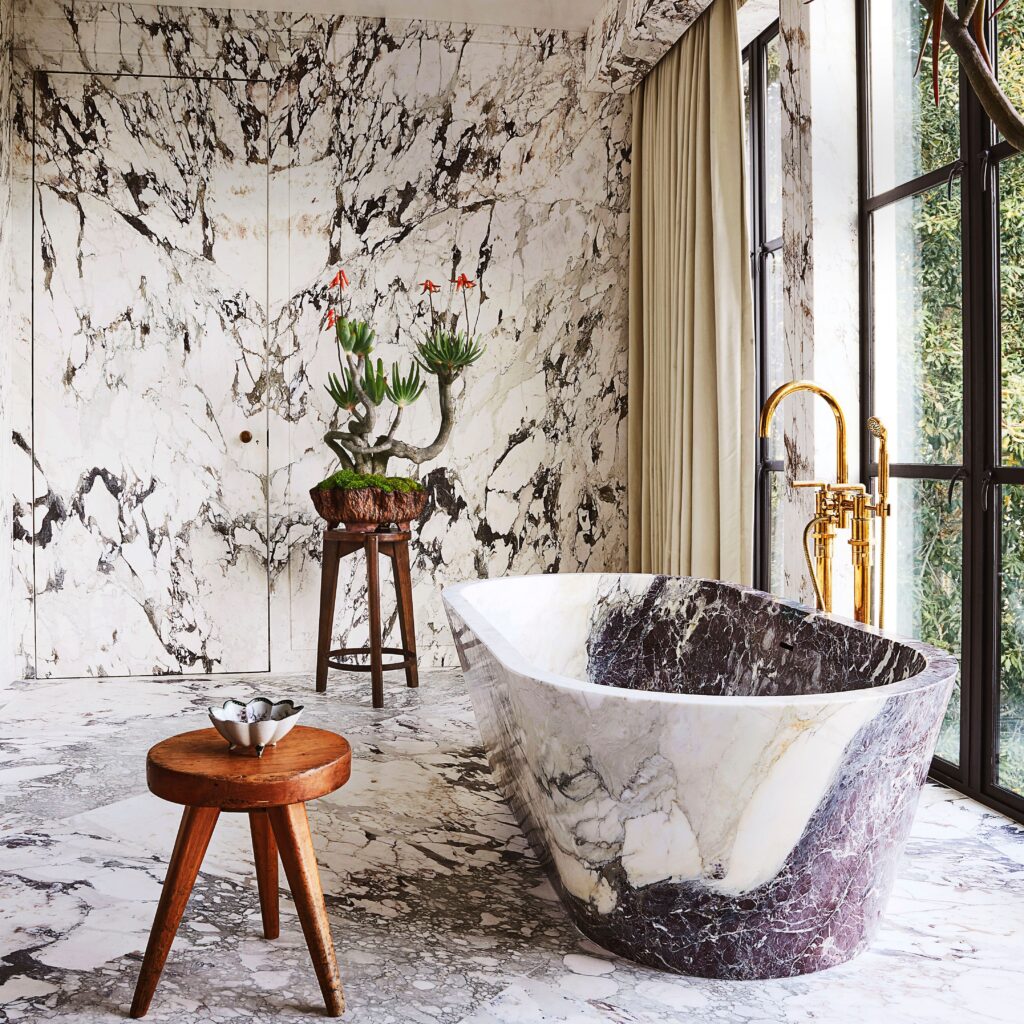
Bathroom tiles have established themselves as one of the most decisive elements of interior design, functioning as a continuous envelope that defines not only the atmosphere and thermal perception but also the deep visual identity of this space. Towards 2026, the trend leans towards materials with memory that evoke nature through stone, clay, terrazzo, marble, or concrete. These surfaces do not seek literal imitation, but a reinterpretation of the essence of the original material to offer superior durability and greater ease of maintenance in daily life.
This contemporary approach dictates that the use of tile no longer responds solely to the functional need to cover walls, but becomes a tool for rhythmic composition. Currently, these pieces are used to create stripes, frame wet areas, or emphasize architectural volumes, allowing the same bathroom to combine different formats to generate a sense of depth and visual hierarchy. In this play of textures, color acts as a fundamental language where soft, earthy tones continue to dominate the landscape, but are now strategically integrated with deeper hues.
Bathroom Floors: Continuity and Safety
Bathroom floors fulfill a fundamental technical function, but also carry enormous aesthetic weight. They are the plane that connects the body with the space and, therefore, directly influence the user experience.
Current trends favor visual continuity: floors that extend from the bedroom or dressing room into the bathroom, eliminating unnecessary breaks. This strategy visually enlarges the space and reinforces the feeling of architectural unity.
At the same time, non-slip surfaces and matte finishes are prioritized, combining safety and sophistication. The floor ceases to be a neutral element to become an expressive foundation of the design.
Bathroom Washbasins and Sinks: The Center of the Daily Ritual
The bathroom washbasin is one of the most used objects in the space and, at the same time, one of the most visible. Its design directly impacts ergonomics and the aesthetic reading of the bathroom.
Bathroom sinks integrated into continuous countertops offer a clean, contemporary look, while countertop washbasins function as sculptural pieces. The choice depends on the character sought: minimalist, artisanal, or architectural.
Regarding materials, natural stone, concrete, glazed ceramic, and mineral surfaces stand out. Each one provides a different sensation upon contact with water and in daily use.
Bathroom Mirrors: Reflected Architecture
Bathroom mirrors are fundamental tools for working with light and spatial perception. Beyond their practical function, they have the ability to visually double the space and enhance natural lighting.
Large-format mirrors, from floor to ceiling or wall to wall, have become a key architectural resource. Models with integrated lighting provide visual comfort and reduce the need for additional light fixtures.
Source: Read the original article | Published: February 27, 2026