
Editor's Note
This editor’s note highlights the key facts and market implications behind “Ceramics Market Size, Industry Share, Growth, St”, with emphasis on sourcing, product fit, fabrication, logistics, or buyer impact.
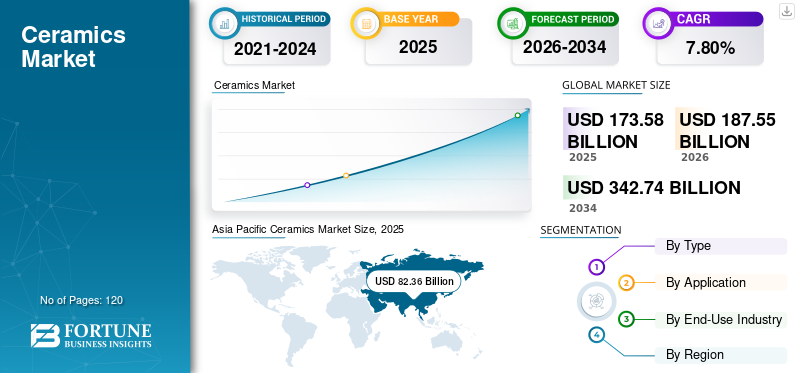
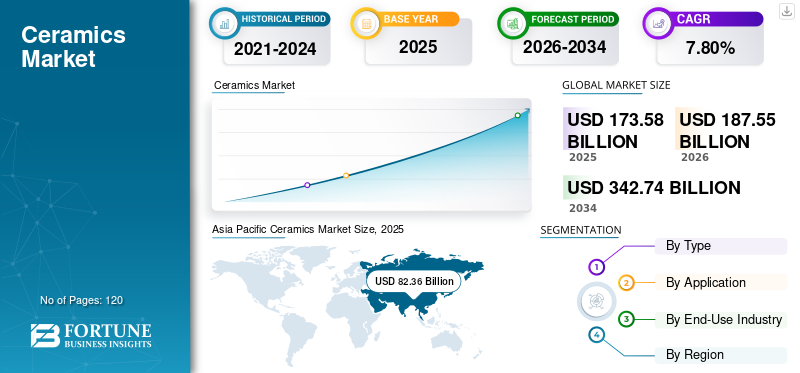
Germany and Italy (Europe): Market growth is driven by advanced ceramic coatings, exports of high-quality tiles, and increasing demand from the electronics and electroceramics sectors. United Arab Emirates, Iran, Turkey, Egypt: Key players in the Middle East and Africa, supported by large-scale tile production and exports, notably from Ras Al Khaimah, UAE. The Asia Pacific ceramics market size is projected for 2025 (USD Billion), with rapid growth in demand for technical products in the region. Demand for electroceramics is expected to increase due to the booming electronics industry in the region. The European market is also fueled by increasing exports of tiles and kitchenware due to the high quality of their products. The UK market is expected to reach USD 2.83 billion by 2026, while the German market is projected to reach USD 8.08 billion by 2026. The Middle East and Africa recorded a market size of USD 22.35 billion in 2025, accounting for 12.90% of the global market share, and are expected to reach USD 24.07 billion in 2026. The Middle East and Africa are expected to observe substantial growth in the coming years. The base of one of the five largest companies is located in the emirate of Ras Al Khaimah, UAE, which exports its products to over 150 countries. Iran, Turkey, and Egypt are the key countries contributing to tile production growth, leading to healthy market growth in the region. The global ceramics market size was valued at USD 173.58 billion in 2025 and is expected to grow from USD 187.55 billion in 2026 to USD 342.74 billion by 2034, exhibiting a CAGR of 7.80% during the forecast period (2026-2034). Asia-Pacific dominated the ceramics market with a market share of 43.40% in 2025. Furthermore, the ceramics market in the United States is expected to experience significant growth, reaching an estimated value of USD 8.03 billion by 2032, driven by the expansion of residential and commercial construction sectors.
Ceramics is a solid material composed of metallic, non-metallic, ionic, and covalent bonds containing inorganic compounds. Its properties, such as chemical inertness, high melting temperatures, hardness, and low electrical and thermal conductivity, have increased the adoption of this material in various applications. The properties displayed by this material are the result of its crystalline structure and chemical composition. It is used to manufacture different products ranging from decorative pots to nuclear fuel pellets by modifying the material's composition using various additives and different processing techniques. Traditional raw materials used to manufacture the product include silica, clay, and feldspar. In comparison, advanced raw materials include alumina, tungsten carbide, and silicon carbide. These raw materials enhance product properties, such as abrasion resistance and electrical resistance. This market is heavily dependent on the construction sector. However, building and construction activities were shut down due to lockdown regulations imposed by various governments worldwide during the pandemic. The closure of product manufacturing facilities further reduced the demand for products globally. Furthermore, the slowdown in activity in the steel, automotive, electronics, and aerospace sectors negatively impacted the market. However, the market regained its momentum by 2022. Asia-Pacific dominated the global ceramics market in 2025 with a share of 43.40%, growing from USD 82.36 billion in 2025 to USD 90.07 billion in 2026. Growth is fueled by infrastructure development, availability of raw materials, increasing sanitary and medical demand, and initiatives such as Smart Cities and Clean India.
Source: Read the original article | Published: March 23, 2026