
Editor's Note
This editor’s note highlights the key facts and market implications behind “Dehua: The Millennial Glory and Contemporary Mis”, with emphasis on sourcing, product fit, fabrication, logistics, or buyer impact.
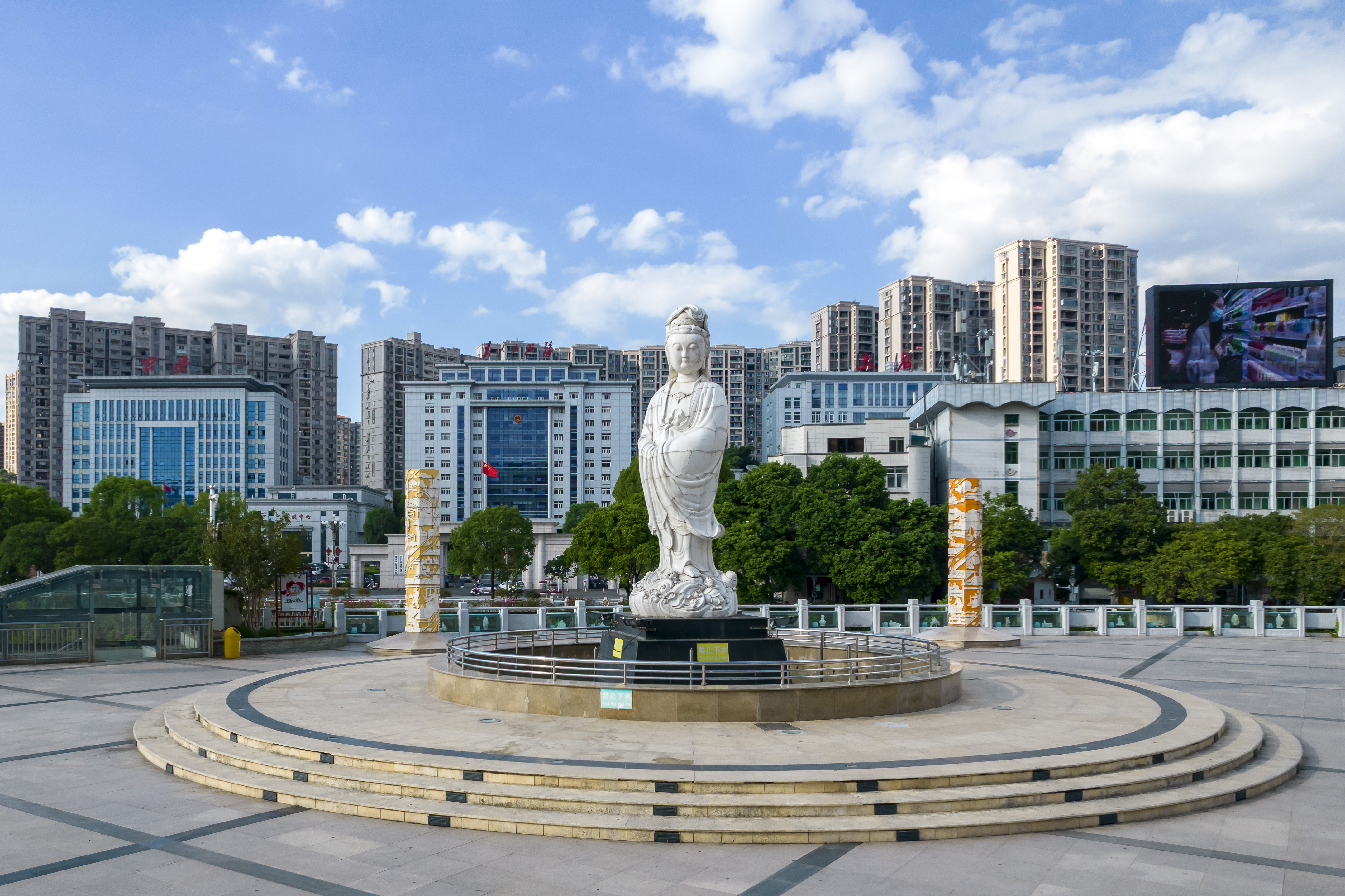
Dehua: The Millennial Glory and Contemporary Mission of the World Ceramic Capital Hong Kong Economic Herald Reporter: Xu Guoxi Published: 2025-09-19 ▲ Dehua Ceramic Capital Square, Photo by Xu Huasen
“Without a diamond, one cannot handle this porcelain work.”
On May 30, 2015, the expert panel of the United Nations World Crafts Council unanimously voted to award Dehua, Fujian, the title of “World Ceramic Capital.” This honor is the highest tribute to Dehua’s thousand-year ceramic cultural heritage and marks a new starting point for this eastern porcelain capital on the global stage, shouldering the mission of telling China’s ceramic story to the world.
Millennial Kiln Fire: Laying the Civilizational Foundation of the World Ceramic Capital
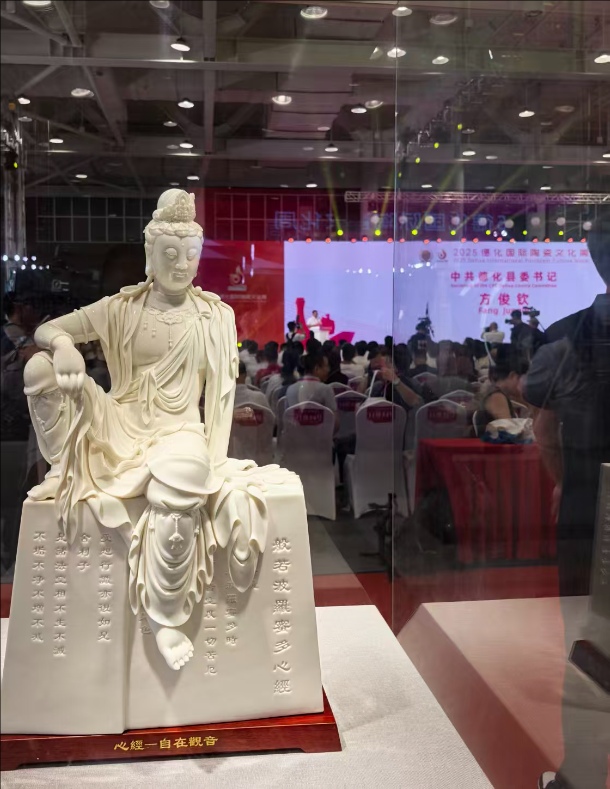
Dehua’s ceramic history is a civilizational epic of coexistence with clay and fire. As early as over 3,700 years ago in the Neolithic Age, Dehua’s ancestors began making pottery. During the Song and Yuan dynasties, relying on the prosperity of the Maritime Silk Road, Dehua porcelain became a “golden commodity” in Sino-foreign trade, exported to Southeast Asia and the European continent. Qing Dynasty poet Zheng Jiancai wrote in “Kiln Workers”: “Shoulder to shoulder at the market gate, piles rise like peaks. Once a sea vessel arrives, the price multiplies downstream.” These few lines vividly capture the bustling scene of porcelain exports at that time. The Ming Dynasty was the peak era of Dehua white porcelain, with its texture “white as snow, moist as jade, thin as paper, and resonant as chime stone,” earning the reputation of “Chinese White” and sparking an “Oriental Porcelain Charm” craze in the European market. Master porcelain sculptors represented by He Chaozong, known as the “Saint of Porcelain,” pioneered the “one shaping, two repairing, three firing” technique and the “Eighteen Styles of Porcelain Sculpture Opening,” elevating Dehua porcelain sculpture to an artistic pinnacle. Their surviving works remain treasures in major museums worldwide.
After the founding of New China, Dehua ceramics have frequently shone on the international stage as national gifts, with over 50 pieces selected as national gift porcelain to date. Today, Dehua is the largest production and export base for craft ceramics in China—one out of every three ceramic crafts globally is produced here, and six out of every ten exported ceramics in China originate from Dehua. Over 4,500 ceramic enterprises and more than 700 foreign trade companies work together to build a ceramic industry cluster valued at 66.3 billion yuan, allowing the millennial kiln fire to continue its brilliance in the modern era.
Inheritance of Craftsmanship: Guarding the Spiritual Soul of Millennial Porcelain Art
In 2006, Dehua porcelain firing techniques were included in the first batch of China’s national intangible cultural heritage. The core difficulty lies in “firing”—“Once the kiln door is closed, even immortals can’t help,” a saying that captures the delicacy and hardship of handmade porcelain. The Yueji Kiln, built in 1619, has kept its kiln fire burning for over 400 years, earning it the title of “living fossil” of Dehua wood firing: kiln workers must observe the flame color with the naked eye to precisely control the temperature; any slight mistake can ruin the entire batch. This skill of “extracting porcelain from fire” is the crystallization of wisdom passed down through generations of artisans. In the long river of skill inheritance, generations of artisans have upheld craftsmanship through dedication. Senior Arts and Crafts Master Qiu Shuangju has delved into the creation of five hundred arhat porcelain sculptures, with themes covering historical figures and Buddhist, Taoist, and Confucian statues, showcasing the charm of porcelain art. China Arts and Crafts Master Xu Ruifeng, to restore the “transparency” and “moistness” of Dehua white jade porcelain, repeatedly optimized clay formulas and precisely controlled reduction flames, even managing to control the thickness of large sculpture bodies to 5–7 millimeters, earning admiration for his “thin-body technique.” China Ceramic Art Master Chen Renhai founded the brand “Chinese White·Chen Renhai,” combining traditional porcelain sculpture with modern themes, with “Olympic Porcelain” and “World Expo Porcelain” becoming new national cultural symbols. National Intangible Cultural Heritage inheritor Chen Mingliang’s work “Sunlight” was a national gift at the 2017 BRICS Summit, and many of his works are collected by political leaders from multiple countries. Additionally, Lian Zihua, a student of China Arts and Crafts Master Su Qinghe, has had 47 works collected by institutions such as the National Museum of China and the China National Arts and Crafts Museum. China Ceramic Art Master Lai Litong, known as the “Red Ceramic Master,” created the work “Mountain Ghost” (inspired by the “Nine Songs” from the Chu Ci), with a blue robe outer layer as thin as a few tenths of a millimeter, showcasing the pinnacle of thin-body porcelain sculpture. He also created a giant Confucius porcelain statue 2.219 meters high, setting a Guinness World Record. Masters like Su Qinghe and Su Zhuzhuang also have their own specialties: some delve into religious figure porcelain sculptures and cultivate industry talent, while others integrate traditional techniques with modern aesthetics, collectively making Dehua porcelain a “living cultural heritage.”
Innovation-Driven: Activating the Contemporary Vitality of the Ceramic Industry
The sustainable development of Dehua ceramics stems not only from respect for tradition but also from a persistent commitment to innovation. Technology injects new momentum into the industry: 3D printing simplifies over a dozen traditional porcelain-making steps, enabling small-batch, customized production; UV printing breaks through color limitations, achieving a daily output of 100,000 pieces, allowing Dehua porcelain to move from the elegance of “Chinese White” to the brilliance of “World Color”; smart kilns, through digital temperature control, significantly improve yield rates and quality stability, supporting the industry’s large-scale development. The industry model is also evolving through innovation. Dehua has created a “Master IP+” model, promoted the “World Ceramic Capital·Dehua” logo, built standardized industrial parks and industrial design platforms, and driven the industry toward high-end, intelligent, and green transformation. Even in the face of modern technological impacts, artisans maintain a clear awareness: China Arts and Crafts Master Ke Hongrong and his wife Chen Guiyu (China Ceramic Art Master), while training newcomers, always emphasize “inheriting and developing the thousand-year techniques of Dehua kilns.” Ke Hongrong acknowledges the neatness and convenience of 3D printing but firmly believes that “the compassion of Buddha and the agility of dance are hidden in the ‘irregular’ fingerprints of handmade creation”—the warmth that handcraft gives to a work is a soul that technology cannot replace. This steadfastness achieves a delicate balance between tradition and modernity.
Global Layout: From “Product Export” to “Cultural Export”
After becoming the “World Ceramic Capital,” Dehua has expanded its global market with a higher vision. Leading enterprises like Jiamei Group and Shunmei Group have taken the lead in “going global”: Jiamei has become a core supplier for international retail giants like Walmart and Carrefour, bringing Dehua porcelain into ordinary households worldwide; Shunmei has built the “Chinese White Porcelain Cultural Park,” achieving deep integration of “industry + culture + tourism,” allowing visitors to immerse themselves in the charm of ceramics. The “Dehua production + Yiwu export” model has become an innovative example—by establishing a premium product selection center, integrating production, platform, and distribution resources, it greatly improves trade efficiency. In May 2025, on the opening day of the Chinese White·Dehua Porcelain Yiwu Promotion Center, it secured over 50 million yuan in intended orders, demonstrating Dehua porcelain’s international appeal. Additionally, Dehua is advancing the “Exhibition+” project, hosting the International Ceramic Culture Week and High-End Tableware Exhibition, and plans to hold “Chinese White·Dehua Porcelain” touring exhibitions in multiple domestic and international locations over the next five years, further exploring emerging markets such as BRICS countries, the Middle East, and Central Asia. It is worth noting that the successful inauguration of the Hong Kong, Macao, and Taiwan Talent Exchange Center not only provides a stage for artistic talents from the three regions to showcase their skills but also deepens cultural ties between Dehua and these areas through ceramics. Through skill exchanges and collaborative creations, all parties jointly inherit excellent traditional Chinese culture, injecting strength into promoting the spiritual harmony of compatriots across the strait and advancing the flourishing development of Chinese culture. Industry insiders believe that although Dehua ceramics are currently exported to over 190 countries and regions, breakthroughs are still needed in international brand recognition, cultural value transformation, and global communication system construction. Promoting the “cultural export” of Dehua ceramics is both a necessary choice to implement the national cultural export strategy and a key to solving the problems of “having history but no culture, having products but no brand, having skills but no influence” and achieving industrial upgrading—only by building a virtuous cycle of “culture leading industry, industry nurturing culture” can Dehua ceramics truly establish a foothold in the global market. In the future, Dehua should take the tenth anniversary of the “World Ceramic Capital” as an opportunity to collaborate with overseas mainstream media to create a “three-dimensional communication matrix,” conveying the profound cultural heritage of “Chinese White” and seizing the discourse power in international ceramic culture.
Mission on the Shoulders: Writing the Future Answer Sheet of the World Ceramic Capital
The title of “World Ceramic Capital” is not only an honor but also a heavy responsibility. Dehua fulfills its mission from multiple dimensions: strengthening the protection and rational development of porcelain clay resources, promoting green production processes, reducing pollution emissions, and driving sustainable industry development; collaborating with universities and research institutions to establish talent training bases to reserve backup forces for the industry; ceramic enterprises drive rural revitalization through industrial poverty alleviation and employment assistance—today, one in every three people in Dehua is engaged in the ceramic industry, making ceramics a truly livelihood industry. In 2025, it marks the tenth anniversary of Dehua being awarded the title of “World Ceramic Capital.” Over the past decade, Dehua’s ceramic enterprises have grown from over 1,500 to more than 4,500, self-operated export value has risen from 1.416 billion yuan to 3.921 billion yuan, the industry cluster scale has expanded from 18.82 billion yuan to 66.3 billion yuan, and the number of national high-tech enterprises has increased from 8 to 228. As Zheng Pengfei, General Manager of Shunmei Group, said: “Dehua has completed the leap from ‘sample processing’ to ‘brand export’ and then to ‘cultural export.’” Dehua is a place visited twice by General Secretary Xi Jinping, where every mountain and river echoes the era’s call of “making, displaying, and passing on exquisite porcelain,” and every street and alley carries the earnest expectations of “dare to dream and venture into the world” and “a mountain nest can also produce a golden phoenix.” Today, Dehua ceramics have gone from display stands at the United Nations headquarters to global touring exhibition halls, from national gift banquets to Michelin Guide collaboration lists, achieving a breakthrough from “single-point blooming” to “full-domain blossoming.” In the future, Dehua will drive forward with dual engines of deepening innovation and internationalization, accelerate intelligent and digital upgrades, build more influential brand IPs, and march toward the goal of a 100-billion-yuan industry cluster, making “Chinese White” a shining business card for Chinese civilization to go global, continuing the millennial glory on the new journey of the world ceramic capital. Search keyword: tile export
Source: Read the original article | Published: September 19, 2025