
Editor's Note
This editor’s note highlights the key facts and market implications behind “Over 2,000 Colombian Products Could Access US Ma”, with emphasis on sourcing, product fit, fabrication, logistics, or buyer impact.
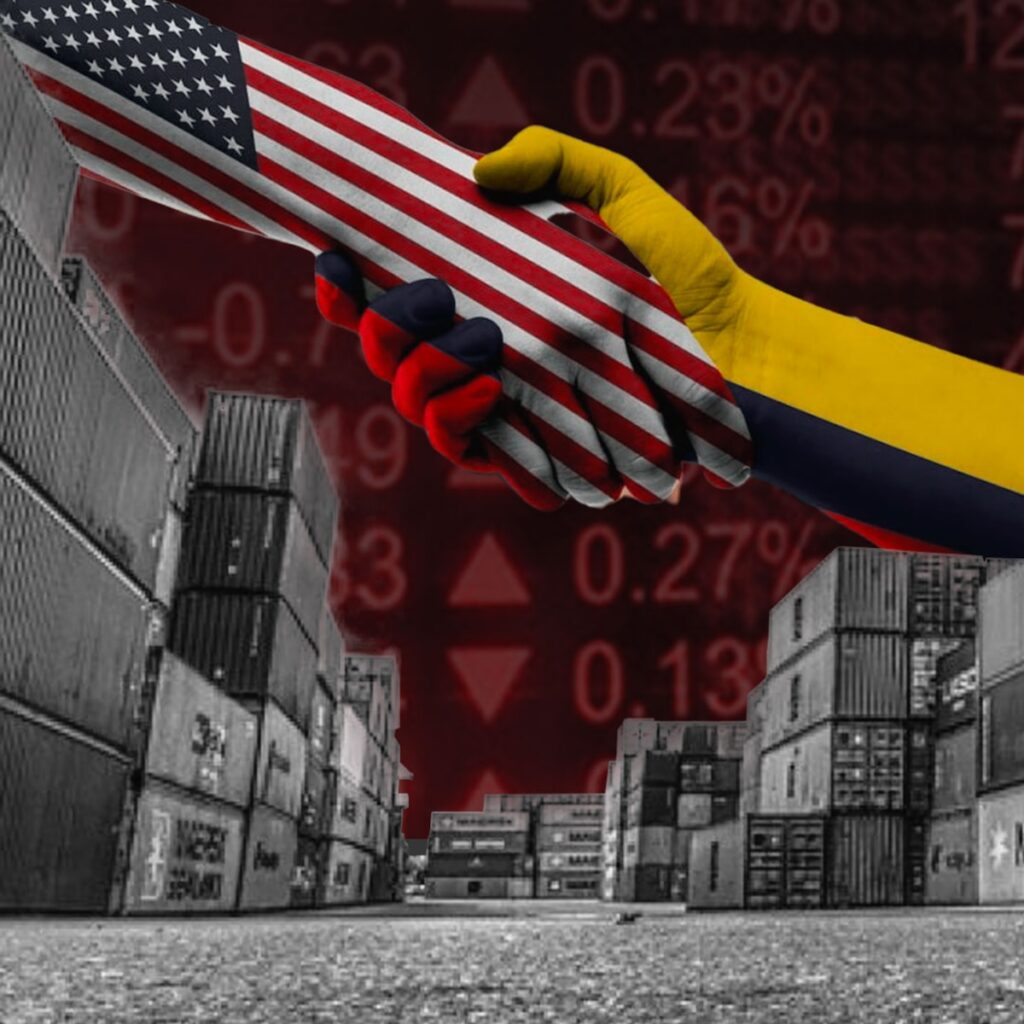
The Colombian export sector is undergoing a period of redefinition following Ecuador's decision to raise tariffs on Colombian products to 50%. This measure affects thousands of companies that traditionally sell part of their portfolio in the neighboring country. In this context, an analysis by the Colombian American Chamber of Commerce (AmCham Colombia) indicates that over 2,000 Colombian products could have a direct pathway to the United States market, marking a strategic shift in Colombia's commercial orientation.
According to the AmCham Colombia report, the current situation presents a concrete alternative: at least 1,208 products currently sold to Ecuador already meet the necessary conditions to enter the United States. These goods are part of a basket that already complies with regulatory requirements and has active commercial channels in US territory. The list includes plastic articles, metal office furniture, tiles, paving slabs, plastic bottles, polyvinyl chloride, ethylene polymer bags, and notebooks, among others.
Immediate and Potential Opportunities for Colombian Exporters
The diversification process is not limited to these products. The AmCham report also identifies 905 additional goods with export potential to the United States, although their entry requires more complex enabling processes, such as certifications and compliance with sanitary and phytosanitary regulations. This group includes items from toothpaste and medicines containing antibiotics to soybean oil, electrical energy, and mineral fertilizers.
“The tariff increase in Ecuador forces Colombian companies to redirect part of their exportable supply, and the United States emerges as the main alternative market,” explains the AmCham Colombia report.
Among the products with immediate potential are also non-cocoa confectionery articles, coffee extracts and concentrates, bakery products, margarine, chocolates, pet food, sweet biscuits, malt beer, and corn flour.
United States, Main Commercial Destination and Diversification Platform
The dynamism of Colombian exports to the United States is already reflected in recent figures. Between January and February 2026 alone, Colombian sales to that country reached US$2,669.8 million, an increase of 22.5% compared to the same period in 2025, according to data compiled by AmCham Colombia. 71% of these exports corresponded to non-mining-energy goods, representing a transformation in the national export structure.
The agribusiness segment contributed US$1,053 million, with a 13% increase, while manufactures grew by 40.4%. This performance shows that the diversification of the export basket is consolidating as a strategic objective for the Colombian economy.
The business base participating in this trade is broad: each year, more than 3,000 Colombian companies export to the United States, a figure equivalent to about one-third of the country's total exporting companies. In January 2026, 1,229 companies had already made sales to the US market.
Regional Realignment and Warning Signs in Foreign Investment
The strengthening of the commercial relationship with the United States contrasts with the trend observed in foreign investment. Although that country remained the main investor in Colombia during 2025, with flows of US$3,375 million (29.4% of the total), the arrival of fresh capital decreased by 27% compared to 2025.
The president of AmCham Colombia, María Claudia Lacouture, warned that the reduction in new investment reflects a perception of caution about the business environment in Colombia.
“Investment is not sustained by speeches, but by clear rules,” stated Lacouture, referring to the importance of legal security and regulatory stability.
In contrast, the reinvestment of profits by already established companies increased, indicating that established firms maintain their commitment to the country, while new capital shows less dynamism. Latin America and the Caribbean together received US$188,962 million in foreign direct investment during the same period, with Brazil and Mexico capturing the largest share of regional flows.
Logistics, Regulation, and Business Capabilities: The Challenges to Realize the Potential
According to the AmCham study, the possibility of redirecting exports to the United States will depend on companies' ability to adapt to the logistical and regulatory requirements of the US market. Although there is confirmed demand for many of these products, access implies overcoming technical barriers and developing effective commercial channels with importers and distributors.
The report emphasizes that the realization of these opportunities will not be homogeneous and will depend on the strategies of multinationals established in the country, as well as the availability of logistical infrastructure. Strengthening these capabilities would allow Colombia to consolidate its position in the US market and mitigate the effects of changes in other regional destinations.
Source: Read the original article | Published: April 09, 2026