
Editor's Note
This editor’s note highlights the key facts and market implications behind “Engineered Stone Market Size, Market Share, and “, with emphasis on sourcing, product fit, fabrication, logistics, or buyer impact.
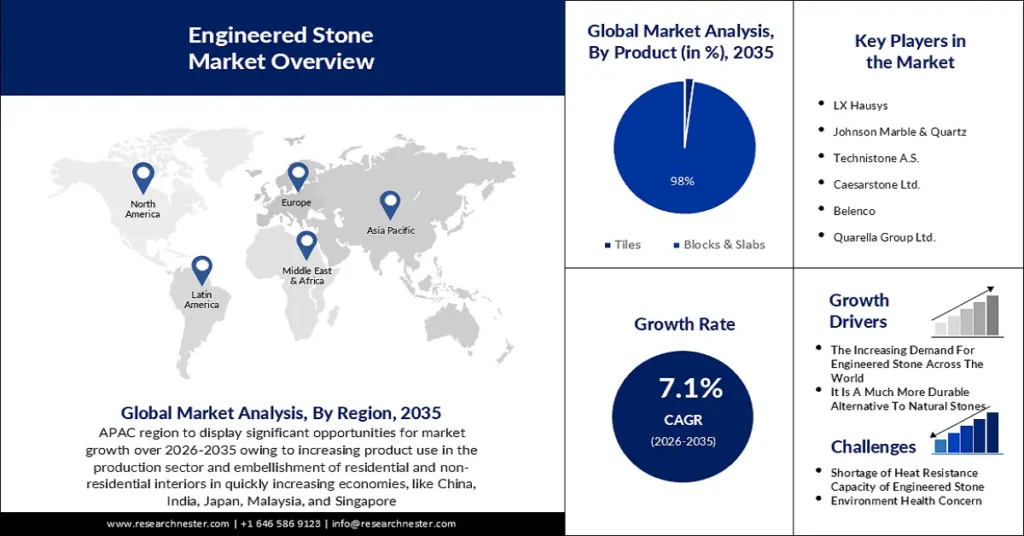
The growth of the engineered stone market is primarily driven by the increasing global demand for this material. Quartz, for example, is one of the most abundant minerals on the planet. Often considered the core of the engineered stone market, the quartz market is experiencing rapid expansion. Quartz slabs are manufactured by combining approximately 90% crushed natural quartz with 10% polyresin. These percentages can vary slightly depending on the quartz brand. Another factor that will stimulate the engineered stone market during the forecast period is its significantly superior durability compared to natural stone. For instance, quartz is malleable, less prone to cracking, and easy to install. Composed of 93% quartz and 7% resin, it is more resistant than natural stones like granite or marble. In terms of durability, natural stones have the characteristics of rocks: they are more susceptible to staining as they absorb liquids in case of spills, while quartz, enriched with resin, is naturally impermeable. Spills on natural stone must be cleaned quickly to protect them from long-term damage. Quartz involves no maintenance costs, as spills or debris can be cleaned with a sponge or water. Maintenance is free, as no sealer is required. In contrast, natural stones require a sealer every one to two years. Furthermore, in terms of upkeep, quartz can prove more effective. Quartz is an impermeable material that resists acids from fruit juices, coffee stains, and burns. Its strength makes it insensitive to scratches, but not to heat. LX Hausys, Johnson Marble & Quartz, Technistone A.S., Caesarstone Ltd., Belenco, Quarella Group Ltd., Quartzforms, Stone Italiana S.p.A., Cosentino S.A., VICOSTONE, Shimizugumi Sekizai Industry Co., Ltd., Yoshida Stone Industry Co., Ltd., Tosoh Quartz Corporation, Taketo Shoten Co., Ltd. One of quartz's major assets lies in its diversity of colors and patterns. These variations are due to impurities present during manufacturing. For example, amethyst quartz exhibits purple hues due to traces of iron, while rose quartz has a pink coloration due to contaminants such as titanium or manganese. This natural beauty makes quartz an attractive choice for architectural decoration. Quartz is an excellent choice for architects seeking a wide range of structural options. It offers a variety of looks to meet different architectural needs. Architects can opt for timeless shades of white, expressing sophistication and refinement, or for vibrant, bold colors, creating enchanting focal points. Moreover, quartz can replicate the complex veining of natural stones like marble or granite, creating a sumptuous appearance without management concerns. Quartz countertops are artificially created engineered stone countertops made by amalgamating approximately 90% crushed quartz (a hard natural mineral) with 8 to 10% resins, polymers, and pigments, combined under high heat and pressure to form a solid slab. This creates a complex surface similar to granite but requires less maintenance. Although quartz does not burn at low heat, it is not recommended to expose its surface to intense heat. Quartz is an engineered stone obtained by amalgamating approximately 90% crushed natural quartz with about 10% polyresin. Placing hot objects on a quartz countertop, such as hot pans and pots, can cause significant damage. Leaving very hot items on your quartz countertop will lead to burns and discoloration. This is because intense heat melts the resin used on the surface. The countertop segment in the engineered stone market will represent the predominant market share (79%) by the end of 2035 and will experience the strongest growth. This demand is explained by the product's stain-resistant properties. Furthermore, the price of quartz countertops, ranging between 45 and 200 US dollars per square foot, varies depending on factors such as quality, color choice, and edge treatment. Engineered stone slabs are relatively less expensive than their natural substitutes and offer a greater choice of shapes, patterns, colors, and textures. Engineered stone is composed of UV-resistant polymer resins, which leads to stone discoloration and binder cracking. Artificial Quartz Johnson Marble & Quartz Technistone A.S.
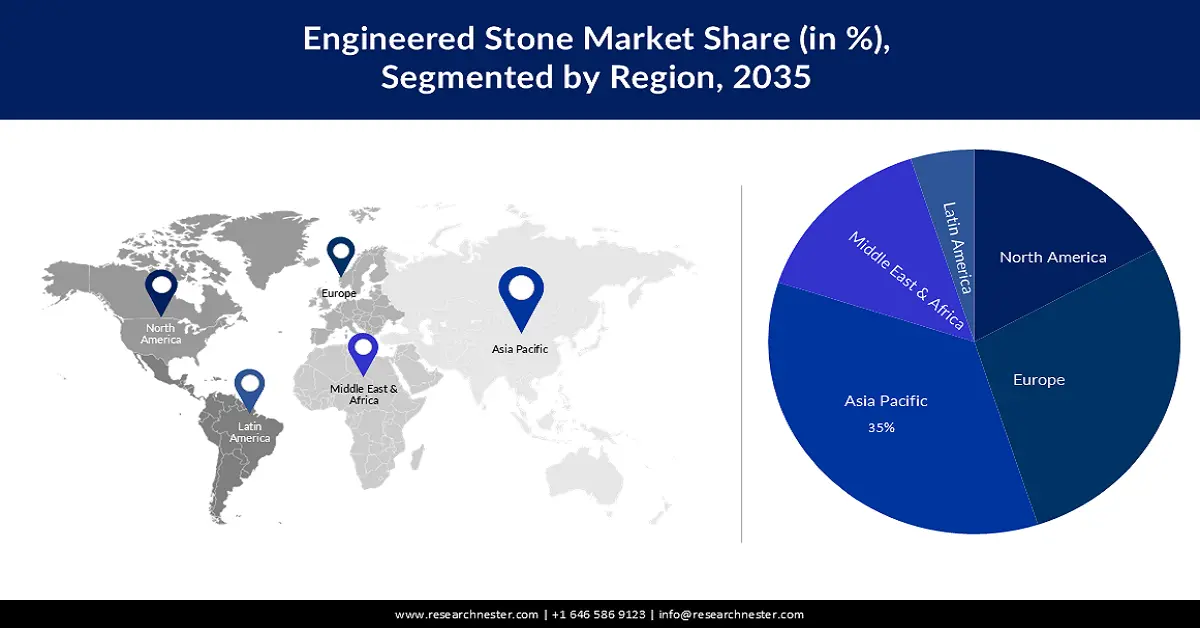
Caesarstone Ltd. Quartzforms Stone Italiana S.p.A. VICOSTONE has presented a creative solution for material realization, with an exceptional ultra-matte surface, developed through special coating preparation and advanced coating technology. This unique material possesses superb properties, including anti-fingerprint, resistance to stains, scratches, and chemicals. Whether you desire a clean and elegant finish for your project or are looking for first-class finishing and execution, LX Hausys SMR® will be your best option. The key market players are LX Hausys, Johnson Marble & Quartz, Technistone A.S., Caesarstone Ltd., Belenco, Quarella Group Ltd., Quartzforms, Stone Italiana S.p.A., Cosentino S.A., VICOSTONE, Shimizugumi Sekizai Industry Co., Ltd., Yoshida Stone Industry Co., Ltd., Tosoh Quartz Corporation, Taketo Shoten Co., Ltd.
Engineered Stone Market Outlook
The engineered stone market
Source: Read the original article | Published: September 16, 2025