
Editor's Note
This editor’s note highlights the key facts and market implications behind “These 5 Flooring Choices Are Dating Your Interio”, with emphasis on sourcing, product fit, fabrication, logistics, or buyer impact.
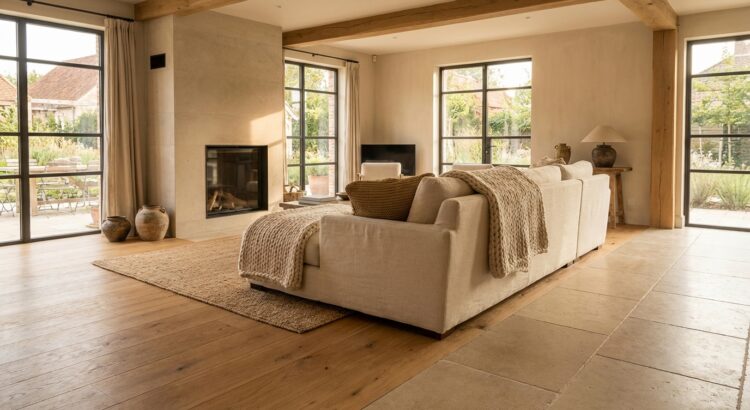
Checkerboard black and white, grey laminate, glossy tiles: some once-trendy floors are now making your room look dated. Designers explain why they are falling out of favor in 2025-2026 and what to replace them with without making a misstep. You've been looking at your floor for years without really seeing it: that black and white checkerboard in the entryway, that grey laminate hastily installed throughout the apartment, those shiny tiles that become slippery when slightly wet. They were in fashion, reassuring because seen everywhere, but they are now starting to betray the age of your decor. Interior architects are observing this: as the home aspires to be warmer, textured, and more natural, certain flooring trends to avoid are clearly taking their final bow. The watchword for 2025-2026? Less cold and shiny surfaces, more warm wood, stone effects, and matte finishes. The question remains: is your floor one of the five styles on the way out? These Flooring Trends That Are Now Dating Your Interior Decor has moved away from icy minimalism to embrace warm minimalism: earthy colors, raw materials, a mix of old and contemporary. Like subway tile on walls, the aesthetic of "clean, white, risk-free" has lost its charm. A floor that is too uniform, too grey, or too shiny clashes with this desire for a cozy nest, especially when paired with still-light walls and few textiles. In this context, surfaces deemed too artificial or visually aggressive are receding. Designers particularly point to highly contrasting floor patterns, cold grey tones installed en masse, large smooth porcelain slabs, busy tile-imitation vinyl, and ultra-glossy hotel-style finishes. These are precisely the five families disappearing from recent projects. Highly contrasting black and white checkerboard tile Cold grey "builder-grade" floors Large plain porcelain tiles Heavily patterned tile-imitation vinyl Ultra-glossy tiles and parquet Five Flooring Choices to Avoid and the Preferred Alternatives Black and white checkerboard tile is the perfect example: graphic and photogenic, it often ends up overwhelming the space, especially in an already busy kitchen or hallway. Designer Damla Turgut summarizes the ongoing shift: "We are seeing a major shift towards softer, more nuanced checkerboards: camel with cream white, off-white with sage grey, even burgundy paired with a warm neutral. These combinations still give that graphic rhythm but in a way that feels more timeless, forgiving, and contemporary," explains Damla Turgut, cited by TheSpruce. The pattern remains, but the colors soften and are often reserved for smaller surfaces. Industrial grey floors are following the same path. "The cold-toned grey floors that dominated the last decade are finally losing momentum. They flatten natural light, make rooms feel cold, and clash with the warmer palettes people are turning towards. We see designers returning to honey, natural oak, toffee, and walnut tones—anything with warmth and variation," continues Damla Turgut. Regarding tile, plain and smooth porcelain is also in decline: "A generic porcelain or ceramic can seem cold, utilitarian, and out of step with the warmth and sophistication demanded by today's kitchens. That said, porcelain designed to imitate natural stone can be elegant when executed thoughtfully, and natural stone on floors and countertops remains the true symbol of quality and timeless taste," observes Laura O'Brien. How to Successfully Transition to Warmer Floors Heavily patterned tile-imitation vinyl is also under scrutiny. Used everywhere on floors, it tires the eye quickly and "shouts" more than it decorates. Designers now favor subtly textured, stone-effect, or wood-effect coverings, which leave room for rugs and textiles to bring character. A calm yet lively floor allows you to dare a patterned wall, bold wallpaper, or vintage furniture without saturating the whole space. The last signal from the pros: the end of mirror-like floors. Polished tiles, lacquered laminates, and hyper-polished marbles give an impression of a show home, show every trace, and prove slippery. Matte or slightly satin finishes, inspired by tadelakt, zellige, or softened stones, create, on the contrary, an enveloping and warm effect. Whether you replace the entire floor covering or, for now, settle for large rugs and some warm lighting, the idea is always the same: bring the floor closer to natural materials and the lived-in feel we already love seeing on our walls and furniture.
Source: Read the original article | Published: December 21, 2025