
Editor's Note
This editor’s note highlights the key facts and market implications behind “The Latest Trends in Wall and Floor Tiles”, with emphasis on sourcing, product fit, fabrication, logistics, or buyer impact.
The Vetri collection from Italian tile manufacturer Ceramiche Refin looks like glass at first glance.
As a covering for walls or floors, they are a classic. Nevertheless, tiles also follow the trends of the time. We show you which looks are currently in vogue for tiles and why bigger is often better when it comes to tiles. We also provide examples from the collections of various tile manufacturers.
Millennia-old yet innovative: ceramic tiles. The industry constantly researches surfaces and design, releasing new decors every year. Whether minimalist in a modern ambiance or natural in a country house, regardless of the interior style, the tile complements it.
Despite the variety of tiles, there are clear trends in this industry as well. Read here about the four most important tendencies currently shaping the tile market and check out our ten trendy examples.
Trend 1: Tiles as Wall and Floor Pictures
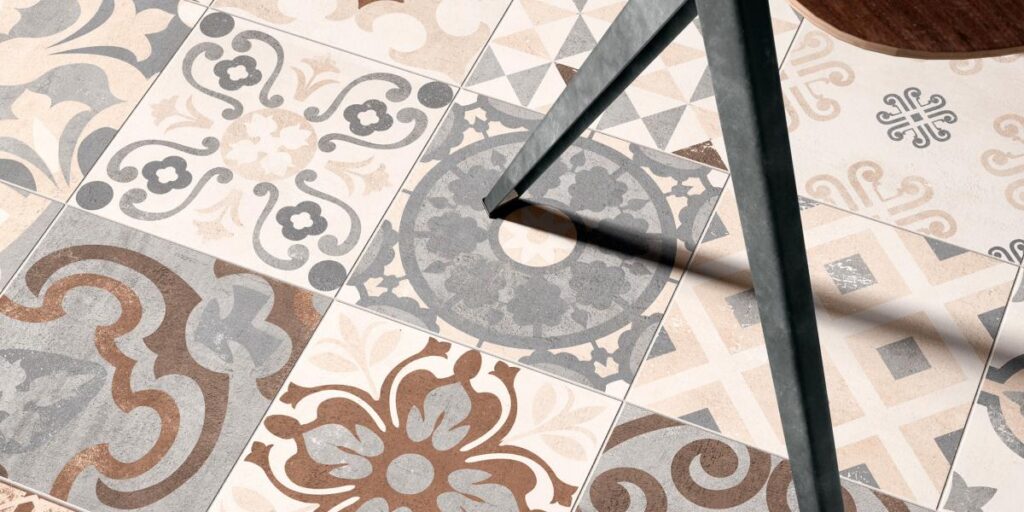
The new decor tiles can be wonderfully assembled into impressive wall pictures but also serve decoratively as a splash guard between wall cabinets and countertops. Especially in open kitchens, porcelain stoneware serves as an ideal link between the cooking area and dining space. Thanks to a uniform floor, the rooms visually merge. If the wall and floor tiles are then coordinated, it perfects the harmonious look.
The bold tile a differently colored strip – a kind of ceramic runner – from the kitchen to under the dining table, perhaps even up the wall. The trendy decor tiles look particularly decorative here. Manufacturers are returning to traditional tile designs and interpreting them in a contemporary way. But ornaments and relief structures are also trending.
Erlesen wie sein Vorbild: Täuschend echt imitiert Villeroy & Boch bei der Dekorkeramik Nocturne den Look wie auch die Haptik edlen Marmors.
On a stone floor in the children's room, you can drive vehicles around superbly.
Trend 2: Tiles in Natural Looks
Nature also serves as a model for tile manufacturers: porcelain stoneware with a natural stone look continues to enjoy unbroken popularity. No wonder, as sandstone, slate & co. can now be imitated almost perfectly thanks to innovative manufacturing processes, even their structure and haptics. The more favorable price compared to the originals makes the ceramic additionally attractive.
Porcelain stoneware also imitates the look of wood deceptively real. And with current plank formats, classic parquet laying patterns can be played with. By the way, horizontally laid rectangle formats create a feeling of spaciousness. This can be further enhanced with a dark floor. Vertically laid rectangles, on the other hand, visually stretch low rooms.
Die Keramikfliesen von Agrob Buchtal ahmen den Naturstein Schiefer nach.
Das vermeintliche Parkett in Fischgrätmuster besteht aus Keramikriegeln in verwitterter Holzoptik aus dem Hause Bärwolf.
Trend 3: Large-Format Tiles
Large formats are more suitable in a mini bathroom than the small standard sizes. Since they create fewer joints, the surfaces appear more homogeneous. Tile joints create a restlessness that feels oppressive. Anyway, porcelain stoneware today shows size. The 60 by 60 centimeter format is almost standard now. Edge lengths of three meters now form the peak among the giants.
The XXL tile comes into its own best on an equally opulent base. It emphasizes the spaciousness of the room and conveys generosity. With a barely visible joint grid, such clear surfaces offer a unique spatial effect. Diagonal laying is particularly attractive, but really only feasible in larger rooms.
Aus einem Guss: Wand- und Bodenfliesen bilden den Rahmen für das Schnittmosaik in der Dusche (Timeless, Agrob Buchtal).
Moderne Inkjet-Technik sorgt bei den Fliesen in Zementoptik von Rako für eine Oberflächengestaltung mit dezenten Gebrauchsspuren.
Trend 4: Tiles as Eye-Catchers
Pure white and as inconspicuous as possible? Not at all. Tiles are increasingly being used as a deliberate decorative element. For example, Terrazzo. Most know it as a jointless floor covering, which was often used in the early 20th century, especially for floors in kitchens, bathrooms, and house entrances due to its high load-bearing capacity. Now it's also available as a tile.
Metro tiles also radiate a very special look. They get their name from the Paris Metro, where tiles with the typical beveled edge were laid. And tiles that look like they're made of glass at first glance also show: modern tiles are much, much more than just utilitarian ceramics.
Terrazzo liegt wieder im Trend, hier als Keramik des italienischen Fliesenherstellers Marazzi.
District nennt Agrob Buchtal seine Serie angesagter Metrofliesen mit Facettenkante.
Our Tile Buying Tip
When buying tiles, consultation is essential so that wall tiles don't accidentally end up on the floor. Because they are usually lighter and more porous than floor tiles. Moreover, they are not slip-resistant.
However, more and more manufacturers are now bringing out porcelain stoneware that is equally suitable for walls and floors. This immensely simplifies the joint design of the cooking and dining area, as well as the bathroom, where wall tiles are still considered the best protection behind the sanitary block, above the washbasin, and in the shower.
Source: Read the original article | Published: February 09, 2020