
Editor's Note
This editor’s note highlights the key facts and market implications behind “How to Export WooCommerce Products: A Step-by-St”, with emphasis on sourcing, product fit, fabrication, logistics, or buyer impact.
How to Export WooCommerce Products: A Complete Guide for Store Managers In many cases, managing your inventory is easier if you export your product data. The export file can be used to back up your products, perform bulk updates, or migrate your products to a new website. This method saves time and gives you more control over your catalog. In this guide, you will learn how to export WooCommerce products using both the built-in export tool and a popular plugin. We will guide you step-by-step through each method.
How WooCommerce Product Exports Work
Exporting WooCommerce products is the process of generating a downloadable file containing the data of your store's products.
What Data is Included in a WooCommerce Product Export?
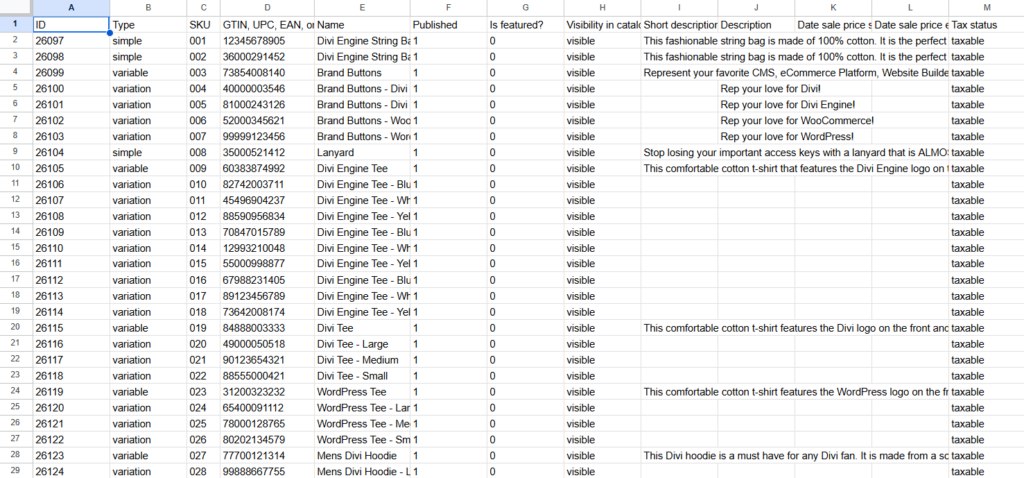
When you export products from WooCommerce, the file typically includes all essential product data. You can choose to export all products or limit the export to specific categories or product types. Product types include: Both WooCommerce's built-in export tool and third-party plugins structure product data in rows and columns. You can open and edit the exported file in spreadsheet programs like Excel or Google Sheets. For simple products, you will see one row per product. If you work with variable products, most export tools show each variation in its own row, although this can vary depending on the tool.
What File Formats are Available for Exporting WooCommerce Products?
The most common export file formats are CSV, XML, and XLS.
CSV is the most widely used format, ideal for editing in spreadsheets or importing to other platforms. XML works well for integrations and backups, while XLS is useful if you prefer to work in Excel. Spreadsheet editing and platform import – Not as compatible with import and export tools as CSV.
Why You Might Need to Export WooCommerce Products
Exporting WooCommerce products is a practical solution for store managers who need more control over their product data. It is especially useful if your store has a large product catalog. Here are the most common reasons to export your WooCommerce products: : If you switch to another ecommerce solution like Shopify or BigCommerce, exporting allows you to transfer your entire product catalog without starting from scratch. : A product export serves as a backup in case of accidental deletion, plugin conflicts, or other website issues. is often faster to update prices, descriptions, or inventory levels in Excel or Google Sheets. You can then use the exported data as an import file to update your products. if you manage multiple stores, exports can help you synchronize inventory or duplicate product data quickly. Analyze product data offline. You can use exported files to generate reports, track price trends, or review sales performance without logging into WordPress. : Exported files help you share product information with manufacturers, distributors, or marketing teams.
2 Methods to Export WooCommerce Products
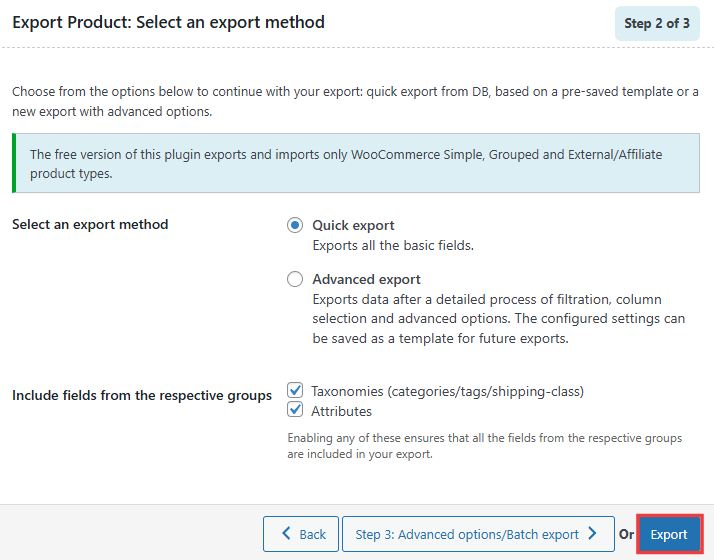
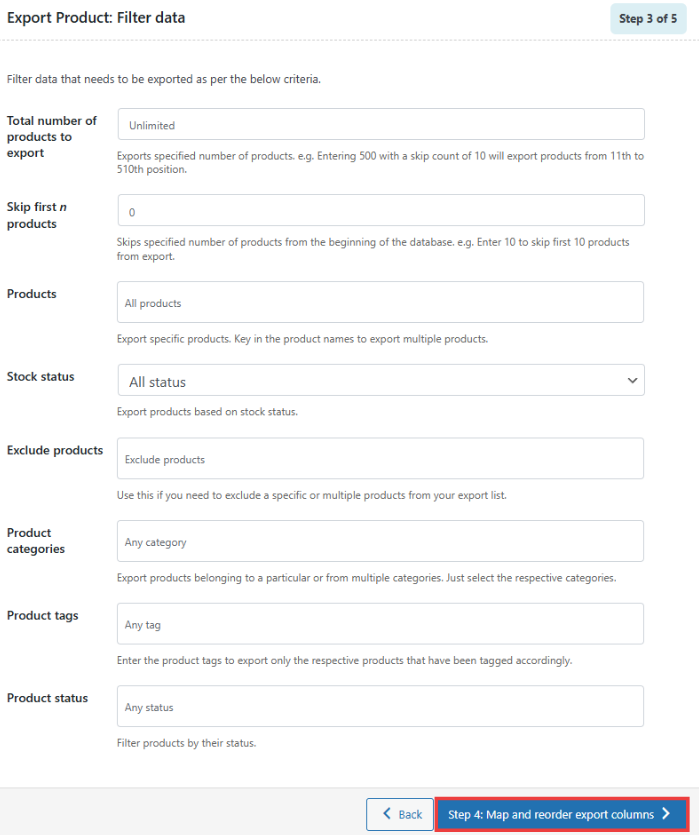
First, we will explain how to use WooCommerce's built-in exporter, which is easier to use and suitable for quick, basic exports. If that doesn't cover your needs, we will also look at a method using a WooCommerce export plugin that allows for more advanced product filtering and mapping.
Method 1: Use the Built-in WooCommerce Export Tool
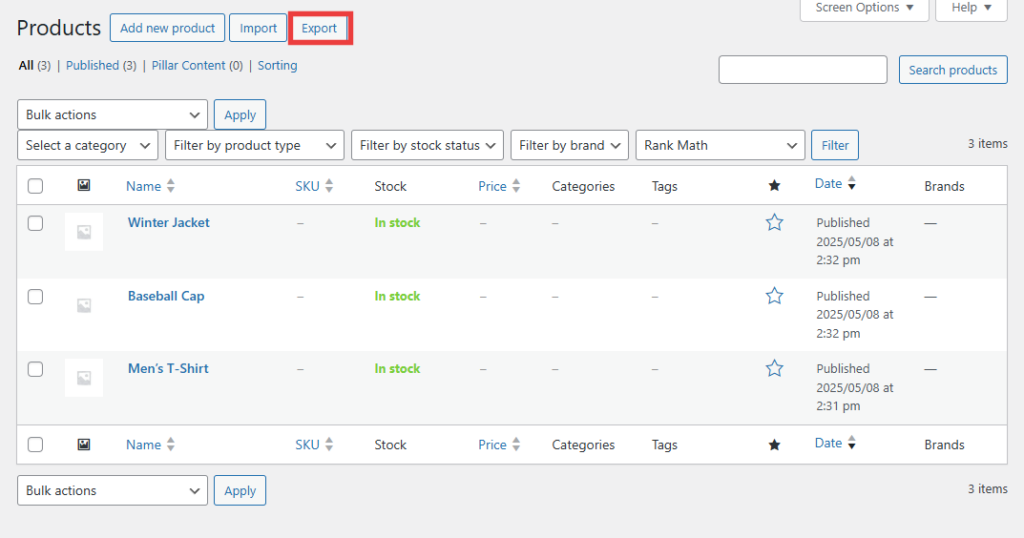
WooCommerce includes a simple export tool that allows you to quickly download your product data into a CSV file. This is useful for backups, modifications, or migrating products to another website. The tool allows you to export product types and categories, but not individual products. If you want to export a specific product or a specific group of products that don't fit into a WooCommerce category, you can add them to a temporary category just for exporting. To access the export tool, log into your WordPress dashboard. Go to Export You will see several options to customize your export: What columns do you want to export? Choose which fields to include, such as SKU, price, or availability. Leave it blank to export all available columns. What product types should you export? What product categories do you want to export?
Limit the export to a specific category if necessary. Suppose you want to export a CSV file with all product fields and metadata, but only for simple products in the Bags category. Your settings should look like the image below. When you finish configuring, click the (Generate CSV) button to start the export. CSV is the only format supported by the built-in tool. If you need more format options, advanced filtering, automatic exports, or automation tools, you will need to use a plugin. We explain this in the next section. Important! In some cases, the export may time out. This interrupts the process and generates an incomplete file. If you have a large product catalog, consider exporting in smaller batches by category or product type to avoid performance issues.
Method 2: Use a WooCommerce Export Plugin
If WooCommerce's native export tool does not offer the features you need, you will have to download and install an export plugin. free export plugins WP All Import Search keyword: exporter
Source: Read the original article | Published: April 20, 2026