
Editor's Note
This editor’s note highlights the key facts and market implications behind “The Stone Secret in the Heart of Italy: The Hypo”, with emphasis on sourcing, product fit, fabrication, logistics, or buyer impact.
The Stone Secret in the Heart of Italy: The Hypogeal Sacellum of Paestum
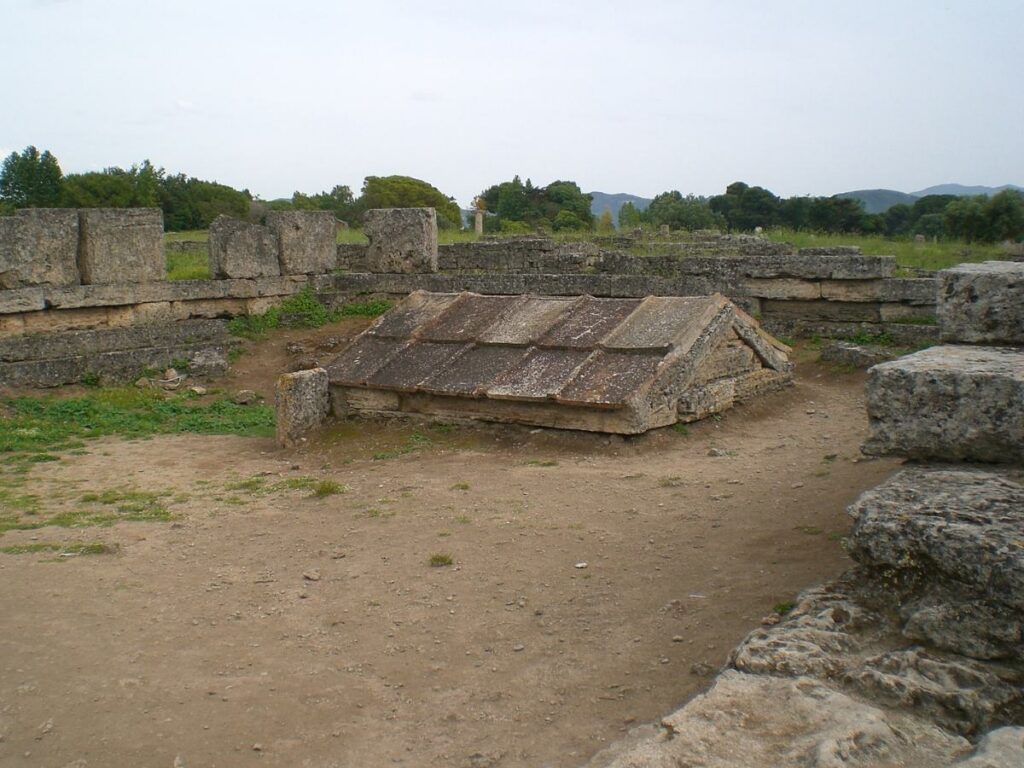
An enigmatic structure made of limestone blocks represents one of the greatest archaeological mysteries linked to the cult of the heroized founders of the city. Serena Proietti Colonna 11 April 2026 The monumental area in Campania, specifically the Archaeological Park of Paestum, holds within its foundations a singular construction that escapes the notice of less attentive visitors. We are talking about the Hypogeal Sacellum, a building that stands partially buried, protected by an enclosure that delimits its sacred perimeter. Archaeologists identified it around the middle of the last century, discovering a rectangular chamber perfectly sealed and devoid of access openings. The construction technique, in fact, employs large slabs of local limestone fitted together with millimetric precision. This area of the polis served as a political and religious fulcrum, making the presence of an underground building an unequivocal signal of high social importance. The construction likely dates back to the end of the 6th century BC, a period of maximum splendor for the local community.
The Box Shape and Gabled Roof of the Hypogeal Sacellum
The structural appearance of the monument is striking for its resemblance to a small dwelling without doors. The rectangular plan measures about 4 meters in length by 3 meters in width, forming a sort of massive casket immersed in the earth. The most distinctive architectural element lies in the upper part, where a double-pitched roof perfectly simulates the roof of a miniature house or temple. Large stone slabs rest against each other following an inclination that facilitated the drainage of rainwater into the surrounding ground. Originally, terracotta tiles rested on these stones, completing the illusion of a sunken domestic dwelling. This visual choice served to identify the site as the eternal residence of an invisible but fundamental tenant for the city's identity.
The Mystery of the Cenotaph and the Honey Vessels
The interior of the artifact held treasures that revolutionized the understanding of archaic rites. Researchers found as many as 8 bronze vessels (6 hydriai and 2 amphorae) containing a dense organic substance later identified as honey. This substance symbolized immortality and served to honor a heroic figure lacking physical mortal remains. The site thus received the nickname of Heroon, a term indicating the place dedicated to the cult of the legendary founder of the colony, called the oikist. The total absence of a skeleton confirms that the structure was a cenotaph, that is, a symbolic tomb destined to keep alive the spiritual bond with the divine origins of the lineage. The honey, preserved for millennia in the dark, testifies to the will to eternally nourish the spirit of the city's protector.
Ghost Furnishings and Symbols of Rest
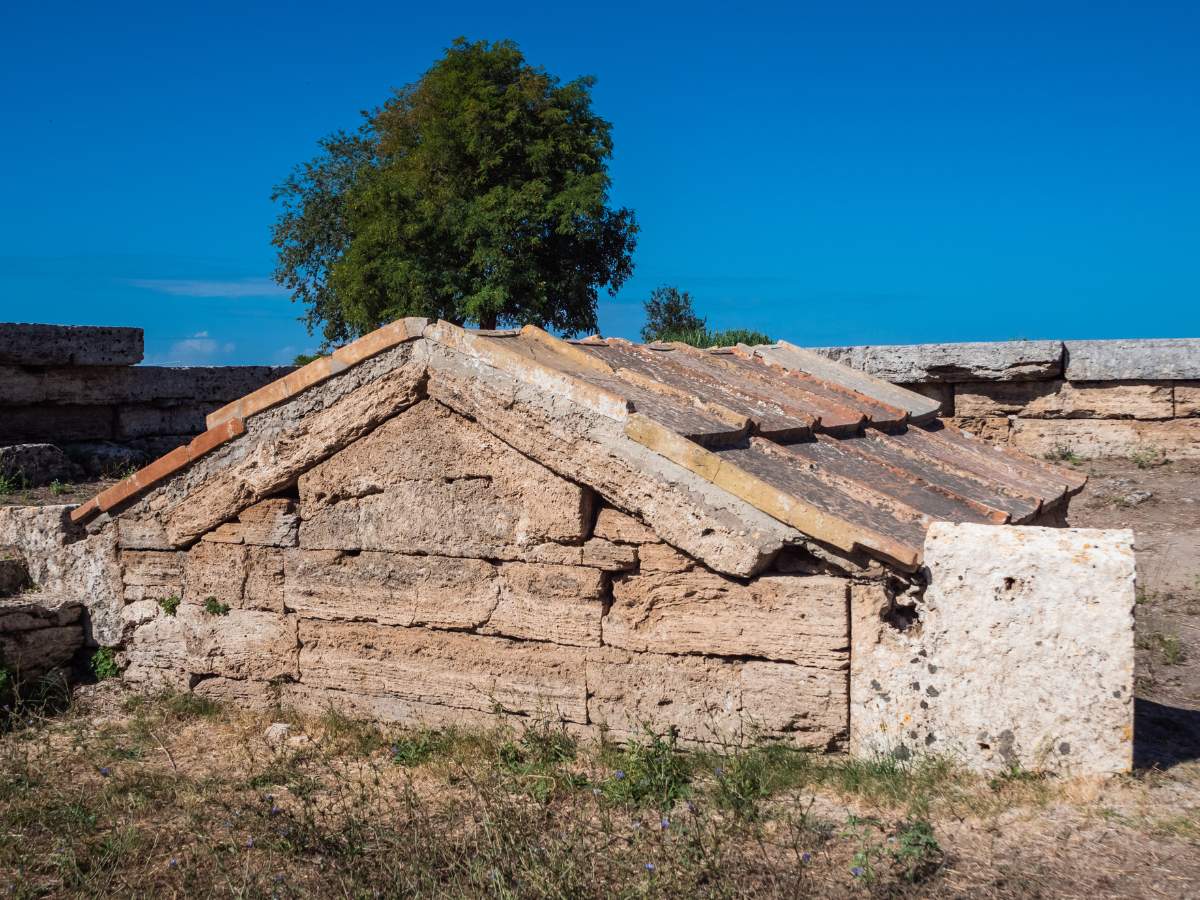
Physical access to the underground chamber is precluded to the public for several fundamental reasons: Absence of entrances: the structure was born as a sealed chamber, devoid of stairs, doors, or corridors. Conservation: being a very small hypogeal (underground) chamber, human presence would immediately alter the internal microclimate, jeopardizing the integrity of the travertine blocks and the stability of the monument. Safety: the space is extremely limited and situated below the walking level, making a safe visitor path that complies with current regulations impossible. But, ideally crossing the stone walls, the internal space reveals an absolute sobriety, therefore lacking pictorial decorations or frescoes. In the center of the floor, consisting of the leveled natural bedrock, scholars identified a structure formed by two limestone blocks (or a bench) on which 5 iron bars/spits wrapped in a woolen cloth were placed. These supports were part of a wooden table or board (sometimes interpreted as a symbolic bed), now decomposed, on which the offerings were laid. Next to the bronze vessels rested Attic black-figure amphorae of exquisite craftsmanship, depicting mythological scenes and banquets. The arrangement of the objects followed a rigorous ritual order, transforming the room into an inaccessible time bubble. The lack of stairs or entrance corridors underscores the nature of a sacred deposit, isolated from the world of the living to preserve the purity of the gift offered to the vanished hero.
What Can Be Visited
The visitor can observe the Hypogeal Sacellum exclusively from the outside, remaining above the enclosure surrounding the excavation. To admire what was kept inside (the bronze hydriai, ceramic vases, and the remains of honey), one must go to the National Archaeological Museum of Paestum, where the entire collection is exhibited in a dedicated section that ideally reconstructs the arrangement found during the 1954 excavation.
A Time Capsule Protected by the Centuries
During the Roman era, the community decided to cover the entire complex with a mound of earth and stones to prevent its desecration. A protective intervention that allowed extremely fragile artifacts to reach our days intact, defying degradation and infiltrations. The solidity of the limestone blocks, in fact, resisted the pressure of the soil, keeping the internal cavity intact for over 2,000 years. The Hypogeal Sacellum remains a fundamental stop for those seeking to decipher the profound link between architecture and religious rite. Cover photo: Liberotag73 – Own work, CC BY-SA 3.0, via Wikimedia; Canva
Source: Read the original article | Published: April 11, 2026