This editor’s note highlights the key facts and market implications behind “The Challenge of Ceramics in Europe: EU Countrie”, with emphasis on sourcing, product fit, fabrication, logistics, or buyer impact.
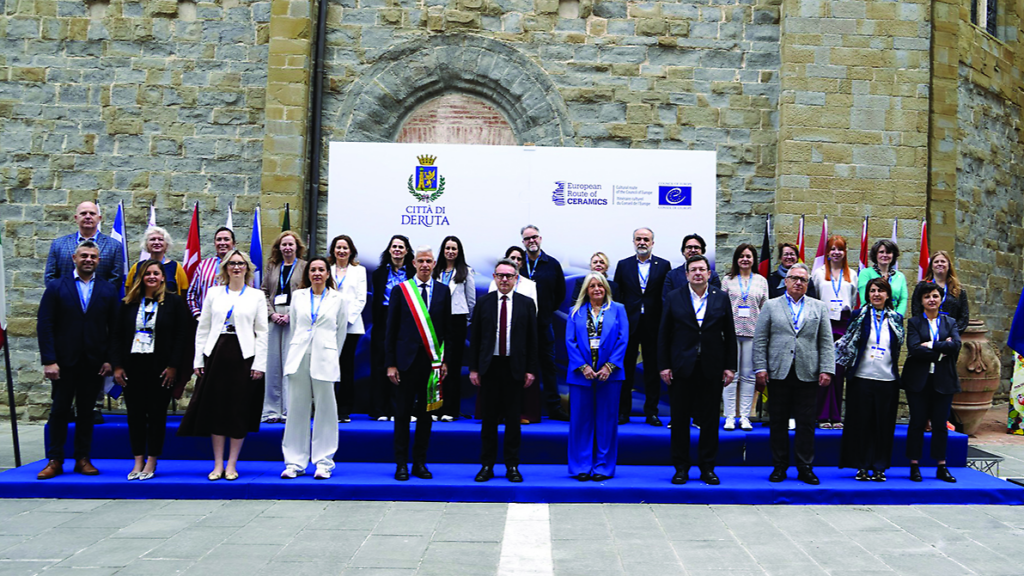
Deruta is experiencing memorable days, with the city serving as a focal point for European ceramics. On Wednesday afternoon, Mayor Michele Toniaccini welcomed delegations from ceramic associations of Spain, Portugal, the Czech Republic, France, Bulgaria, Albania, Luxembourg, Croatia, China, and Uzbekistan in Piazza dei Consoli. The event was attended by the Prefect of Perugia, Francesco Zito, and major Umbrian institutions. Following this, representatives from the various countries opened the General Assembly of the European Association of Ceramic Cities, coordinated by Toniaccini himself, who has been its president since October of last year. Thursday was no less intense, featuring the assembly of the European Ceramic Route, with representatives from Italy, Spain, Portugal, Croatia, Germany, Poland, Greece, Norway, Turkey, the Netherlands, Malta, Slovakia, and Austria in attendance. At the heart of both meetings were the present and future of the artistic ceramics sector, including its challenges and the search for shared strategies in terms of valorization and promotion. The goal is a unified vision while respecting respective histories, traditions, and specificities.
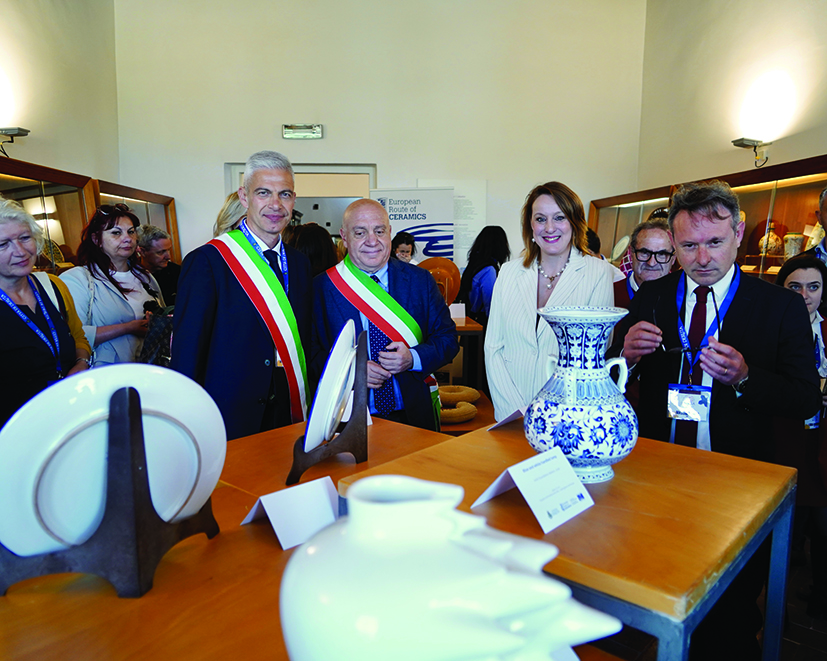
This was followed by the inauguration of two thematic exhibitions: the international exhibition of the European Route at the Regional Museum of Ceramics, and "Francesco: The Imprint of Ceramics," also at the museum, featuring works from the 60 Italian cities that are part of AICC. The AICC is the association of entities with ancient ceramic traditions recognized as such by the Ministry of Economy.
The afternoon concluded with the conference "IGP and Ceramics: Protection and Value of Made in Italy," opened by a video address from the Minister of Enterprises and Made in Italy, Adolfo Urso.