
Editor's Note
This editor’s note highlights the key facts and market implications behind “Lotus Moon in Milan: Dialogue between Ōtagaki Re”, with emphasis on sourcing, product fit, fabrication, logistics, or buyer impact.
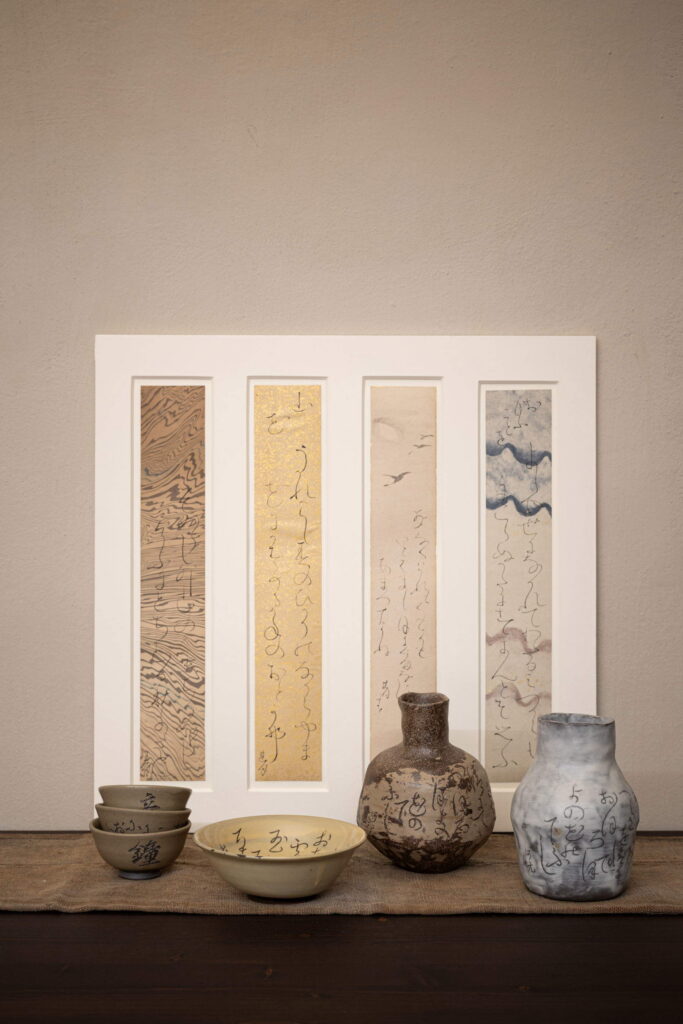
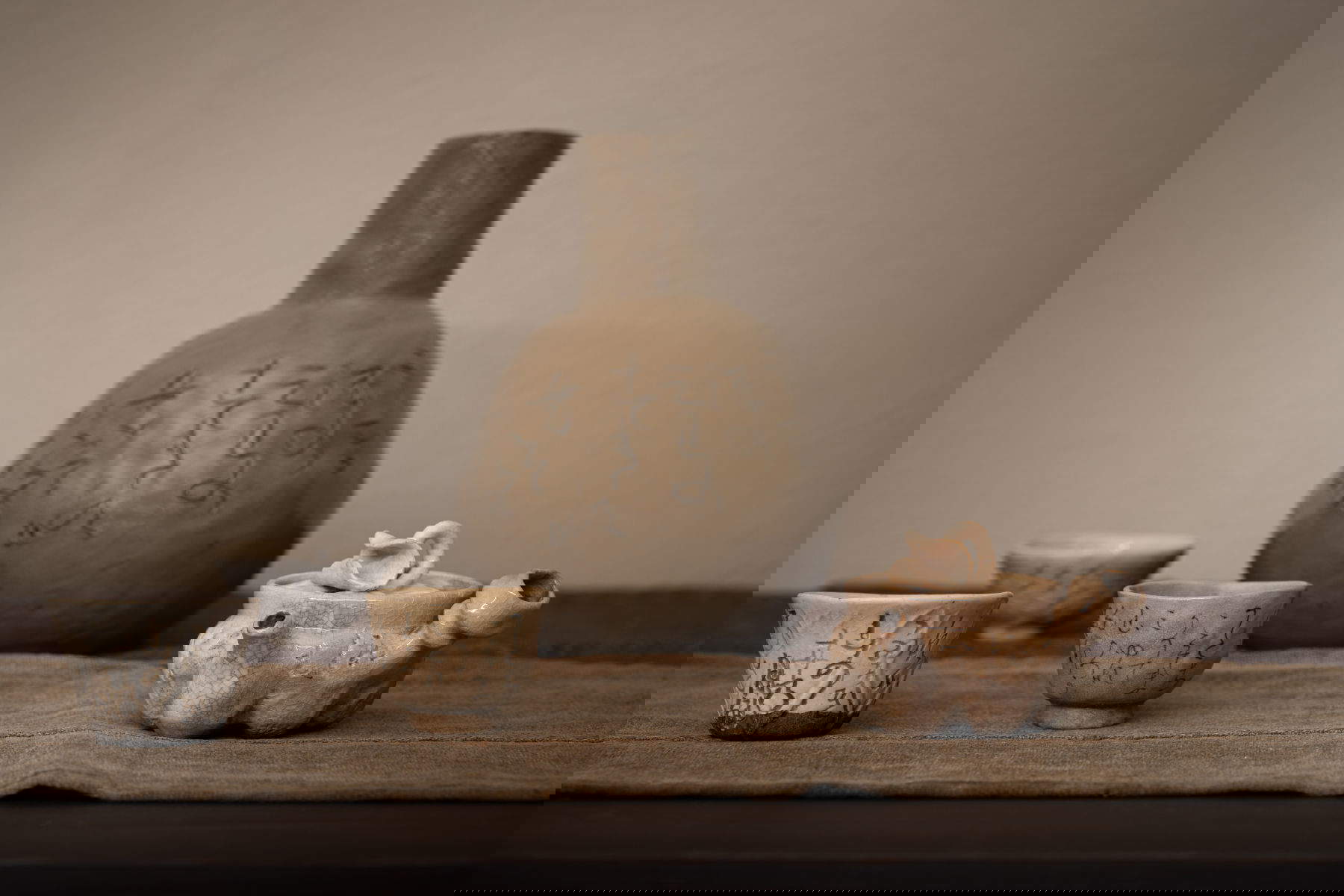
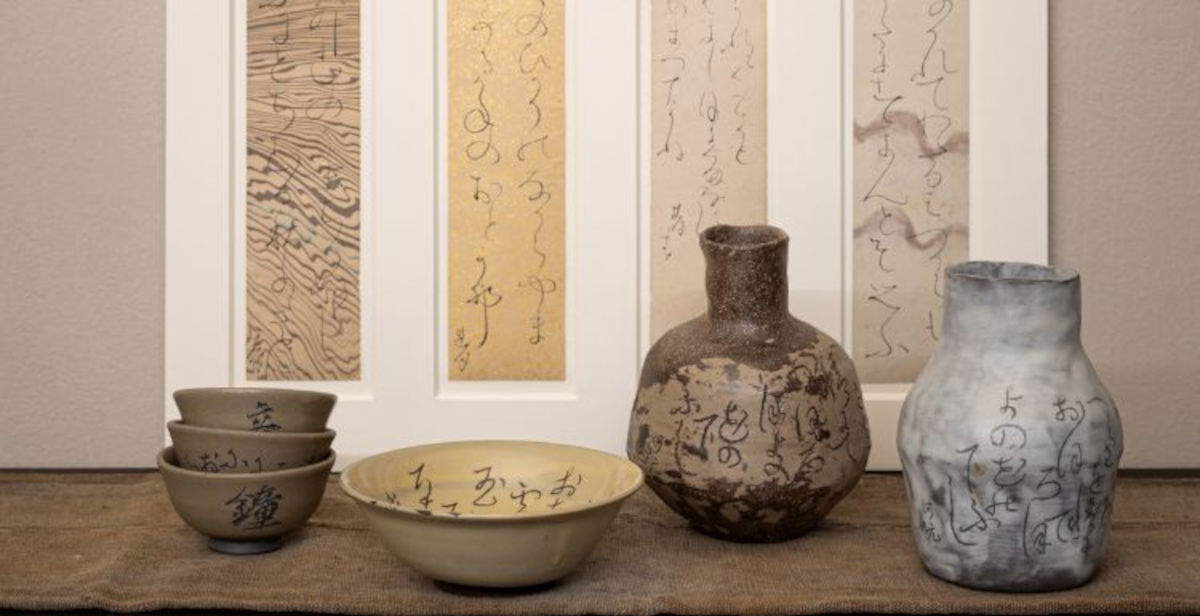
In Milan, Spazio TOMA and Ekadea Studio will present an exhibition from April 28 to May 8, 2026, featuring 30 works by Ōtagaki Rengetsu, shown for the first time in Italy, alongside contemporary works inspired by Wabi-Sabi poetics, creating a dialogue between calligraphy, ceramics, and poetry. The exhibition project presents for the first time in Italy a core of thirty original works by Rengetsu, who worked between poetry, calligraphy, and ceramics following the aesthetic principles of Wabi-Sabi. This perspective, central to Japanese culture, is based on the idea of an imperfect, essential beauty connected to nature, manifested in the simplicity of forms and an appreciation for transience. The artist created everyday objects such as bowls, teacups, and sake containers, engraved with poetic Waka compositions—a traditional Japanese poetic form structured in five verses. From left: 3 sake cups with poems; 1 sake bottle, poem 250; 1 teapot, poem 195 (19th century; ceramic with engravings). Photo: Tomoyuki Tsuruta. Ōtagaki Rengetsu: 4 Tanzaku with calligraphies of 4 of his poems, from left: 569, 56, 546, 684. Bruno Riva and Katia Bagnoli: 4 bowls, 1 bottle, 1 vase with engraved poems by Rengetsu / 2025 / ceramic with engraving. Photo: Tomoyuki Tsuruta.
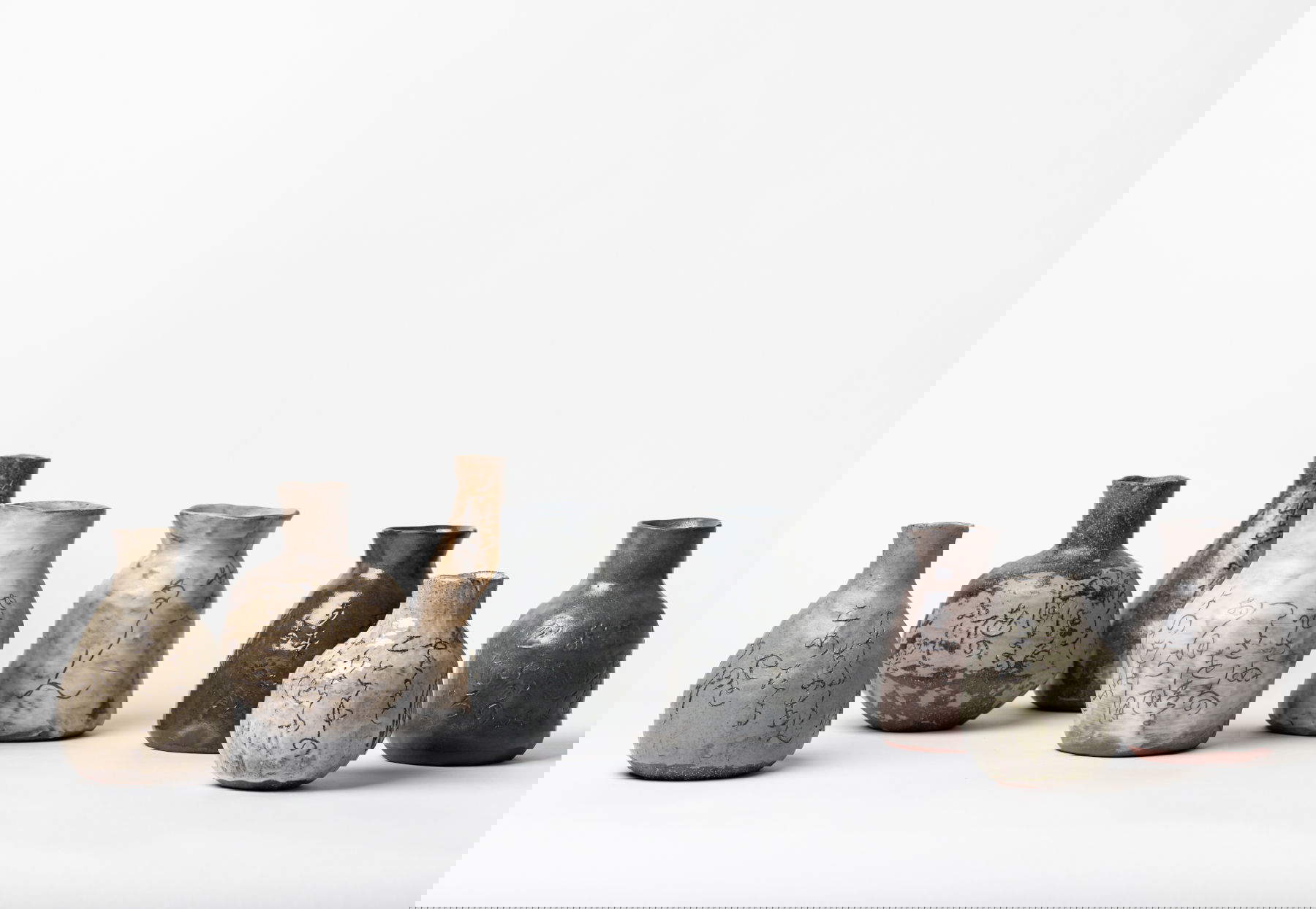
The contemporary works, developed specifically for the project, are not intended as reproductions but as interpretations guided by Rengetsu's poetic texts and aesthetic research. The dialogue between historical and contemporary works unfolds through various media, including calligraphy, painting, and ceramics, aiming to bring together artistic practices that are temporally distant but united by a focus on material and gesture. These works are part of the visual dialogue with contemporary calligraphy. Ceramics by Ekaterina De Andreis, hand-engraved by Bruno Riva and Katia Bagnoli, are also presented in this context. The second venue, the Ekadea Studio at Via Plinio 42, opening on April 29, 2026 at 6:30 PM, hosts additional ceramics by Ekaterina De Andreis and a selection of calligraphic and painted works created by artists and calligraphers from Shodo.it on Japanese paper. For this occasion, De Andreis produced one hundred ceramics using traditional techniques, subsequently engraved by Bruno Riva and Katia Bagnoli, following an approach consistent with the exhibition's reference aesthetics. Katia Bagnoli and Bruno Riva, 8 vases and bottles with engraved poems by Rengetsu (2026; engraved ceramic). Photo: Tomoyuki Tsuruta.
Preceding the main exhibition project is a series of installations throughout the city, starting April 8, 2026. Some works will be presented at the Japanese Consulate General at Via Privata Cesare Mangili 2/4, while others will be visible in the window of the Toma Boutique at Via della Spiga 2. These interventions anticipate the main exhibition and contribute to building a distributed urban itinerary. The entire project is conceived as a tour inviting a slow unfolding of the exhibition spaces, following a structure reminiscent of a meditative dimension.
“In a hectic time like ours,” say curators Katia Bagnoli and Bruno Riva, “this exhibition is an invitation to rediscover mindfulness, silence, and slowness. It encourages approaching the ancient and very modern voice of Rengetsu, being touched by his poetic sobriety, and discovering through works from two centuries the deep breath of an aesthetic that still speaks to the heart. This encounter between Japanese and Italian artists across cities, cultures, and languages, between past and present, renews the subtle fabric of philosophical and aesthetic exchange that has connected East and West for centuries.”
The Japanese poet, calligrapher, ceramicist, and painter Ōtagaki Rengetsu was born in the spring of 1791 in Kyoto, the ancient capital of Japan. She was born under the name Nobu, as the secret daughter of a geisha and a high-ranking administrator of the Iga-Ueno domain. Shortly after her birth, she was adopted by Ōtagaki Mitsuhisa (Banzaemon), an employee of Chion-in, a major temple of the Pure Land (Jōdo-shū) Buddhist school. At the age of eight, she was sent to Kameoka Castle in the Tanba region, where she was trained in poetry, calligraphy, and martial arts. When she returned to Kyoto about ten years later, she married the young samurai Mochihisa. The marriage was marked by numerous bereavements: her three children died young, and in 1815 her husband also passed away. In 1819, she entered a second marriage but was widowed again after four years.
The family losses led Nobu, at the age of 33, to decide to shave her head and take monastic vows, adopting the name Rengetsu, “Lotus Moon.” She settled near Chion-in Temple with her adoptive father, who had by then also devoted himself to religious life. After Mitsuhisa's death in 1832, Rengetsu began to earn her living by making and selling ceramics, on which she engraved Waka poems—a classical Japanese poetic form structured in five lines following the 5-7-5-7-7 syllable pattern.
Source: Read the original article | Published: April 18, 2026