
Editor's Note
This editor’s note highlights the key facts and market implications behind “Green Building, the Wood Lesson: From Sweden to “, with emphasis on sourcing, product fit, fabrication, logistics, or buyer impact.
Green Building, the Wood Lesson: From Sweden to South Tyrol, How It Makes Construction Sustainable
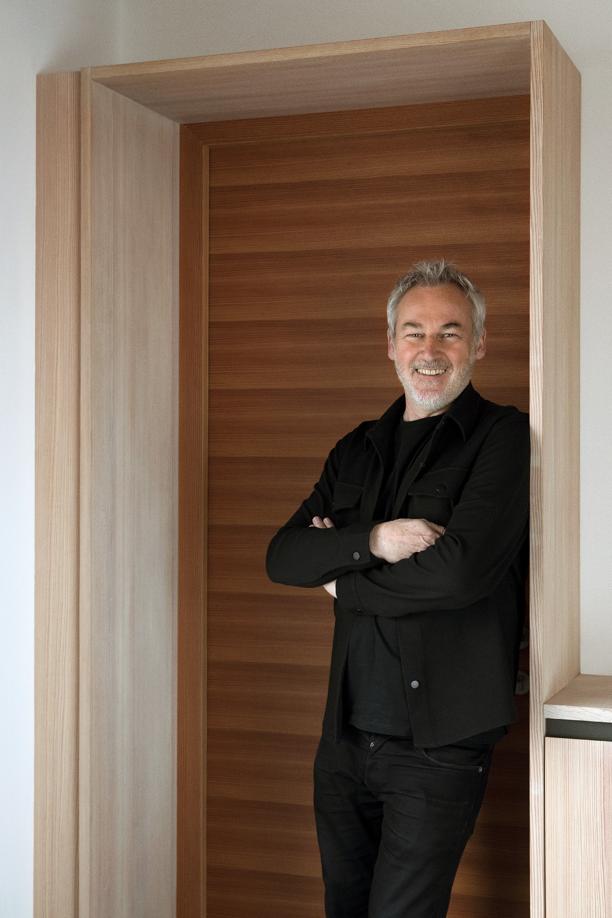
Roland Baldi, an expert in wooden architecture and winner of the Klimahouse Wood Architecture Prize in 2023 with the Sluderno (Bolzano) kindergarten project, discusses the versatility of the most natural material for building. The built environment is a nightmare for the climate. Producing cement, steel, and plastic—the materials we commonly use to build our infrastructure—emits large amounts of carbon dioxide. If cement were a country, it would be the world's fourth-largest emitter of greenhouse gases after China, the United States, and India. For this reason, reducing the carbon footprint of building materials is an essential effort for climate defense. Among the solutions being considered, the fastest-growing in sustainable construction is the choice of wood as a building material: particularly high-performing from an environmental impact perspective throughout its entire life cycle, wood is considered carbon neutral and is now also used for building tall structures. Buildings like the Ascent Tower in Wisconsin, Mjøstårnet in Norway, or the HoHo tower in Vienna have successfully demonstrated the potential of wooden construction as an alternative to concrete and steel. Even in Milan, two towers with structural elements made of cross-laminated timber (CLT) are being built as part of the Mind project: Zenith, with 13 floors, and Horizon, with 8.
The Characteristics
In Sweden, however, they think bigger: in Sickla, a former industrial area south of the capital, Stockholm Wood City is rising, "the world's largest solid wood neighborhood," according to the description by developer Atrium Ljungberg.
The settlement, which will include 2,000 new homes, 7,000 offices, schools, shops, and restaurants all made of wood, covering 250,000 square meters, is unique for its size and the priority given to the principles of sustainable construction. Wood itself is a material that stores carbon rather than emitting it, as trees absorb CO2 during growth, but even in construction site management it can reduce carbon emissions by up to 60% more compared to traditional methods, because it is lighter and faster to work with than concrete, allowing for extensive use of prefabrication. Not surprisingly, the project is ahead of schedule and will manage to complete the building housing the schools by the end of this year, with the rest of the thirty buildings to be delivered between 2026 and 2027.
The Most Virtuous Italian Territory
In Italy, South Tyrol is the homeland of wooden architecture, also thanks to its proximity to other culturally similar areas like the Austrian region of Vorarlberg or the German regions of the Alpine arc.
"Wood now plays a fundamental role in our projects. Modern construction methods allow it to be used efficiently and with high aesthetic value," explains Roland Baldi, a Bolzano-based expert in wooden architecture and winner of the Klimahouse Wood Architecture Prize in 2023 with his project for the Sluderno kindergarten.

“For our studio, the use of wood is not a dogma, but we are convinced that the sustainable soul of a building, besides contributing to its environmental sustainability, will also lead children to greater attention to the environment. This was the case for the CLT school in Sluderno, where we highlighted the educational aspect of using natural and sustainable materials, also lining the interiors with wood, for greater comfort and to make the soul of the building visible,” emphasizes Baldi.
The same applies to the new school in Chienes, built with wood and local materials, with a green roof integrated with photovoltaic panels and a high-efficiency heating system: "The wooden structure reduces the ecological footprint without limiting its functionality and indeed contributes to the flexibility of the spaces, which can be adapted over time to changing needs, thus prolonging the life of the building itself."
Costs Still High, but Industrialization Can Help
Building with wood still has high costs, but the possibility of industrializing construction, with standardized sites primarily intended for assembling prefabricated elements, manages to amortize the higher material costs.
“Wood is lighter than other materials and allows for greater precision, paving the way for more innovative architecture. Thanks to its lightness, it is also becoming important in urban densification projects, where raising buildings to increase their volume is preferred to avoid consuming more land,” notes Baldi.
The Strategies
In a broader perspective, of exponential growth in the urban population and redefinition of climatic balances, the regeneration of cities will necessarily involve the use of lighter buildings, adaptable to other uses, that can be modified infinitely. These pathways are giving rise to a series of new areas for construction: logistics, agile production, assembly and maintenance, digital manufacturing, robotics, and augmented reality.
Several large European companies are exploring the possibility not only of designing with greater standardization but also of producing "zero-kilometer" buildings.
Source: Read the original article | Published: November 15, 2025