
Editor's Note
This editor’s note highlights the key facts and market implications behind “Top Interview: From Building Materials Wholesale”, with emphasis on sourcing, product fit, fabrication, logistics, or buyer impact.
Top Interview: From Building Materials Wholesaler to Construction Engineering Trading Company – Growth Strategy in the Era of Infrastructure and DX
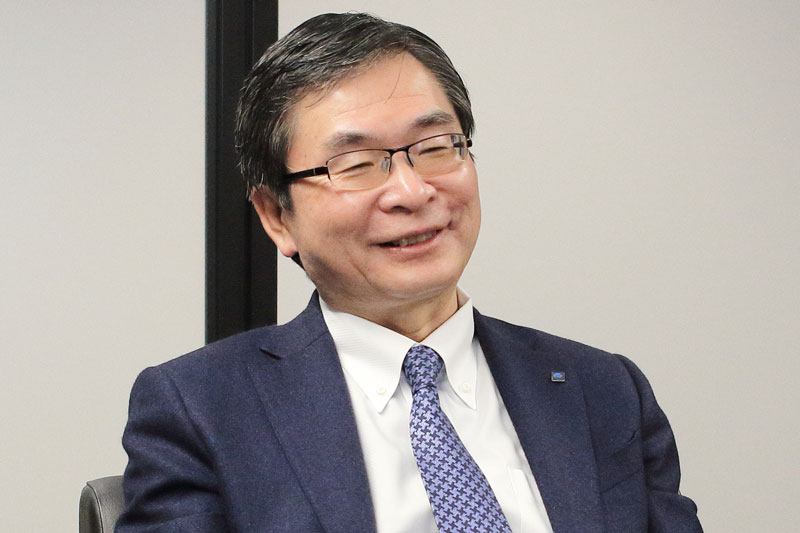
The building materials industry has been swept by structural changes over the past few decades, including supplier consolidation, the maturing of the new housing market, and the emergence of social challenges like aging infrastructure. Riding these turbulent market conditions as a tailwind, OCHI Holdings Co., Ltd. has continued to grow by boldly transforming its business portfolio through over 50 M&A deals. We asked the company's President and Representative Director, Michihiro Ochi, about his vision and philosophy on how to capture the tide of change and what compass he is drawing for the future.
(Interviewer: Naoshi Kodama, Chairman and Representative Director of Data Max Co., Ltd.)
Surviving Consolidation: An Industry Transformed Over 30 Years
— Many of your former business partners have likely either been absorbed by major house builders or disappeared, haven’t they?
Michihiro Ochi (hereinafter, Ochi): Amidst environmental changes, major house builders are no longer focusing solely on the domestic market. Their construction starts in the US now exceed those in Japan, showing a shift overseas. Even in Kyushu, local real estate players are investing tens of billions in Southeast Asia, such as the Philippines, Vietnam, and Thailand. Overseas ventures require partnerships with local developers, which is a challenging path.
From Housing to Civil Engineering & Infrastructure: A Strategic Shift Anticipating Demand Trends
— The domestic market has changed significantly. In particular, how do you view the challenges facing the housing market, which was your main battlefield, and the new opportunities arising there?
Ochi: You're right, the market structure has fundamentally changed. The new housing market, once our mainstay, has now plateaued. On the other hand, new business opportunities have emerged. For example, the market for buying up, renovating, and reselling used homes is growing significantly, centered on major metropolitan areas. Rising construction costs are also fueling this trend.
— While housing starts are on a downward trend, your group’s “Engineering Business” segment is growing significantly. In the interim period ending March 2026, this segment’s sales showed an astonishing 48.0% year-on-year increase.
Ochi: The decline in domestic new housing starts is unavoidable due to factors like the declining birthrate. The vision we are considering for the future is strengthening the "Civil Engineering & Infrastructure Maintenance" field. We believe it is crucial to discern the structural differences between private demand (housing) and public demand (civil engineering).
First, housing is private demand and is closely linked to the economy. It is heavily influenced by individual purchasing power, interest rates, and economic trends, and currently, soaring material costs are directly hitting demand in the volume zone. On the other hand, in public works like civil engineering and infrastructure, especially in recent years, countermeasures for aging infrastructure—such as bridges and sewers that are 40-50 years old—are now in a state where action cannot be delayed. This is an "unavoidable mission to support the safety of national life" that must be carried out regardless of the economic climate, so we believe building a business strategy responsive to this demand is important.
— Despite this situation, I hear the failure to award public works contracts is severe. There are even stories of a certain municipality’s waterworks bureau bowing and asking contractors, “Please take on this project within this year so we can execute our budget.”
Ochi: At current infrastructure construction sites, a reversal of power balance is occurring against a backdrop of labor shortages. A typical example is "having a budget but lacking construction capacity." In such an environment, our group will further strengthen our system to respond to demand as much as possible by having in-house construction capabilities. We believe that securing stable, high-public-demand work is a strategic key to fundamentally stabilizing the "quality" of management.
— As a method for infrastructure maintenance, switching from “corrective maintenance” to “preventive maintenance” has become emphasized.
Ochi: Switching from "corrective maintenance" to "preventive maintenance" is estimated to have a cost-reduction effect of about 90 trillion yen over the next 30 years. Corrective maintenance carries the risk of sudden accidents, but planned 'preventive maintenance' increases safety and reduces total cost. Our group has a specialized company for inspecting and diagnosing bridges, tunnels, and road facilities, and we have built a network capable of handling a wide range of civil engineering and construction work seamlessly, from bridge substructure work and highway interchange construction to seismic reinforcement. We are confident that this 'preventive maintenance' field, unlike private housing demand, will continue to grow steadily as a mainstay of public works.
Over 30 Group Companies: Sharing Values and Respecting Autonomy
— Your group has expanded through strategic M&A. How many companies are in the group now, and what are the main business areas?
Ochi: The group has grown to over 30 companies. The areas include the founding building materials business, the engineering business mentioned earlier, a processing business that processes and sells housing lumber, an environmental amenity business mainly selling refrigeration/air conditioning equipment in regions like Tohoku and Kanto, and others including a staffing company. Recently, in October 2024, we welcomed Yumida Construction Co., Ltd. in Fukushima Prefecture, and in July 2025, IT company Japan System Solutions Co., Ltd. into the group.
— What is the secret to managing a group encompassing diverse industries? The world hears not only success stories but also failures. For example, stories where imposing the parent company’s logic resulted in a mass exodus of young employees in their 20s from a subsidiary. I’ve also heard of failures where a major medical device maker excessively interfered with an acquisition target, stripping its management of decision-making power.
Ochi: When welcoming companies from different industries into the group, the first important thing is to respect each company's autonomy. I think it's about not imposing the parent company's logic. We don't understand all industries outside our core business either. Also, business customs differ by region, so forcing Kyushu's methods on other prefectures won't work. We entrust reliable management teams and value their autonomy. However, an indispensable prerequisite for this is sharing a common value: "Creating a safe, secure, and sustainable society" (our Purpose). While leaving operations to them, we align on the group's social responsibilities. The essence of the construction and materials industry is "trust relationships where you can see the face." We believe that respecting each company's autonomy after sharing values as a corporate social responsibility is the path to connecting the individuality of over 30 group companies into one synergy.
Making DX Promotion the Group’s Core to Maximize Profits
— What synergies do you anticipate from welcoming different industries into the group?
Ochi: One core element we position for synergy formation is leveraging DX. By establishing related solutions developed by the group's IT company as a common operational platform usable by all companies, we will accelerate improvements in work efficiency and strengthen the entire group's earning power.
— Please tell us about advancing digital transformation.
Ochi: The aforementioned Japan System Solutions is a company with strengths in developing CAD systems and BIM/CIM solutions for the construction and civil engineering industries. The purpose of welcoming this company into the group is to achieve sustainable growth by adapting to changes in the social environment as a whole group through in-house software development and securing specialized IT personnel. The company will play a leading role in driving DX for the entire group as an "IT solution partner specializing in the construction industry."
A specific vision we are advancing for the future is BIM development. BIM is a type of design and management method for the construction and civil engineering industries, a new digital technology different from traditional 2D design, but it is not just an IT tool; it becomes a foundational technology that changes the industry structure. BIM is not merely the digitization of design; by constructing information about civil structures as a digital model and managing the entire process from design to construction and even maintenance in an integrated manner, it dramatically contributes to the efficiency of cross-disciplinary management across all fields involved in a project.
The BIM we are developing within the group will be used as "test marketing" within the group. By immediately incorporating field feedback, we can develop simple, highly practical products. First, we will accumulate a track record within our own group, and based on those results, expand BIM to our customers, such as contractors and builders. As a result, we aim to establish a position as a solution provider leading the digitalization of the entire industry. Furthermore, by evolving from merely selling goods (wholesale) to a "construction engineering trading company" that combines IT solutions and construction capabilities, we aim to differentiate ourselves from others.
— The construction industry faces its biggest challenge: “labor shortage.” Your concept seems powerful for this as well.
Ochi: We see DX promotion as one realistic solution to the structural problem of labor shortage. One aspect is the efficiency of education. There are limits to training people solely through old-fashioned OJT (on-the-job training). What is expected is building systems utilizing BIM and AI, efficiently transferring the tacit knowledge and experience held by skilled workers within them, and making mechanisms that can continuously support sales and construction sites functional.
Expanding Profit Margins Through Group Synergy
Ochi: Also, as a future development, we are considering utilizing a group staffing company specialized in the construction field. By combining IT systems with such human resource functions, we will provide total solutions to market challenges like labor shortages, going beyond mere personnel supply. We clearly position IT (BIM/DX) not as merely auxiliary tools but as a source of competitiveness as a "construction engineering trading company" and the most important strategy for achieving a shift to a high-profitability constitution.
However, we do not intend to apply generic systems directly to companies within the group. The group has companies with different business contents and scales, each with its own operational characteristics. We emphasize customizing BIM and systems according to each company's needs and workflow, finishing them into truly usable, highly practical tools for the field. DX is not something you introduce once and finish. We regard this as an "eternal theme," and by continuing to refine it together with the field, we aim to raise the very competitiveness of the group.
[Text & Composition: Tomoki Teramura]
COMPANY INFORMATION
Representative: Michihiro Ochi
Location: 3-12-20 Nanotsu, Chuo-ku, Fukuoka City
Founded: May 1955
Established: October 2010
Capital: 400 million yen
Sales (Consolidated, FY ending March 2025): 117.084 billion yen
PROFILE
Michihiro Ochi
Born 1957 in Fukuoka City. Graduated from Waseda University's School of Political Science and Economics, joined The Bank of Fukuoka in 1979. Joined Ochi Sangyo Co., Ltd. in 1987, became Director and Manager of the Accounting Department in 1989, and assumed the position of President and Representative Director in 1991.
Source: Read the original article | Published: February 05, 2026