
Editor's Note
This editor’s note highlights the key facts and market implications behind “What Happens to Your Old Toothbrush and Soap Dis”, with emphasis on sourcing, product fit, fabrication, logistics, or buyer impact.
September 24, 2019
The Netherlands is often hailed as a champion of plastic recycling, as we've heard in our investigation into the Plastic Plague. Yet, there is still much to criticize about our plastic recycling system. For instance, a lot of plastic that could be perfectly well recycled ends up going straight into the incinerator. How does that happen?
Our system for packaging in household waste seems fairly watertight: a producer brings a bottle to market. You buy it, drink it empty, and throw it in the PMD (Plastic, Metal, and Drink cartons) bin. The municipality collects it. And the producer pays the municipality, via the Packaging Waste Fund, for the collection and subsequent recycling of that bottle. No problem, or so it seems.
If we are to believe the figures from the Packaging Waste Fund, the Netherlands is doing quite well when it comes to plastic recycling. Of the 512 kilotons of plastic packaging that came onto the market in 2017, a full 258 kilotons were recycled, according to their annual monitor. That's over 50 percent, exceeding the Dutch target of 47 percent and well above the European target of 22.5 percent. But there are four question marks that can be placed against these impressive results. What are we talking about?
Old Toothbrush and Broken Lunchbox
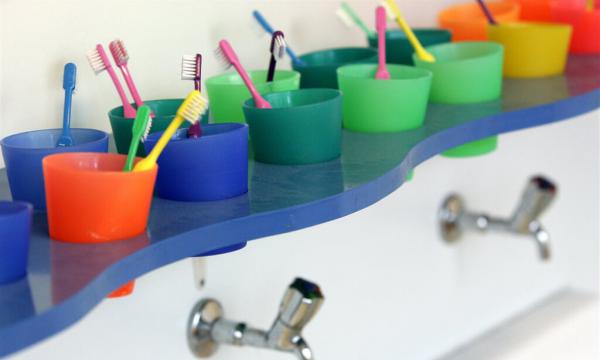
First, with these figures, you would expect that half of all the plastic we throw in our bin is recycled. But that is an illusion. The Packaging Waste Fund only pays for the collection and recycling of *packaging*. So that old toothbrush or broken lunchbox you throw away most likely ends up in the waste incineration plant. The Netherlands Court of Audit even estimates that we incinerate about 60 percent of our total annual plastic production and recycle only about 15 percent as raw material. The rest is in use (in cars, crates, etc.) or ends up as litter.
What’s in the Mix?
Second, the point at which we measure how much packaging is recycled makes us frown. To understand this, we first need to understand the journey our plastic bottle takes before it can be used as raw material again. The contents of our PMD bin first go to a sorting company like Suez, which we have written about before. It separates the plastic into different streams, such as PET, PE, and a residual stream. Then comes the measurement moment: it is determined how much material is presented for recycling. The recyclers turn it into recyclate; flakes or granules of, for example, pure PET that can be used again to make new products. But as packaging expert Ulphard Thoden van Velzen explained to us earlier, a residue stream also falls out at the recycler. One recycler tells us that this can be as much as one-third of the stream. You might wonder, shouldn't that be deducted from the recycled stream?
Our plastic recycling is far from optimal: ‘Dead cats have to be removed first.’
The Packaging Waste Fund, by the way, measures according to the rules; the measurement method is determined at the European level. We hear from various sides that the measurement moment will soon be revised. It would be placed later in the process: not after the sorter, but before the recyclate is made. This could cause national recycling percentages to drop by as much as a quarter.
From Soap Pump to Roadside Post
Third, a large part of our plastic packaging is designed in such a way that it is not easy to fit into a good quality stream for a recycler in the first place. Recyclers want a so-called mono-stream of PET, PE, or PP. If a product is composed of multiple plastics or is made of low-quality plastic, like a soap pump or a meat tray, it has a high chance of ending up in the mixed stream (about one-third of the total plastic coming out of the sorting center) already at the sorter. From this stream, no new packaging can be made, only products like roadside posts and picnic benches. This is so-called downcycling. Critics do not consider this real recycling and say it does not fit the idea of a circular economy.
Children’s lemonade in colored plastic bottles is a disaster for recyclers.
Another 100 Kilotons of Plastic in Commercial Residual Waste
The fourth and final question mark we place concerns the plastic that ends up in office, shop, or station waste bins. The Packaging Waste Fund does pay municipalities to collect household waste separately; this does not apply to commercial waste. If you throw your empty water bottle away at the office or at the station, the municipality plays no role, and the owner of the waste bin must (extra) pay for the separate collection and sorting of the plastic from the rest. The question is whether they do this.
In the annual monitor of the Packaging Waste Fund, we read that in 2017, 114 kilotons of plastic from companies were collected separately for recycling. Sanne Nusselder of research agency CE Delft delved into the processing of our plastic last year on behalf of Greenpeace and wrote a report about it. She estimates that in addition to those 114 kilotons of separately collected commercial plastic, there is still about 100 kilotons of plastic in the residual waste of companies: 90 kilotons of packaging and 10 kilotons of small plastic utensils.
In this article, we use information from conversations with various parties, such as researcher Ulphard Thoden van Velzen of WUR and Rob Buurman of the Recycling Network. We also use information from background conversations with people from the industry who do not wish to be in the public eye.
Source: Read the original article | Published: September 24, 2019